Category Archives: Literature

Bologna Book Fair 2024: Looking For New Trends

This year, the Bologna Children’s Book Fair (BCBF), the biggest fair in the world for children’s literature since it was launched 61 years ago, opened in Bologna, Italy, on Monday, April 8. Lasting for four days, it was a big success, drawing 1,523 exhibitors from 100 countries, with Slovenia as the guest of honor and China back in full force. I was among the many who attended, with over 31735 visitors according to the BolognaFiere Group, an increase of 10 percent over 2023.

Yet, as I will discuss below, the Fair felt different from last year, more like a turning point, as if we were on the verge of a new era. And it wasn’t just due to the rise of AI, which, after all, is just a new technology, nor was it a new trend in the world of ideas or a new category of books, like, say, romantasy.

Although to be sure, it was that too. But with books being banned in the United States (of all places, a country that was once upon a time a leading democracy, a paragon of virtue and freedom) and the rising challenge posed by social media and films to the publishing industry, siphoning away readers, especially among a key group, Middle Grade readers (age 8-12), the industry may well have to brace itself for some groundbreaking shift in the reading public’s interests and tastes.

Alas, the high level of sales achieved during the pandemic is now a thing of the past. And AI, seen by many as a threat, could also be an opportunity for publishers to try and cut costs – but at whose expense? How AI will impact the industry remains to be seen but one thing is certain, it will impact it in a big way.

And yet…Human creativity has never been so high, as the Fair amply demonstrated.

No doubt, fresh ideas and approaches to publishing were in full display. Boosted, inter alia, by the many new countries that joined the Fair this year for the first time: Angola, Belarus, Benin, Bolivia, Cameroon, Colombia, Luxembourg, Mauritius, Monaco, Moldova, Paraguay, the Philippines, Togo, and Uganda.

Attendance was also boosted by the Fair’s unique “brand extension” feature in the form of parallel presentations at Bologna Book Plus and the Bologna Licensing Trade Fair/Kids—bringing together promoters and showcasing content across the book publishing supply chain. And the Fair was amply covered by the international press with more than 40 journalists attending, including extensive reporting of all trade aspects by Publishing Perspectives.

Event at the Illustrators’ Café, April 8, 2024  Source: Author

There were 386 events at the Fair itself, and more than 220 additional events on and off-site, in other parts of the city which has a long tradition of welcoming artists and illustrators and numerous libraries featuring children’s books – not to mention the magnificent public library, the Sala Borsa.

And China was back in full force, with over 100 Chinese exhibitors and events like “Data Release and Case Analysis of the Chinese Children’s Book Market” provided insights into the booming Chinese market that services over 360 million children and young people with over 40,000 titles published each year. China also has its own major children’s book fair, the China Shanghai International Children’s Book Fair (CCBF), which takes place in November. 

The Bologna Children’s Book Fair: Looking for new ideas, from romantasy to graphic novels

As mentioned above, the pandemic that had caused a sudden boost in children’s book sales and a concerning drop in attendance at public events is now definitively behind us.

Pandemic peak sales are a distant memory; the world of children’s book publishing is back to normal, with book fairs around the world – notably the London Book Fair just over and the Frankfurt Book Fair coming up in October – acting as thermometers to figure out what’s hot. Publishers, editors, and agents are now realizing they may have gaps in their lists, and the middle-grade category (books for ages 8-12) is the most affected – although even YA (age 14-18), once the high-flyer among categories, is no longer the undisputed star.

As reported by Publishers’ Weekly, the current craze is for a new crossover genre termed “romantasy”, combining fantasy with romance.

And the other large emerging trend that has – depending on the viewpoint – “taken over” the middle grade category (books for ages 8 to 12) or “saved” it from collapse is graphic novels. And the Bologna Book Fair could not fail to have a large section dedicated to comics with publishers coming from every corner of the world:

This said the focus at the Fair remained firmly on illustrations and the world of author-illustrators, from picture books ranging for early readers to graphic novels for YA (young adults, ages from 14 to 18). At the core Illustrators Exhibition with its 58th competition, over 3,500 artists from 81 countries  made 17,600 submissions. In the end,  there were 344 finalists and  79 artists 78 sets from 31 countries made the most coveted list. 

The winners of the 2024 Hans Christian Andersen Award given for recognition for lifelong contributions were announced on the first day at the Fair and drew a large gathering: 

The winners were Heinz Janisch from Austria, a master of short-form stories that leave room for readers’ imagination; and Sydney Smith from Canada, recognized for his illustrations characterized by authentic characters and a focus on emotions.

The Fair featured a new theme for children: Sustainability

Through both an exhibition of some 70 titles focused on sustainability as well as a debate aptly titled “Reading For A Healthy Planet”, the objective was to interest trade visitors,  publishers, editors and literary agents in “children’s books to help achieve a sustainable future”.  

The book exhibition ranged across all ages and genres, from fiction to non-fiction:

The debate, held in the Authors’ Café on April 8, was organized by both the BCBF and the United Nations with Irina Lumelsky, acting Head of UN Publications, and in cooperation with the International Publishers Association (IPA) President Karine Pansa.

The debate, ably moderated by Ed Nawotka, Senior Editor at Publishers Weekly, included Ferdinando Boero, President of the Dohrn Foundation, Inès Castel-Branco, Publisher of Akiara Books, and Elisa Palazzi, children’s books author and Professor of Climate Physics at the University of Torino. 

Source: UN Publications X feed 

All this was set in the framework of the Sustainable Development Goals Book Club which, as its website indicates:

 “aims to use books as a tool to encourage children ages 6-12 to interact with the principles of the Sustainable Development Goals (SDGs) through a curated reading list of books from around the world related to each of the 17 SDGs in all six official UN languages—Arabic, Chinese, English, French, Russian, and Spanish.” 

The Club brings together all the publishers who are signatories of the SDG publishers compact. According to Ms. Lumelsky, some 300 publishers have signed the compact so far. They come from across the world and as a quick perusal of the list of signatories shows, many major publishers have joined.

The debate, however, unlike the SDG Club, which covers all 17 SDGs – including the social goals, human rights, fighting poverty and hunger –  was largely focused on climate change and how to sensitize a young public to the issue.

Undoubtedly, this is a major issue and perhaps the one that speaks most strongly to children as it directly affects their future. Something a slightly older youth, Greta Thunberg, never tires of repeating. 

The panel, composed of at least two very active environmentalists (President Boero and Professor Palazzi) was enthusiastic and, guided by Nawotka’s pointed questions, successfully conveyed its high level of passion and dedication. At one point, publisher Castel-Branco unfolded one of its lovely Akaria picture books gaining applause from the audience:
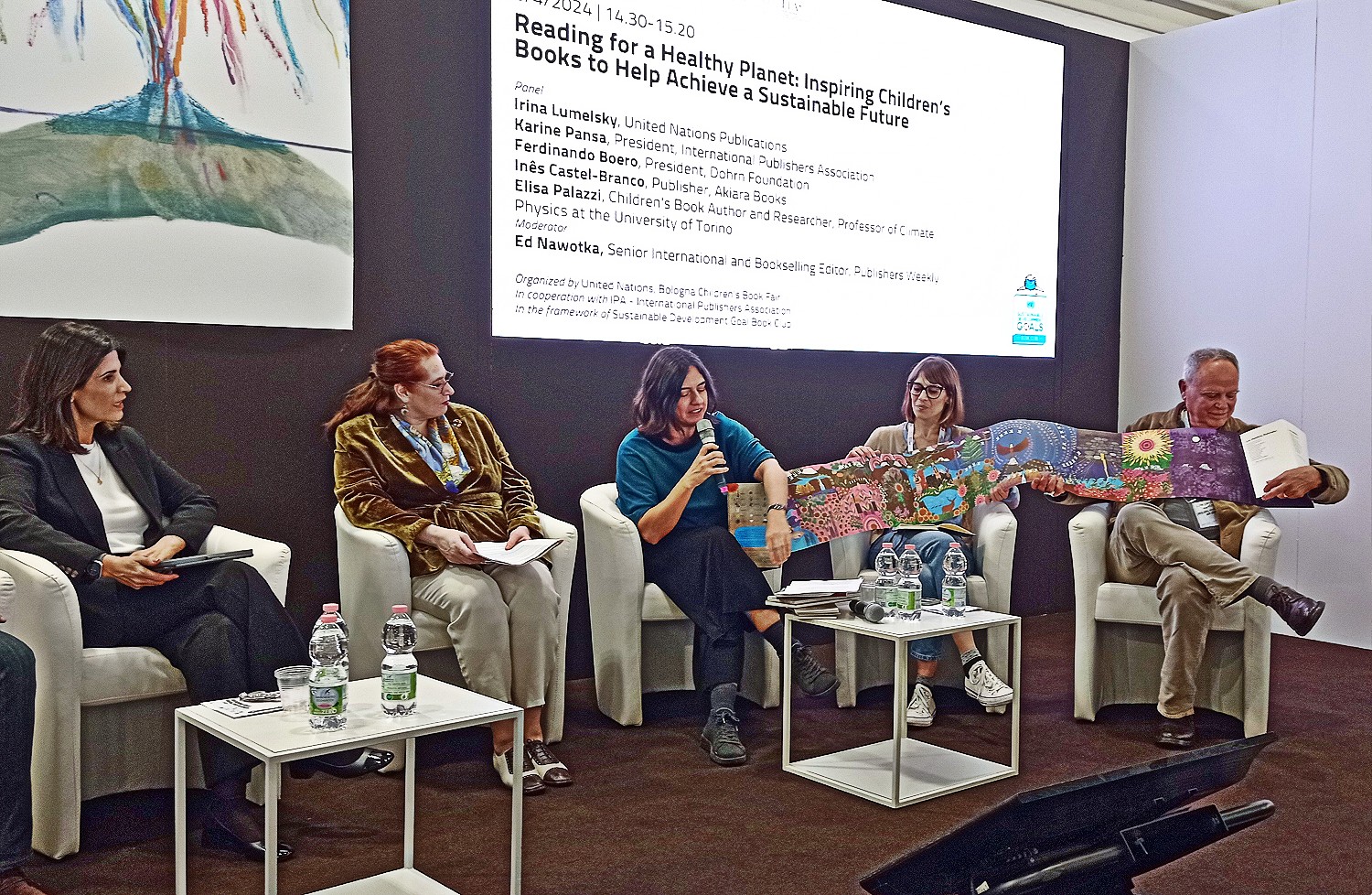
From left to right: IPA President Karine Pansa, Irina Lumelsky, UN Publications, Inès Casteò-Branco (with microphone), Publisher Akiara Books, Elisa Palazzi, author and Professor of Climate Physics, University of Torino, and Ferdinando Boero, President Dohrn Foundation   Source: Author photo

About next year’s Children’s Book Fair

The 62nd edition of the Bologna Children’s Book Fair is scheduled from March 31 to April 3 next year, with Estonia as the guest of honor. 

It will be interesting to see if the emerging trends at this book fair – a focus on more and better illustrations and graphic novels – will be confirmed next year. And whether some new ideas beyond romantasy will emerge.

Most importantly, it would be comforting to see publishers enlarging the concept of sustainability beyond environmental concerns and the fight against climate change to embrace social justice, equity, and more and better democracy.

Too many of the children’s books coming out these days are exclusively focused on climate change: on the E element (i.e. environment) of ESG, and not enough on S (social) and G (governance).

………………………………………………………………………………………………….

A shorter version of this article was first published on Impakter; click here to read it.

To read more of my articles published on Impakter, click this link:

https://impakter.com/author/claude-forthomme

Comments Off on Bologna Book Fair 2024: Looking For New Trends

Filed under art, book marketing, Business, Environment, Literature, Publishing

A Close Look At A Novel By Nobel 2022 Winner: French Writer Annie Ernaux

La Place

by

Annie Ernaux

My review on Goodreads:  4 stars – really liked it!

I approached this book with some diffidence – in my opinion, the Nobel in Literature is often oddly chosen, picking out writers that in fact, you wouldn’t read, and then when you do (just because they won the prize and you want to know why), you’re (predictably) disappointed. I won’t name names here because when I don’t like authors I never write about them, I just retreat in a (diplomatic) silence and that’s that.

Well, you’ve guessed it, this time was different. Totally different, I loved it! This is a remarkable memoir that captures the anxiety and deep inner contradictions of our society – indeed, as the book cover blurb claims (but justifiably so), it has universal appeal. It’s short, fast-paced, written in a sober style, the author herself defines it as a “flat style”. Flat or not, it’s very effective, it will keep you riveted as it depicts in an unforgettable way the rise of the middle class in the 1950s following World War II, and what it did to those left behind.

In this case, poignantly, it’s the daughter who rises (Annie Ernaux, the author) and the person left behind is her father.

Highly recommended.

READING PROGRESS

October 8, 2022 – Started Reading

October 8, 2022 – Shelved

October 10, 2022 – Finished Reading

Comments Off on A Close Look At A Novel By Nobel 2022 Winner: French Writer Annie Ernaux

Filed under Book review, Literature, Uncategorized

A Rare Interview

The “rare” interview in the title of this post is one done by Shanaz Radjy and it’s about me. I normally don’t like to talk about myself but this time I must. Because the person who interviewed me did a superb job, it’s actually much more than an interview, it’s a full portrait of my life as a writer.

Shanaz, who describes herself as “an adventurer, foodie, bookworm, and horse-lover” is an incredibly talented writer, based in Portugal; with her husband, she has cofounded what she calls “an eco-tourism project” – it’s actually a lovely “eco-lodge” opened to nature lovers,  a restored stone farm in a beautiful, wild mountainous setting, “off-the-grid”, as she says, with plenty of animals and fruits and home-grown vegetables. 

Appropriately called Casa Beatrix, you can find all about it here.

Disclosure: I met Shanaz a few years ago and we happily worked together when I reported on the wonderful Women’s Brain Project and had a long and fascinating talk with founder Maria Teresa Ferretti who’s an Alzheimer specialist. The aim of their project is to generate scientific evidence to understand how sex and gender difference impact brain and mental disease. If you’re curious about that article, click here

And here is the opening of that interview:

Reconnecting with Claude Forthomme

Claude Forthomme and I crossed paths when I was the Head of Communications for the Women’s Brain Project, and we collaborated on a piece on brain health for Impakter, where she is a Senior Editor. A few years later, after I finally read her book “Crimson Clouds” (yes, I have a monster TBR pile), I reached out to interview her. 

One of the things I find fascinating about her is that she has done so many different things, and yet one of the red threads throughout the years has been her love of the written word.

Once a Writer, Always a Writer

Technically, Claude started her writing career when she was eight years old. She published a newsletter for her parents, an 8-10 page booklet complete with clippings, drawings, and articles on what she considered the big news of the day. 

By the time she was 15, she had written her first novel: a murder story set in Colombia, among the mountain rebels. It’s one of many pieces that sit in literal or digital drawers, gathering dust.

A Citizen of the World

Born in Brussels, Claude’s father was a diplomat. She spent her childhood in Sweden, Egypt, Columbia, and Russia before graduating from Columbia University with a degree in Economics. After graduation, she worked in banking and publishing before teaching at the college level.

In 1979, Claude joined the United Nations, stationed at the Food and Agriculture Organization (FAO) in Rome, Italy.

Claude went on to direct the UN/FAO Office for Europe and Central Asia, with US$ 35 million in aid projects aimed at aiding the transition of Eastern Europe to a free market system. She also put food safety on the global agenda, organizing 48 countries at a transcontinental meeting in Budapest.

What’s in a (Pen) Name

In 2009, when she started her blog, Claude decided to publish under the pen name “Claude Nougat.” It was an inside joke, dating back to her teenage years. One day, her father mused aloud about nougat, wondering why it existed in two such extremes: soft and gooey and dry and crisp. Claude said she had the answer. Then, she explained that eggs were integrated differently in each – an explanation she’d made up on the spot. 

Since that day, whenever she offered up one of her theories to explain something, Claude was told she “nougatized” it. An appropriate pseudonym, therefore, for a fiction writer.

Read the rest on Two Drops of Ink: A Literary Blog, click here.

Comments Off on A Rare Interview

Filed under interviews, Literature, travel

Should Robots Be Built To Feel Pain?

My latest article on Impakter, just published, about AI and how we should organize our future with sentient machines. Should we build them to feel pain and other emotions? What is the point of it? What are the dangers?

 Neku – Robot Lover Song (Featuring Aline) in Youtube video

What is the role of pain in our lives?  Pain, we can all agree, is unpleasant, both physically and emotionally. Pain acts as an alarm when faced with danger. Pain can be excruciating, tragic, the forerunner of death. In short, when we feel pain, we feel more alive than ever. Now that robots play an increasing role in our society, should we design robots as sentient machines with the ability to feel pain?  

Robots are everywhere in manufacturing, in agriculture, in transport and distribution, in communications, in the home. And they appear not just as androids like the famous science fiction author Isaac Asimov visualized 75 years ago, but in a vast range of devices, from autonomous vacuum cleaners to whole factory production lines and military drones.

Arguably, it might make sense to endow some of them with the capacity to feel pain in situations where it could help the machine foresee a threat and save itself from possible damage. But should it be endowed with merely a series of physical reactions demonstrating pain or should it feel it as an emotion the way we humans feel it?

When a machine feels pain, will it cry?

Or an equally valid question: should it cry?

The question of whether robots should feel pain may sound futile, but it’s not. With advances in computing power, particularly with quantum computing just around the corner, we are close to being able to create robots with General Artificial Intelligence. Not just a specific ability like beating human champions at difficult games like chess and Go, but a “general” intelligence that could lead soon to the dreaded Singularity, the point where Artificial Intelligence will surpass human intelligence.

In short, we are headed towards a world where science fiction meets reality, where our planet hosts two types of “sentient machines”, us and the robots.

How to Organize a World full of Sentient Machines

Scientists have been working on this for several years, notably Beth Singler  and Ewan St John Smith, both at Cambridge University.

Read the rest on Impakter, click here

Find out about our future with robots. Should love and sex be part of it? Let me know what you think!

Comments Off on Should Robots Be Built To Feel Pain?

Filed under Digital Revolution, Economics, politics, science fiction, Sociology, Tech

“Fear”: Why Bob Woodward’s New Book is a Bombshell

A key question is raging around Bob Woodward’s new book “Fear: Trump in the White House”, published by Simon & Schuster on September 11:

Did Bob Woodward wildly exaggerate and fabricate findings or is the Trump White House, and more importantly, the president himself, wildly dysfunctional?

An answer in partisan mode is no answer at all. Here, as a friendly outside observer (disclosure: I am European), I will try to clear up the issue.

The book, in a sober style, convincingly depicts an administration in the midst of a “nervous breakdown”, with aides running to contain damage. He reports this unforgettable comment from Reince Priebus: “When you put a snake and a rat and a falcon and a rabbit and a shark and a seal in a zoo without walls, things start getting nasty and bloody. That’s what happens.”

Among the revealing anecdotes:

  • Gary D. Cohn, former Goldman Sachs President then working for Trump as Chief Economic Adviser, removes a letter from Trump’s desk in the Oval Office to stop him from signing it – a letter that authorized withdrawal from the trade agreement with South Korea; Cohn said afterwards that he did it “for the country”, as the trade agreement vitally underpins US-South Korea cooperation, a pillar of US policy to contain North Korea;
  • Chief of Staff Kelly exploding in a meeting:  “We’re in crazytown, I don’t even know why any of us are here. This is the worst job I’ve ever had”;
  • an exasperated Jim Mattis, the defense secretary, after a discussion with Trump last January about the nuclear standoff with North Korea, tells colleagues “the president acted like — and had the understanding of — a ‘fifth or sixth grader.’”

This particular depiction of Trump’s White House found an unexpected echo –  really a confirmation – in the anonymous op-ed published by the New York Times just a few days before Woodward’s book came out, with the striking title: “I’m Part of the Resistance Inside the Trump Administration”. It is from a White House senior official and there are many theories as to who did it. The latest from  Ann Coulter claiming Jared Kushner did it. But at the time of writing, still no one really knows.

What is most unsettling about Trump is not so much his level of understanding about issues, bad as it is, but his systematic misperception of reality.

Read the rest on Impakter, click here.

Comments Off on “Fear”: Why Bob Woodward’s New Book is a Bombshell

Filed under Literature, non-fiction, politics

Escape from the Consumer Society: A Conversation with Mike Blue

Mike Blue is a talented writer even if you don’t agree with his philosophy: I don’t and that made for a great conversation between us – reported here on Impakter:


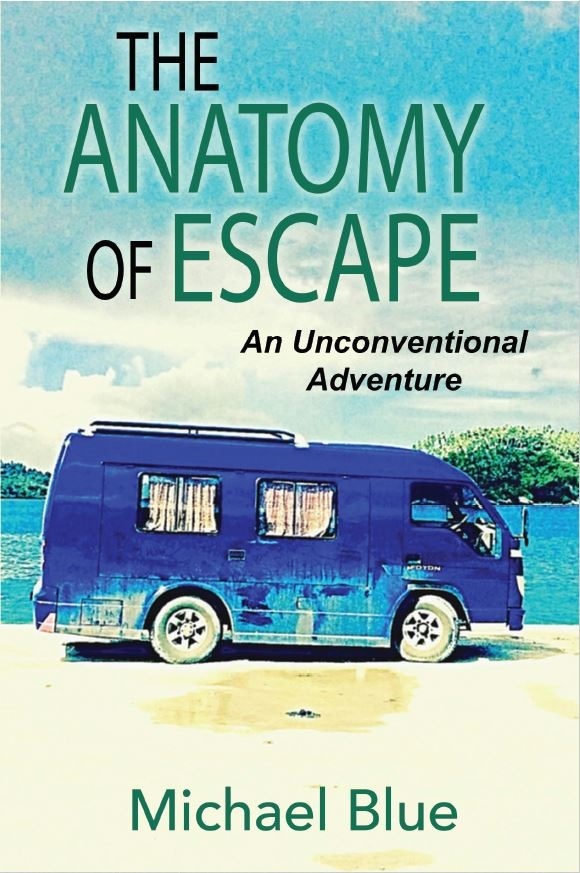
Our industrial society, ever since it began, has spawned fierce critics. Two of the best known lived in America: the transcendentalist Henry David Thoreau and the economist Thorstein Veblen. Thoreau gave us the definitive masterpiece of life in the woods with Walden in 1854. Later, in 1899, Veblen became famous with his Theory of the Leisure Class, a savage critique of “conspicuous consumption” depicting businessmen as modern-day “lords of the manor”. Now, following in their footsteps, we have Michael Blue, a young Australian author who has just published his own addition to the Thoreau and Veblen legacy: The Anatomy of Escape .


Anatomy of Escape ,book cover. It features the bus named Rosie in which the author lived in Sumatra while writing his book.

This is Michael Blue’s second book, the first was The Consumption Cleanse published two years ago, with  a long sub-title that said it all: “Giving up 13 consumption habits in 13 weeks for a better life and a healthier planet”.

The Anatomy of Escape, by contrast, is more ambitious. It is a crossover, partly memoir describing the high points of his own escape from the consumer society and partly guidebook telling his readers how to do it. In short, how to turn this kind of escape into a sustainable lifestyle.

Over the past year, Michael Blue has shared with Impakter several early drafts while writing his “escape” book. Choice pieces, like the explanation of why dogs always look happy (and cats don’t), the three-legged stool metaphor, or  what we can learn from Easter Island.

read the book and enjoyed it as much as I had enjoyed his articles for Impakter. But I wanted to know more. His desire to leave behind the consumer society in pursuit of happiness had always struck me as something out of the ordinary. It takes courage to abandon a career and choose to drift across the world.

When he wrote his articles for Impakter he was living in Indonesia, in an old bus converted into a house. Why do it? How to do it? His book provides answers, of course, but I still had more questions.

I got in touch with Mike and discovered that he had abandoned his bus.

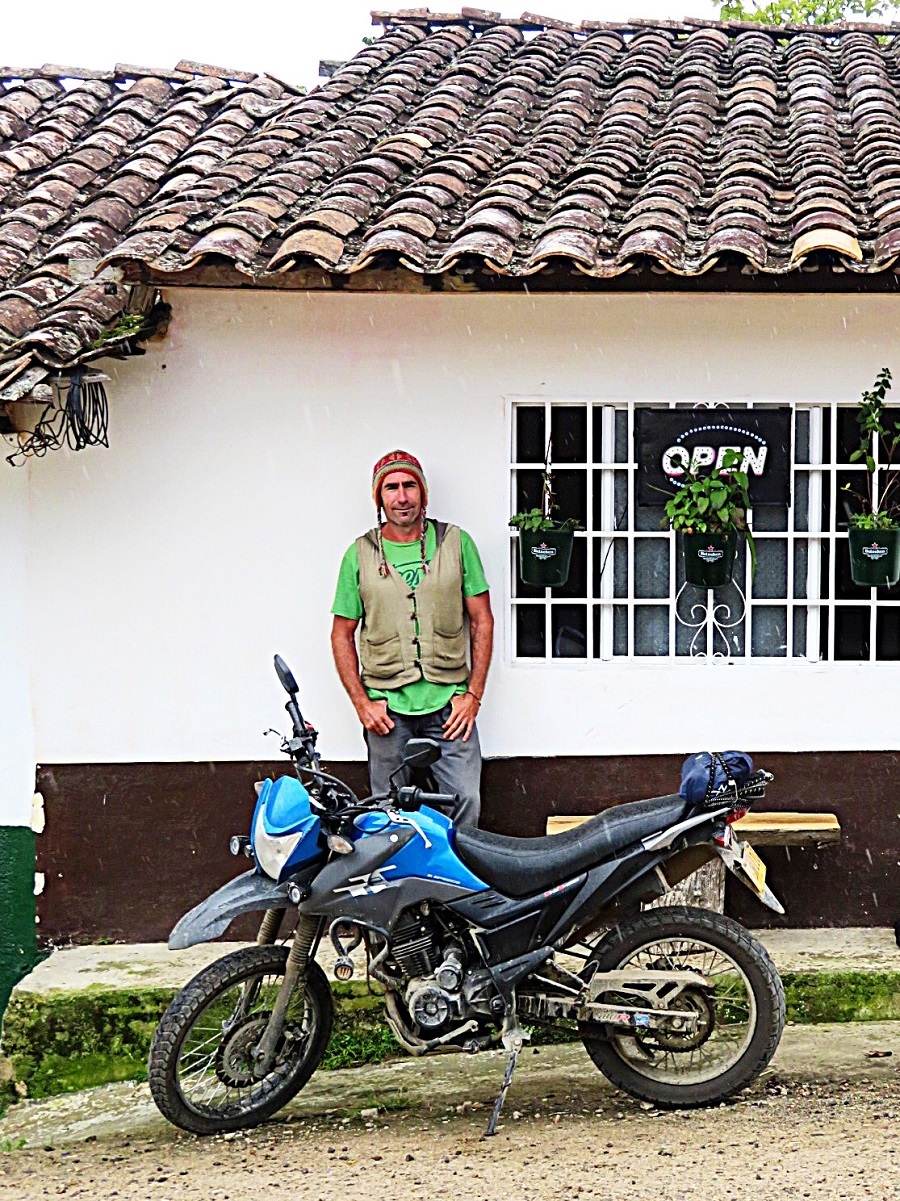
He was now traveling across Colombia on a motorcycle, stopping now and then to write, nestling his computer in improbable places, including eagle nests with breathtaking views of the mountains. Eventually, we managed to have a long conversation that clarified many of my questions and doubts, here are the highlights.

Mike, I just finished your Anatomy of Escape and thoroughly enjoyed it. You have an original way to couch your ideas (e.g. the 3-legged stool! Dogs vs. cats!). It worked even in my case and that’s pretty amazing if you consider that I don’t really share your philosophy, at least not in full. While I share your distaste for the consumer society, I could never do what you’ve done, give up everything, leave behind home and family and live on the road. In short, drop out.

It might at first seem like that’s what I’ve done, drop out, but it wasn’t quite like that. I can see this clearly now in retrospect. Rather than dropping out, I feel like I have climbed out, out of the consumerism trap. And then I dropped in, if anything, to a life that I feel brings me so much more than it once did.

But climbing out of the “trap” as you call it, means giving up the lifestyle of the middle class, that I imagine you were born into. You are an accountant by profession, surely you had to give up a lot?

Read the rest on Impakter, click here.

Comments Off on Escape from the Consumer Society: A Conversation with Mike Blue

Filed under Book review, Literature, Literature, Sociology

#MeToo: Taking it to the Next Level

Also published on Impakter.

Here’s the opening:

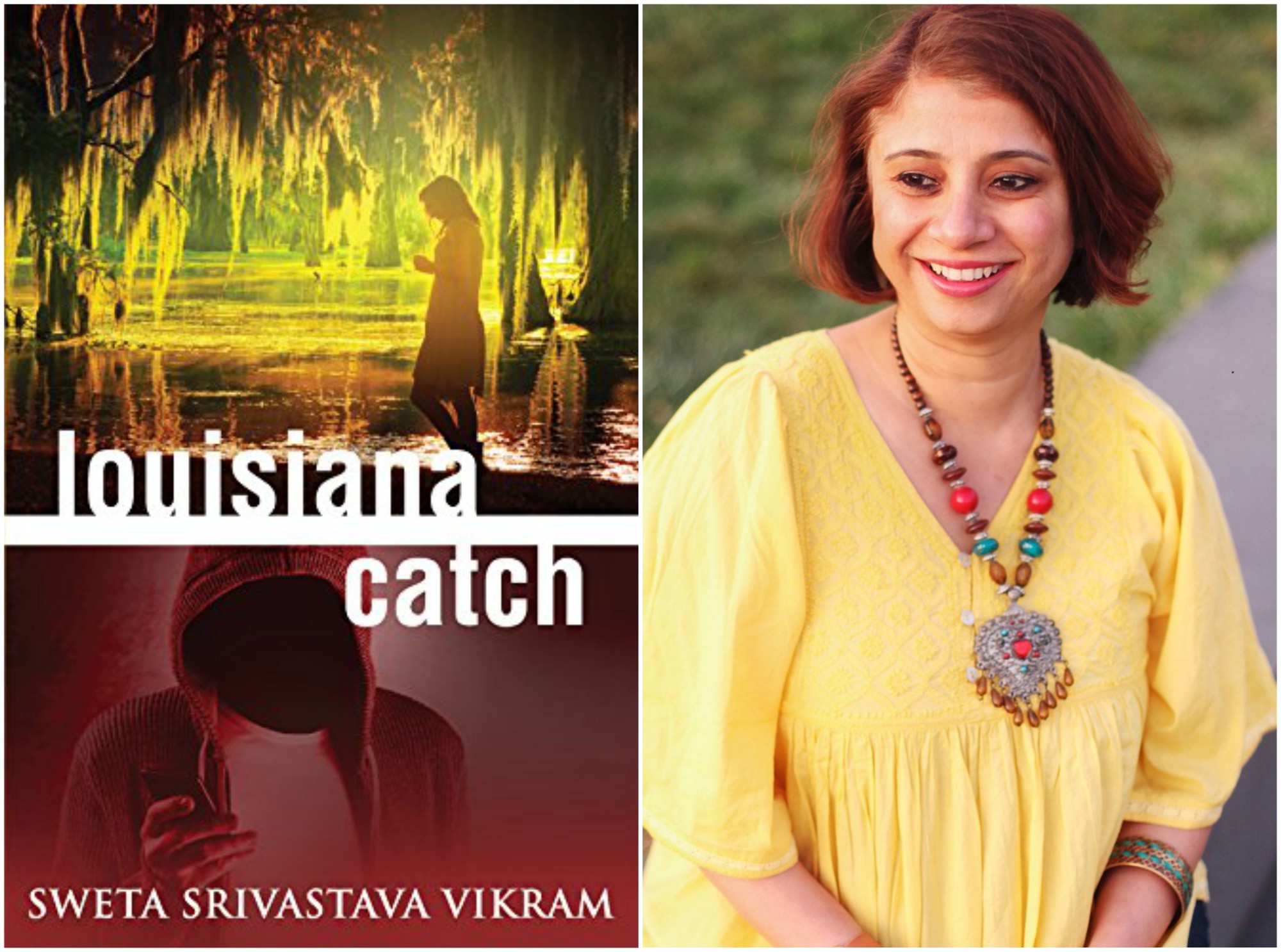
Louisiana Catch by Sweta Srivastava Vikram, published by Modern History Press, 268 pages. Out on: 10 April 2018

This is a remarkable novel, a book for our #MeToo age.

To some it may look like another women’s fiction title, but it’s not. It goes beyond the recurrent themes of the genre – marriage, friends and the search for happiness, showcasing a strong woman who overcomes multiple obstacles. It brings home the universality of #MeToo, not an issue exclusive to America: It has become a number one issue around the world, India included. And it is a great read, the work of an exceptionally talented storyteller, with finely observed characters, unexpected twists in the plot and a deeply satisfying ending. This is a not-to-be-missed novel, including for those who do not normally read in the genre.

 Sweta Vikram iPiccy-collage

In my view, this book does something more: It adds a much needed, broader dimension to the #MeToo issue, shifting the focus squarely on sexual abuse. It’s not just a matter of recalling episodes of unpleasant groping and being threatened or blackmailed by an alpha male that can kill your career, your reputation or any hope you have for happiness. It is that too, of course, but it goes beyond. Sexual abuse is the one aspect of sexual violence that is unequivocally indefensible and morally deeply wrong, with no ifs and no buts.

And it does this in three ways.

One, the major event around which the story unfolds: A world conference on sexual violence against women – to be held in New Orleans, hence one of the reasons for the book’s title. There are others, and I shall come to them shortly. Ahana is charged with the organization of this conference, a task that is a big challenge and that pushes her to her limits. The conference logo she’s picked, No Excuse, is striking. In two words, it tells us we are facing the next level after #MeToo.

Two, the major themes in the novel: sexual violence against women and stalking/bullying on social media (in this case, in an online therapy group). These are deeply serious issues you find every day in the news headlines, yet they are lightly woven in the plot. And the author manages the feat of adding a new urgency to them – this is done through two intriguing characters, two diametrically different men, who erupt in Ahana’s life as she tries to organize the conference. And here we get to the other reason for the book’s title: Both men are from Louisiana, including the catfisher. And right until the middle of the novel, we can’t tell which of them is actually a ‘good catch’ for Ahana and who is the one ‘catching’ her in his net. One of them is not what he seems – hence the suspense.

Three, the viewpoint: The story is told from Ahana’s standpoint and Ahana is special. Highly educated, she comes from a wealthy upper-class Delhi family. She lives in two worlds, the traditional Indian one with all its customs, including the food and the gossiping “aunties”, and the Western one that she has been educated in. Tall and beautiful, an athletic yoga-practitioner, Ahana is recently divorced from Dev, a good-looking man but a sexually abusive husband.

Ahana is someone you grow to increasingly like and care about, and you find yourself wanting to tell her to stop, to be more careful about sharing personal stuff online. People throw up smoke screens, will Ahana see through them? Believe me, it’s a page turner.

Reading the book, I became curious about Sweta Srivastava Vikram, an author capable of creating such stunningly realistic characters, both Indian and American. If you peek at her bio, you discover she is of Indian origin, but she lives in America and has known entrepreneurial success in her own life just like Ahana. She has already had eleven books published, establishing her as a major poet – with only one of them (a novel) published in India, and she has won several awards.

Louisiana Catch is the first novel you publish in the United States. And you now live in New York with your husband. What inspired you to write this book? Any connection with your move to the United States?

Sweta Srivastava Vikram: Louisiana Catch is my 12th book but debut U.S. novel. My poetry books have been published in the U.S. before, but the novel is exciting on a whole different scale.

Louisiana Catch didn’t happen directly as a result of my move to the Big Apple. I moved to NYC about 20 years ago…

READ THE REST ON IMPAKTER, CLICK HERE.

________________________________________

BIO: Sweta Srivastava Vikram, a graduate of Columbia University, was featured by Asian Fusion as “one of the most influential Asians of our time”. She is a best-selling author of 12 books and a five-times Pushcart Prize nominee. She is also a mindfulness writing coach, social issues advocate, and a certified yoga & Ayurveda counselor who helps people lead creative, productive, and healthier lives. Louisiana Catch is her debut U.S. novel and featured on U.K.’s list of “Books to Read in 2018.” Born in India, Sweta lives in New York City with her husband and in her spare time, teaches yoga to female survivors of rape and domestic violence.

Website          Twitter            Instagram          Facebook          LinkedIn

________________________________________

Featured Image Credit: New Orleans: French Quarter, Exchange Place – by wallyg flickr.com

2 Comments

Filed under Book review, interviews, Literature, Literature, Sociology

If We Were Gods, Would We Be Happy?

My latest article published on Impakter:

If We Were Gods by Adam Karni Cohen, published by The Endeavour Press, July 2017 Book Review and Interview 

When I started reading If We Were Gods, I was wondering how Adam Karni Cohen, the author of this remarkable and bizarre love story-cum-family saga, could ever pull off the heavy referencing to the ancient world of Greek and Roman mythology. I was ready to be bored and expecting to classify this debut novel as yet another pretentious failure from an aspiring writer.

I was wrong, of course. This is the work of a master story-teller. Don’t be put off by the Roman gods roaming around in this book, they are not a bore or a waste of time. There’s nothing academic or pretentious about them. The gods you encounter here don’t slow down the storytelling, what they do is add a new dimension to it, refreshing and amplifying a common tale in our times. A love story between two university students from different countries and different cultures, in this case, Italy and the UK. We have Claudio Collina, son of a Verona industrialist, who came to study engineering in the UK and Jennifer who is an English med student. Claudio is a pivotal character, loaded with an intellectual baggage shaped by ancient Rome, he is the one living the ancient myths.  He befriends Chris, another British med student, and soon this becomes a “classic” love triangle.

Adam Karni Cohen took literally the classic element in this love triangle and elevated it to the main theme of his novel – thus turning it into something entirely new.

You don’t need to know anything about the triangle of love between Vulcan (the god of fire), Venus (his wife) and Mars (her lover) to enjoy the book. And as you read on, you discover that the author has woven more than a love story, this is the saga of two families, one in England, the other in Italy, and it spans decades and generations, as the story turns on Jennifer’s children, Anna, eighteen and her brother Sam, fourteen.

Sam is a particularly endearing character who, to alleviate the boredom of a summer vacation, plays at being a “detective”. He delves deep into his mother’s personal papers and there are times you feel like telling him to stop. But his relentless curiosity moves the plot forward and you come to enjoy the way the author delicately draws this teenage boy, with all his flaws, misguided ambitions and yearning to be loved.

This is an ambitious novel, finely structured and with multiple points of views. Remarkably, one key character central to the plot is one we never meet but only hear about: Claudio’s father, Federico Collina, who sounds like a ruthless startup entrepreneur (not an entirely lovable character but very real).  He has an outsize effect on his children, Claudio and Melissa, shaping their destinies.

If this all sounds complicated, it isn’t. The author pulls it off brilliantly, aided by a real talent for both story-telling and mastery of language. The reader is drawn in, the pace is relentless, this is a page-turner and a deep plunge into the human condition.

After reading it, I wanted to talk to the author and he kindly agreed to answer my questions.

Question: Literary agent Donald Maass wrote in his famous guidebook “the Breakout Novel” that a “truly BIG book is a perfect blend of inspired premise, larger-than-life characters, high-stakes story, deeply-felt themes, vivid setting and much more”. Your book checks all the boxes. Can you tell me how you came to your “inspired premise” and “larger-than-life characters” – in other words, why the mythology, why Claudio?

To read his answers on Impakter, click here.

Comments Off on If We Were Gods, Would We Be Happy?

Filed under Book review, interviews, Literature, Uncategorized

What Turns a Police Thriller into a Bestseller? Lessons from Faceless Killers

Discovering Henning Mankell (here)

Let me start with a confession: I’m not a habitual reader of police thrillers and murder stories. Like everyone, I’ve read Agatha Christie when I was young, I’ve gone through all the classics from Arthur Conan Doyle to Ngaio Marsh but I’m not a fan, call me a dispassionate reader.
Why? Because too often, I can see through the plot and it all looks depressingly formulaic.

When Henning Mankell died this month (see this excellent article in the Atlantic Monthly, here),  I was reminded of his stature in Scandinavian literature – the Atlantic Monthly calls him the “dean of Nordic Noir“, with 30 million copies of his Kurt Wallander series sold since the first one came out, 25 years ago, in 1990.

Of course, I’m familiar with the character of Kurt Wallander, an ordinary, middle-aged policeman working in a small town in Southern Sweden, having seen several episodes of a series featuring him on ARTE TV. But now I wanted to find out more, I thought I would try and uncover the roots of his success by reading that first book in the Wallander series, the one that “made it”, with the arresting title Faceless Killers.

Here’s what I found – the main “lessons learned” to ensure that your next thriller is going to rise above the genre and make it as a global bestseller.

As you will see, there are only two rules to follow.

First, let me say it’s a great read, the pace never slackens. When it does slow down – as inevitably it must if you’re following a police investigation step-by-step, an indispensable aspect of making this novel realistic – then Kurt Wallander’s personal life butts in. He has problem with his senile, grumpy and lonely father, a landscape artist endlessly painting the same landscape, his cool wife Mona who has just left him, causing him to dream of making love to a black woman (inexplicably black but then dreams are not always explainable) and his complicated daughter Linda, an independent young woman who lives with her boyfriend from Kenya and can’t make up her mind about attending college. You get the sense that Kurt Wallander, ordinary as he is, has in fact a complex life and you, the reader, feel for him.

This observation leads directly to:

Rule #1: establish empathy with your main character – even if this is a police procedural and the implications are that police procedures and the thrill of the chase should trump characterization.

To transcend the genre and establish credentials as a genuine, world-class work of literature, follow Mankell’s example: develop your main character. Kurt Wallander soon becomes someone you feel you know, someone who goes through the same (often depressing) experiences so many of us go through our lives as a marriage grows stale, as a child turns into a rebellious teenager, as a parent slowly sinks into old age.

The other striking aspect of Faceless Killers is its social dimension. 

This is a book that has deep roots in Swedish society, and by extension, in the society of any advanced country that calls itself (like Sweden) a democracy, that believes it has humanitarian traditions. And it’s a book that does not shy from raising deep, uncomfortable questions. In fact, Mankell himself had lived in Africa and brought his own views to his books and the character Kurt Wallander. As he explained on his website,

“Racism for me is a crime, and therefore it seemed natural that I wrote a crime novel. It was after that the idea of a policeman was born.”

The book is peppered with Mankell’s personal opinions about racism and how refugees are viewed and ill-treated in refugee camps in Sweden. One, a Somali, father of nine children, while walking alone down a country lane near his camp, gets his head blown off  by a ruthless killer with an accomplice in a near-by car ready to whisk him away from the crime scene.

But the book does not merely “show”, Mankell is not afraid of “telling”, here are some examples:

  • [One character says:] “We have a refugee policy in this country that must be followed.” [The other answers:] “Wrong. It’s precisely the lack of  refugee policy that creates chaos.”
  • [Then this character amplifies his thinking]: “Right now we’re living in a country where anyone with any motive at all can come in anywhere in this country at any and in any manner. Control of the borders has been eliminated. The customs service is paralyzed. There are plenty of unguarded strips where the dope and the illegal immigrants are unloaded every night.”

Sounds familiar? Yes, it’s amazingly relevant to our own times and the current migrant crisis in Europe. Germany expects to have to take in one million refugees this year, Sweden less of course, but it is still a favorite destination of the millions of migrants pouring into Europe through Greece, the Balkans and Italy – most of them from war-ridden countries like Syria, Afghanistan and Sudan (Darfur, remember it?)

I wonder if any of those migrants has read Faceless Killers?

The book gives you the whole range of feelings – pro and against – caused by waves of migrants, here are a few more samples:

  • “For brief moments [Wallander] could also detect contradictory sympathies in himself for some of the anti-immigrant arguments that came up in discussions and the press while the trial was in progress [trial about the murder of the Somali man]. Did the government and the Immigration Service have any real control over which individuals sought to enter Sweden? Who was a refugee and who was an opportunist? Was it possible to differentiate them all?”

And then comes the conclusion, one that is haunting all of us these days in Europe as we watch waves upon waves of migrants entering the continent:

  • “How long would the principle of the generous refugee policy be able to hold without leading to chaos? Was there any upper limit?

Indeed, that is precisely what we wonder about now. And we are all like Kurt Wallander, who, as Mankell writes:

  •  “He realized that he harbored the same vague apprehension that so many other people did. Anxiety about the unknown, about the future.”

This is what makes this book so extraordinary, and enables it to rise above the “genre” of mysteries, leaving behind the usual tropes and reaching out to the level of “real” literature – not pure thrills, not entertainment for the sake of entertainment but applying a lens to reality that makes you understand reality better, and perhaps in a way you have never understood it before. In short, great literature.

And this brings us to:

Rule #2: Root your story in reality – address real life issues.

In this case, migrants, what to do with them, how to integrate them in our society. In a globalized world shaken by war and injustice, this is the kind of issue that will stay with us a long time. Think of it, Faceless Killers was written 25 years ago, yet the issues it raises are incredibly relevant to our situation today.

From BBC article: “What can Europe Achieve?” (see here)

You may wonder whether those two rules actually apply beyond thrillers and mysteries.

Of course they do!

In my view, applying those two rules to any genre novel will lift it to the level of
(a) a bestseller; and
(b) literature with a capital “L”.

You may make a lot of money with strictly genre books, selling by the millions like 50 Shades of Grey did, but you won’t reach the top. To achieve that, as Menkell shows, you need to go beyond mere thrills and open the doors of the real world for your readers, you need to make them think.

And you may ask, what is the benefit for you, the writer? Not much beyond some splendid obituaries like the one Henning Mankell got in the Atlantic Monthly or the New York Times and of course, why should you care?

But if you’re an activist who would like to see the world become a better place, then you do care. I know I do. How about you?

Comments Off on What Turns a Police Thriller into a Bestseller? Lessons from Faceless Killers

Filed under Literature, politics

Climate Change and the Collapse of Western Civilization

To anyone living in Europe, it is truly puzzling that Americans continue to deny Climate Change.  The anger, recklessness and vehemence displayed by American “climate deniers” are something of a mystery. And their favorite argument is that there is no scientific “evidence” of global warming – in spite of the rising number of “extreme” weather events, the floods, the fires and the melting ice, and some of it happening right on their doorstep.

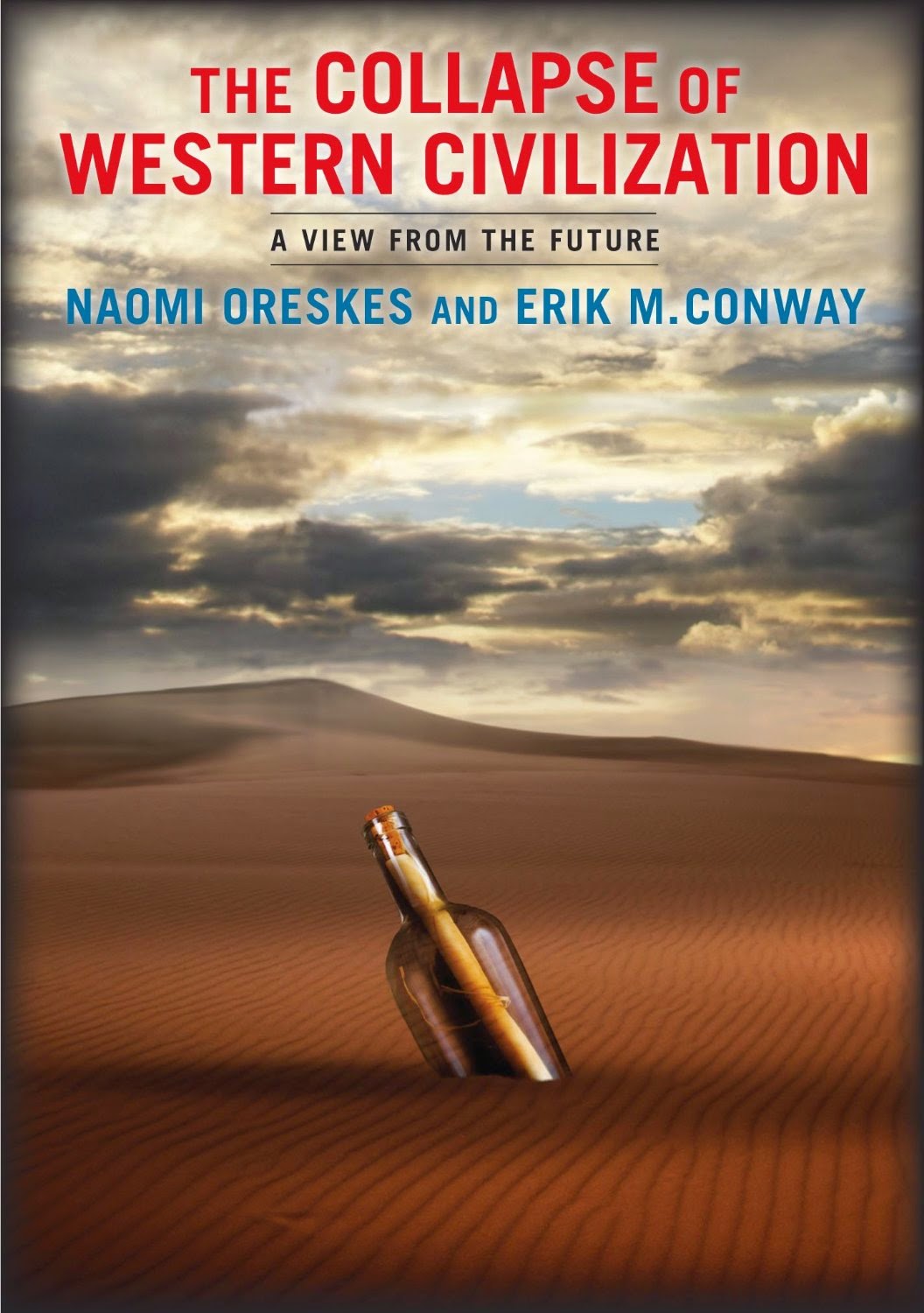
Now, finally, two American scientists – one from Harvard, the other from the California Institute of Technology – have given us the key to the mystery.  Naomi Oreskes who is professor of the history of science and affiliated professor of Earth and planetary sciences at Harvard University and Erisk M. Conway,  an award-winning historian of science and technology at the California Institute of Technology, have used in their latest book, The Collapse of Western Civilization, a remarkably effective dramatic device. Instead of writing a standard analysis, they have set it in the future, giving it the detached, objective tone of scholarly work. It is intended as the fruit of research by a future scientist looking back on our time and trying to figure out the factors that “explain” how global warming caused the collapse of Western civilization. The year is 2939, and what bothers our future scientist is how the United States, the most powerful country on Earth, was, in spite of its power, unable to reverse climate trends.

Don’t be put off by the dramatic subject. This is a book packed with humour that will make you smile (or perhaps snigger?) and the book description in the Kindle Store perfectly captures the spirit of it:

 “a senior scholar of the Second People’s Republic of China presents a gripping and deeply disturbing account of how the children of the Enlightenment, the political and economic elites of the so-called advanced industrial societies, entered into a Penumbral period in the early decades of the twenty-first century, a time when sound science and rational discourse about global change were prohibited and clear warnings of climate catastrophe were ignored. What ensues when soaring temperatures, rising sea levels, drought, and mass migrations disrupt the global governmental and economic regimes? The Great Collapse of 2093.”

The book is clearly a success on Amazon. This is the ranking (as of February 1, 2015):

And it has already garnered 178 Amazon customer reviews. On Goodreads it got 305 rankings (average 4 stars) and 91 reviews. The mainstream media also paid attention to it, in Nature, Scientific American, the New York Times and probably many more that I missed.I particularly liked this comment from Elizabeth Kolbert, the author whose The Sixth Extinction: An Unnatural History I’ve reviewed in an earlier post. This is what she has to say: “Provocative and grimly fascinating, The Collapse of Western Civilization offers a glimpse into a future that, with farsighted leadership, still might be avoided. It should be required reading for anyone who works — or hopes to — in Washington.”

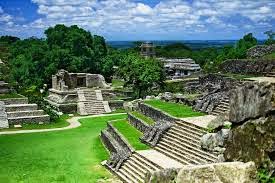
Yes, can we sway our politicians  or are we destined to perish like the Maya civilization? A few decades of drought, causing an economic collapse and internecine fights, were enough to turn the once-splendid Maya cities into ghost towns by the time the Spanish conquered Mexico. Of course, our civilization is global and it will take much more than a few decades of drought to kill it off. But then, Climate Change is a much more massive event…

Maya site: Palenque

I was so moved by this read that I wrote a review (now on Amazon) that I’m happy to share here:

5.0 out of 5 stars A Powerful Read and a Wake-up Call, January 20, 2015
Delightful read if one may be allowed to use that particular adjective when the subject is so grim. And the authors, two science historians coming from the best universities in America (Harvard and the California Institute of Technology), managed the feat of making serious analysis read like fiction. A real page-turner. Yet it’s not fiction, far from it. The book is in fact reviewing what’s wrong with our society, pin-pointing with deadly accuracy the reasons why we are unable to stop our “civilization” from rushing to “collapse”. This is a book that should be taken seriously by anyone concerned with our future, and in particular by our political leaders.

The idea of analyzing what is happening in the climate change debate from the standpoint of the future (the book is purportedly written by a future historian located in China in 2393) is particularly effective as it gives a neutral, balanced voice to the whole account. And it is refreshingly novel. The fact that it is short (a mere 100 pages) no doubt also helps. This is both a powerful read and a wake-up call. I found the arguments particularly convincing and being an economist, I especially liked the twist they put on economic concepts, for example, Hayek’s and Milton’s “neo-liberalism” calling it “market fundamentalism” (indeed, those theories are ideologies rather than scientific) or “gross national product” amusingly described as an “archaic” concept.

The humor is there but it is ultimately very dark humor. The message is clear. If we don’t do anything, if we don’t reverse engine and control gas emissions, we are doomed and why this is so is masterfully demonstrated. Many factors are at play and the authors pull them together in a compelling way, using the detached tone of a future historian who is puzzled by the fact that Western Civilization could not avoid collapse in spite of its remakable advances in science and technology.

The reasons for our failure to address climate change are clearly analyzed and deconstructed – and suddenly, reading this brilliant essay, I began to feel like the Mayas must have felt when decades of unexpected drought destroyed their civilization, causing economic collapse, local wars and social chaos. Just like in the case of the Mayas, the reasons we are failing are all linked to each other – to global warming of course, but more importantly, to the way we handle it (or rather do not handle it – we simply deny it’s there).

The book is at its best in explaining exactly why we deny climate change, in pointing to the “internal” causes, things that lay at the heart of our civilization, things that made it once great and that are now causing its fall – like, for example, “reductionism” which is the idea (that began in Descartes’ time) of solving large problems by breaking them down into smaller, more “tractable” elements. The approach has proved powerful to advance knowledge but as the narrator coldly remarks “reductionism also made it difficult for scientists to articulate the threat posed by climate change, since many experts did not actually know very much about aspects of the problem beyond their expertise.” As a result, scientists did not speak in a single voice, climate change continued to be denied, fueled by the interests of the “carbon-combustion complex” – another witty take on Eisenhower’s famous “military and industrial complex” – and political leaders thought they had more time to address it than they really had.

Other contributing factors are also identified, such as over-reliance of scientists on the concept of statistical significance (also termed an “archaic”!) – something that had never occurred to me before and yet totally makes sense. And this is yet another reason why I loved this book: the authors managed to shed new light and come with new insights on an argument, climate change, that I tend to consider “closed”, in the sense that I can’t imagine what more could be added.

Actually, although I gave it 5 stars, I don’t think the book is perfect. It falls in two areas, as I point out here:

There are only two aspects I regret, one, is the reference to just one climate fiction novelist (there are many, climate fiction is a brand new genre and rapidly rising with the likes of Margaret Atwood) but of course, the authors have a right to their own likes and dislikes in fiction; the other, is the premature burial of the United Nations following the collapse of international talks on climate change at some point in the mid-21st century. Personally, I view such a collapse totally unlikely – the United Nations are here to stay, they are indispensable and most likely to preside over the collapse of our civilization rather than being buried before…But those are minor details and don’t detract from the main strengths of this excellent book, which is to unravel the puzzle of climate denial.

Highly recommended.

Yes, regarding the United Nations, I do think the authors got it wrong. The road is long and difficult, but the United Nations could well be the one institution that will help to wake up the world to the danger and save Western Civilization from collapse! But I do take it on board that the authors were writing a worse case scenario and therefore had to somehow delete the UN from the equation.

As to the idea that we will experience Global Collapse as soon as 2093, why not? I suspect it is a little early, but I could be wrong on that one. In any case, in my own book about the future (Gateway to Forever), the story starts in 2222 and global warming is not longer a subject of debate, it’s a fact. Why did I chose that date? Because I rather like the numbers that repeat themselves (!). And I didn’t want to fall in the error Orwell made with his 1984 which was far too close to his publishing date (1948)… But then, he too liked to play with numbers and simply reversed them!

Naomi Oreskes rock climbin at Jackson Hole 2011 (photo Andy Tankersley)

Comments Off on Climate Change and the Collapse of Western Civilization

Filed under Cli Fi, Literature, non-fiction, science fiction