Category Archives: politics

TWO-SPEED EUROPE: WHY THIS IS THE LIKELY WAY FORWARD

Impakter Magazine has just published my latest article on Europe, here it is:
 
TWO-SPEED EUROPE: THE WAY FORWARD?
 

FROM THE “WHITE PAPER” ON THE FUTURE OF EUROPE TO THE EUROPEAN MINI-SUMMIT IN VERSAILLES

President Hollande did not mince his words. “Europe will explode,” he warned, if the idea of a two-speed Europe is not accepted.

He was referring to what is diplomatically called “multi-speed Europe” where core countries go forward with European integration in areas they agree on, leaving dissenters behind – not a particularly new idea, after all, that was how the Eurozone and the Schengen area (dispensing with border controls) were born in the 1990s.

There has been, over the years, considerable debate and pushback against the idea of a multi-speed Europe, seen as going counter to the “core values of the Union”. But, increasingly, it is viewed as the only realistic way to move forward, abandoning the unattainable ideal (for now) of a United States of Europe and moving instead to a practical “Europe à la carte”, where each EU member gets what he wants at his own pace.

What is different this time is Hollande’s insistence that core countries should not be prevented from moving forward by other EU members. He further elaborated this at the “mini-summit” he hosted in the lavish Versailles palace on March 6, with his three guests, German Chancellor Angela Merkel, Prime Minister of Italy Paolo Gentiloni, and Prime Minister of Spain, Mariano Rajoy.

In the Photo: In the Main entrance to the Chateau de Versailles, Grille d’honneur – Photo Credit: Ronaldieya

While the immediate pretext for the Versailles mini-summit was to prepare the celebrations for the 60th anniversary of the Union to be held in Rome on March 25 with all 27 EU members (with the UK already excluded), there were two other things far more notable about this event:

  • the inclusion of two more countries, Italy and Spain, a suggestion that the famous German-French duo that has historically guided the EU was about to expand, and
  • the message that a “multi-speed” Europe had a backing of all four countries that together form the economic lead of the Union.

Expect this last fact to be reflected in the “Rome Declaration” to be adopted by the 27 EU leaders in Rome on 25 March.

So what did Hollande and his three guests say at the Versailles press conference?

Read the rest on Impakter, click here.

Comments Off on TWO-SPEED EUROPE: WHY THIS IS THE LIKELY WAY FORWARD

Filed under European Union, politics, Uncategorized

Europe at the Crossroads

20170119_ep-047334a_mch_099-1050x699

Impakter has just published my latest essay: EUROPE AT THE CROSSROADS. I’ve worked hard to try and figure out where Europe is going, if anywhere… 

Here is the beginning:


WHAT IS WRONG WITH THE EUROPEAN UNION?

On 25 March 2017, we will know whether Europe – as a “project” for an increased “union” – plans to go forward, fade away or split up.

That is the date of the much-awaited European Summit to be held in Rome to celebrate (without UK Prime Minister May) the 60 years of the European Union. The celebration could turn into a funeral if the 27 heads of EU member nations cannot agree on a so-called “White Paper”, a.k.a. “the Rome Statement”, that they are meant to adopt as a common declaration on Europe’s future.

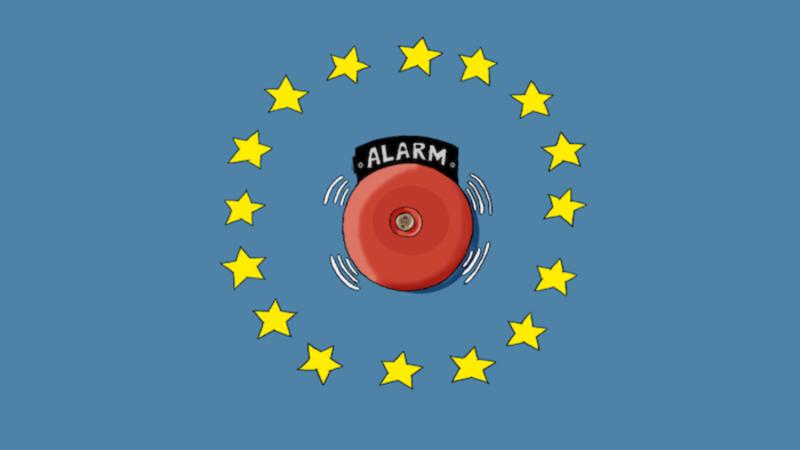
Alarm-Europe-Logo PHOTO CREDIT: MARCH FOR EUROPE

What does this White Paper say? If you google it, you won’t find it. At the time of writing, it’s still under wraps in Brussels. All we know for now is that there has been a preliminary “white paper” prepared by the Benelux countries, Belgium, the Netherlands and Luxembourg, part of the original six founding member countries (the other three are France, Germany and Italy). And there was a recent declaration by German Chancellor Merkel at the EU Summit meeting held in Malta that drew attention and irked some EU members. “This would destroy Europe!” thundered the Pole with the nodding support of other Eastern Europeans.

What did Ms. Merkel say that was so provocative? She aired the possibility of a “multi-speed” Europe – the idea is simple enough: those EU members who want it should be allowed to go forward with integration, the others would be left to proceed slower, at their own pace.

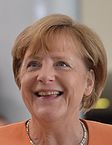
IN THE PHOTO: ANGELA MERKEL PHOTO CREDIT: ELZA FIÙZA/AGÊNCIA BRASIL, CC BY 3.0 WIKIMEDIA COMMONS

This is not a particularly new idea, she had already aired it two years ago. And it is an idea dear to the Italians who have been pushing it for some time – most recently asking for a “Schengen union for security” to try and solve the problem of immigrants rushing across the Mediterranean. Leading Italian political scientists are also behind the “federal solution” for Europe –  notably Sergio Fabbrini, Director of the Luiss School of Government and author of multiple books on Europe who has also expounded it in the country’s leading financial paper, il Sole 24 Ore.

Annoyed by the brouhaha from Eastern European members, the French President Hollande who felt a reference to a “multi-speed Europe” should find its way in the March 25 White Paper, told reporters:

Europe isn’t a cash-box, not a self-service restaurant, a Europe where you come and take what you need, where you take your structural funds or get access to the internal market and then show no solidarity at all in return. Europe was built to be stronger together and it’s that rule, that principle, which should be driven home in March.

PHOTO (above): FRANÇOIS HOLLANDE PHOTO CREDIT: FLICKR/JEAN-MARC AYRAULTCC BY 2.0, WIKIMEDIA COMMONS

So we have two contrasting views of the European Project and, implicitly, a two-speed Europe: a “Europe à la carte”, that pleases Eastern Europeans and Scandinavians who only seek economic benefits and balk at political integration; and a “federal Europe”, more forward-looking and congenial to continental Europeans. Also, good news for federalists, the French-German alliance that had been driving Europe so far could turn into a foursome: France, Germany, Italy and Spain. They have already agreed to meet in Versailles on 6 March – holding a preparatory “mini-Summit” of their own; and thus immediately angering Poland that threatens to hold counter mini-summits with either the Visegrad group (Poland, the Czech Republic, Hungary and Slovakia) or the Bucharest nine (Bulgaria, the Czech Republic, Estonia, Latvia, Lithuania, Poland, Romania, Slovakia and Hungary).

Multi-speed Europe is already a reality…

Meanwhile, the Benelux countries in their “white paper”, while supporting the “Bratislava Declaration and its roadmap” as the way forward, talked about the “subsidiarity” and “proportionality” principles in the usual convoluted EU Treaty language that baffles most European citizens:

“The EU shall only act if and in so far as the objectives of the proposed action cannot be sufficiently achieved by the member states, either at central level or at regional and local level, but can rather, by reason of the scale or effects of the proposed action be achieved at Union level. The EU will only do what member states themselves are not able to deliver for their citizens.”

Note the phrase “by reason of the scale or effects of the proposed action”: this is meant to indicate the Union (because it is larger in scale) can do certain tasks better than a member country. The corollary: European integration cannot impinge upon what is best done at national level, that’s where “subsidiarity” stops.

So where does this leave the “European Project”? Do we go for more “union” or less? Is “more union” politically viable?

THE ROOTS OF EUROSKEPTICISM

The basic problem is rising “euroskepticism”, a new term coined to indicate that Europeans are distrustful of Brussels and European institutions that they see as “power-grabbing” and too distant from them.

Brexit was only the first alarm bell. We now speak of Frexit (for France), Nexit (for the Netherlands), Auxit (for Austria) etc. Trump’s constant denigration of the EU (calling it a “vehicle for Germany”) and his open support of Brexit and other EU-member exits, has further unsettled Europeans.

On 18 February, at the Munich Security Conference, US Vice President Pence sought to reassure Europeans that the US supports NATO and the Minsk II accord for Ukraine, indicating America would stand firmly behind Europe against Russia. Can Europeans trust Pence? A month into the Trump presidency, it is still unclear whether Trump is top dog and therefore his bark matters, or whether he is a tweeting Reality TV star and therefore his cabinet matters. On February 24,  in an interview with Reuters, Trump made a surprising u-turn, declaring himself  “totally in favor” of the EU…but for how long?

It is a fact however that Trump has become a populist icon, deeply resonating with the rising populist movements in Europe, all calling for an exit of the Euro and Europe – from Marine Le Pen in France to Geert Wilders in the Netherlands to Frauke Petry in Germany to Beppe Grillo in Italy. They all liken themselves to Trump.

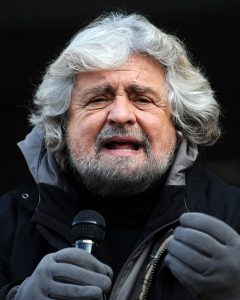
IN THE PHOTO: BEPPE GRILLO AT THE RALLY OF THE FIVE STAR MOVEMENT IN PIAZZA DANTE IN TRENT, ITALY, FOR THE PARTY’S PRESENTATION OF ITS 2013 ELECTORAL SLATE PHOTO  CREDIT: NICCOLÒ CARANTI

Listen to Grillo, an ex-TV comedy star, now sixty-nine but with a continuing appeal on young Italians:

“I’m a comedian. You have to understand that my brain doesn’t work like a politician’s brain. I think about something, then the next day I say something else. It’s a very beautiful word, populism. I’m proud to be a populist.”

And about Europe, this is what he had to say:

“It is an enormous apparatus, with two parliaments, in Brussels and Strasbourg, to please the French. I am in favor of a different Europe, where each state can adopt its fiscal and monetary system. I want the Eurobond, a 20 percent devalued euro for southern European countries, protecting our products against those arriving from abroad, and a revision of the 3 percent deficit budgetary rule. I no longer feel the spirit of Europe.”

To read the rest, click here: http://impakter.com/europe-at-the-crossroads/

Comments Off on Europe at the Crossroads

Filed under Economics, European Union, politics

The Trump Effect: The “Clash” between the Pope and the Order of Malta

Here’s another of my articles, just published on Impakter:

The media has recently reported some eye-popping news about the Pope and the Order of Malta allegedly engaged in a power struggle, with the Grand Master of the Order losing the battle and “forced” to resign.

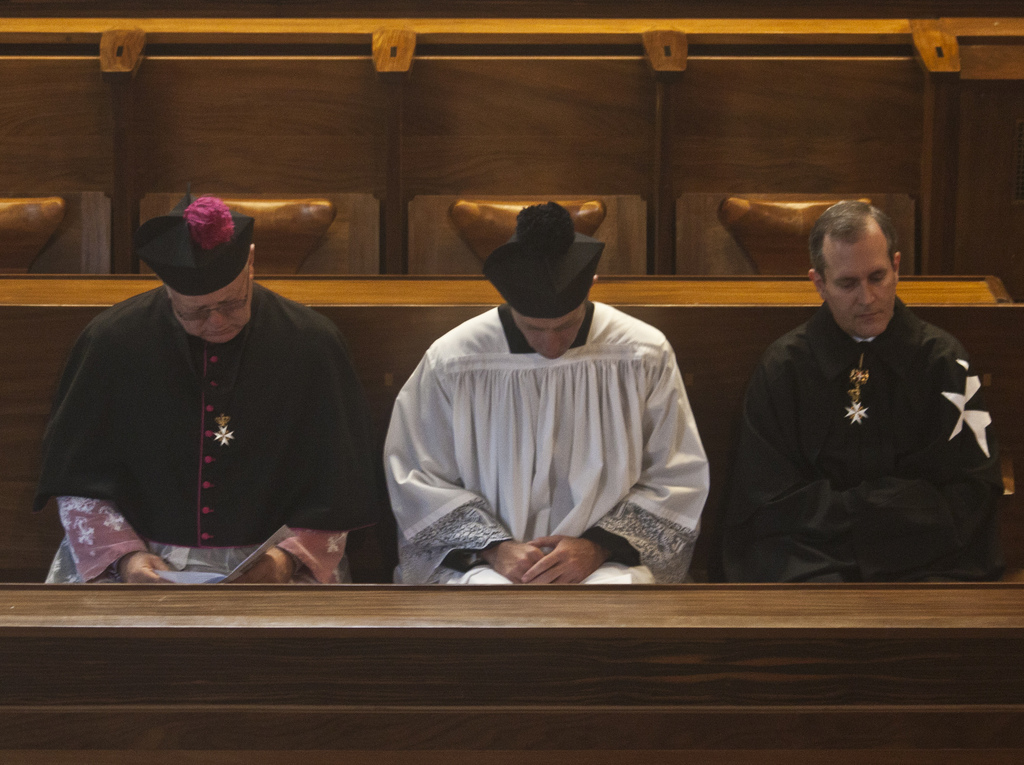
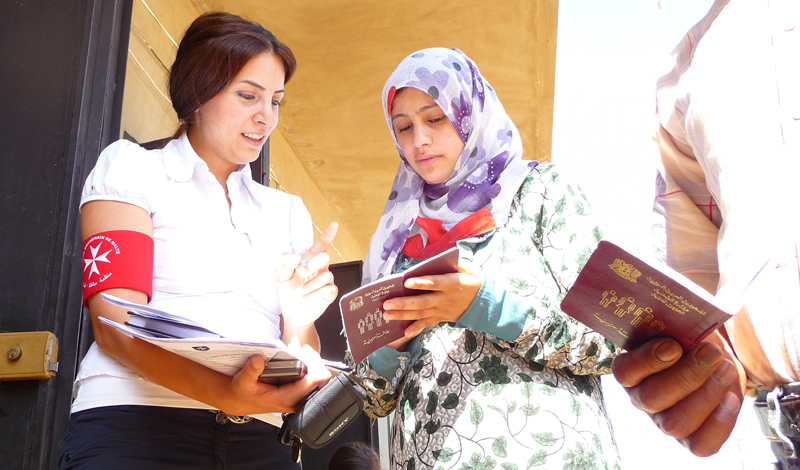
What we have here is the kind of spectacle the media relishes: On one side, the Pope is depicted as the “anti-Trump Pope” for example, see the New Yorker’s article written by James Carroll, an American Catholic reformer and author of eleven novels and eight works of non-fiction, clearly in search of his next plot. On the other side, the Order of Malta, a millenarian Catholic institution with a global, humanitarian mandate, is presented as helplessly in the grips of Cardinal Edmund Burke, a well-known hardliner. An American, Cardinal Burke is adamant about fighting Islam and he is a darling of the populists. So what do you get? A juicy alt-right picture of a clash between a supposedly rigidly conservative Order and a progressive Pope.

In the photo: Pope Francis receives the Grand Master in audience, in earlier better days (June 2006) Photo credit: Order of Malta website  

To make it more credible, the Order is reported by some as an out-of-step relic of the Catholic Church, with its members parading around in “nutcracker” red uniforms.  Instead, it is, historically, the oldest existing humanitarian organization. It started out nine hundred years ago to assist pilgrims in Jerusalem. Today, its mandate has broadened to cover children, the homeless, handicapped, refugees, elders, terminally ill and lepers around the world without distinction of ethnicity or religion.

In the photo: Upholding human dignity and caring for the people in need. PHOTO CREDIT: Order of Malta website

The Order deploys 120,000 people, some 13,500 Knights, Dames and auxiliary members, 25,000 paid medical personnel and 80,000 volunteers. With its world-wide relief agency, Malteser International, it provides emergency aid in natural disasters, epidemics and war.

The Order is not just another charitable organization: it maintains diplomatic relations with 106 countries, the European Union and the United Nations (the latter as permanent observer), thus effectively linking diplomacy with aid. In short, it has a status similar to that of a government-in-exile, having surrendered its territory – the island of Malta – to Napoleon in 1798 and never recovered it, in spite of a resolution of the 1802 Amiens Treaty and the 1815 Congress of Vienna (it was never applied, the English refused to give it back).

In fact, in this complicated story which we can only glean through partial and even fake news (!), the American Cardinal seems to play a key role. And, as I show below, this is not, contrary to stories in the press, a clash between the Pope and the Order of Malta: They are, and never stopped being together on the same side of human values.

THE ORDER’S GOVERNMENT CRISIS, THE FIRST IN OUR TIME

On 6 December 2016, the unthinkable happened: The Prince and Grand Master, Frà Robert Matthew Festing, the third Englishman to serve as Grand Master, suspended the Grand Chancellor, Albrecht Freiherr von Boeselager, a German national and moved to expel him from the Order. The Grand Chancellor, who had been faithfully serving the Order for 40 years (since 1976), immediately denied all allegations of wrong-doing, refused to resign or leave the Order and reportedly contacted Cardinal Parolin, close to the Pope, to obtain guidance.

To read the rest on Impakter, click here.

Comments Off on The Trump Effect: The “Clash” between the Pope and the Order of Malta

Filed under politics, Religion, Uncategorized

How Trump is Changing America and What Writers have to Say

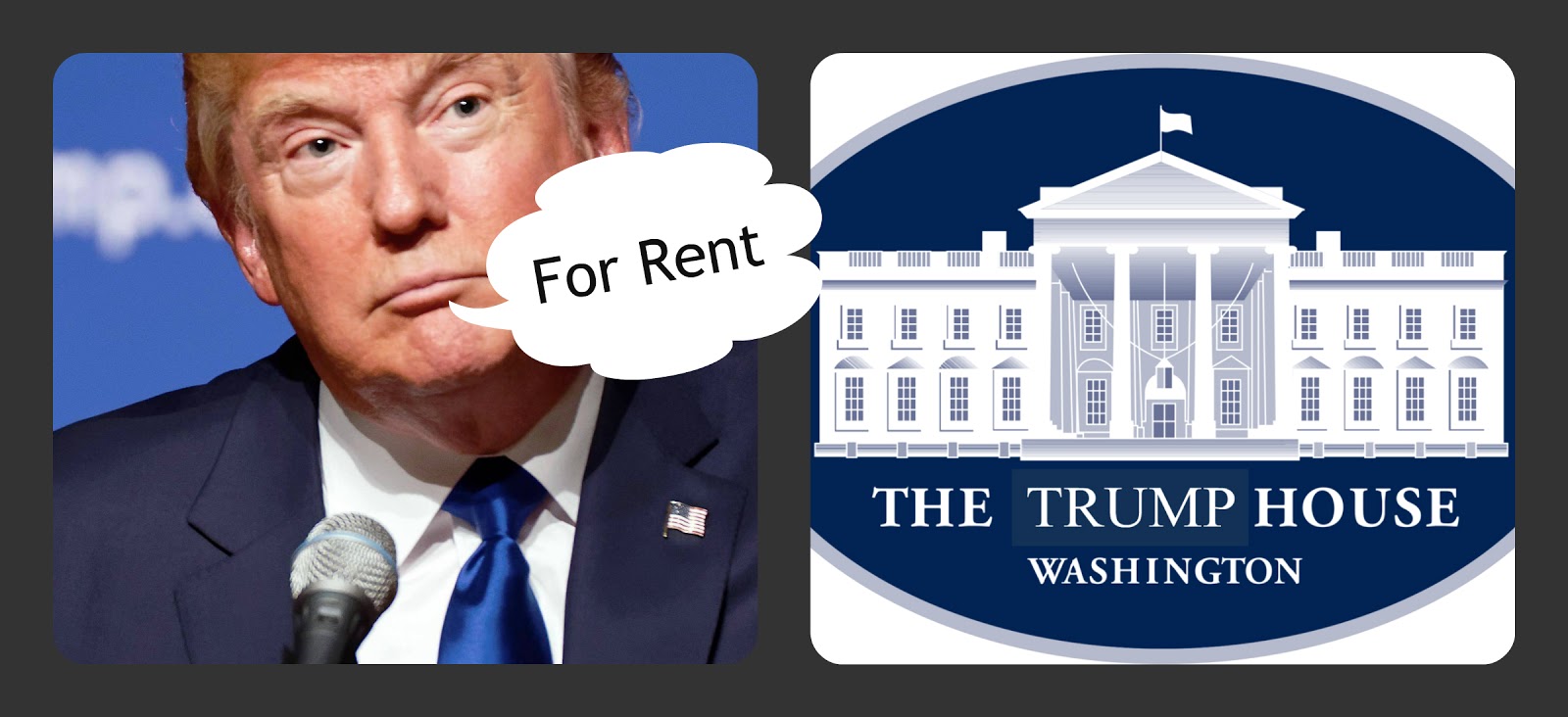
This is how one Italian blogger sees the President-Elect – once Trump moves into the White House, since his wife Melanie apparently has no desire to live there, expect this to happen:

Yes, the American Presidency, with Trump in the driving seat, has lost much of its dignity. Satirists around the world are waking up to the golden opportunity to make fun of him.

But is there really much to laugh about?

The first shocking thing are the numbers. Perhaps Americans, familiar with their bizarre Electoral Voting System are used to it and don’t see the inequity in it. But people who are not American cannot understand that a man who has garnered fully 2 million votes less than his opponent still wins the Presidency.

What kind of democracy is that? Where is social justice?

We are bombarded with frightening news coming out of America, and people who normally write novels and short stories have suddenly turned political. That is very unusual for American writers: in my experience, and at least this was the case through the Obama years, most of them refused to “take sides”. I couldn’t quite figure out why but I imagined they were afraid of losing fans and book sales. Being a European writer myself, I find that astonishing. Over here, on this side of the pond, we are used to writers and artists taking sides – indeed, through most of the 20th century, most of them were Communists. Take the example of France, starting with Simone de Beauvoir and Jean-Paul Sartre   – very few were on the right, Céline being the historic exception, of course (he was pro-Nazi, anti-Jew and a collaborationist).

So what are American writers saying now about Trumpian America?

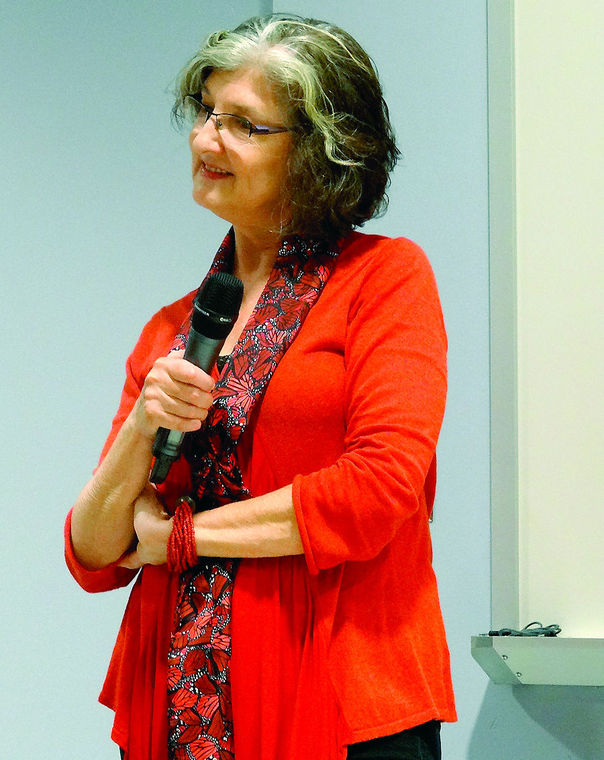
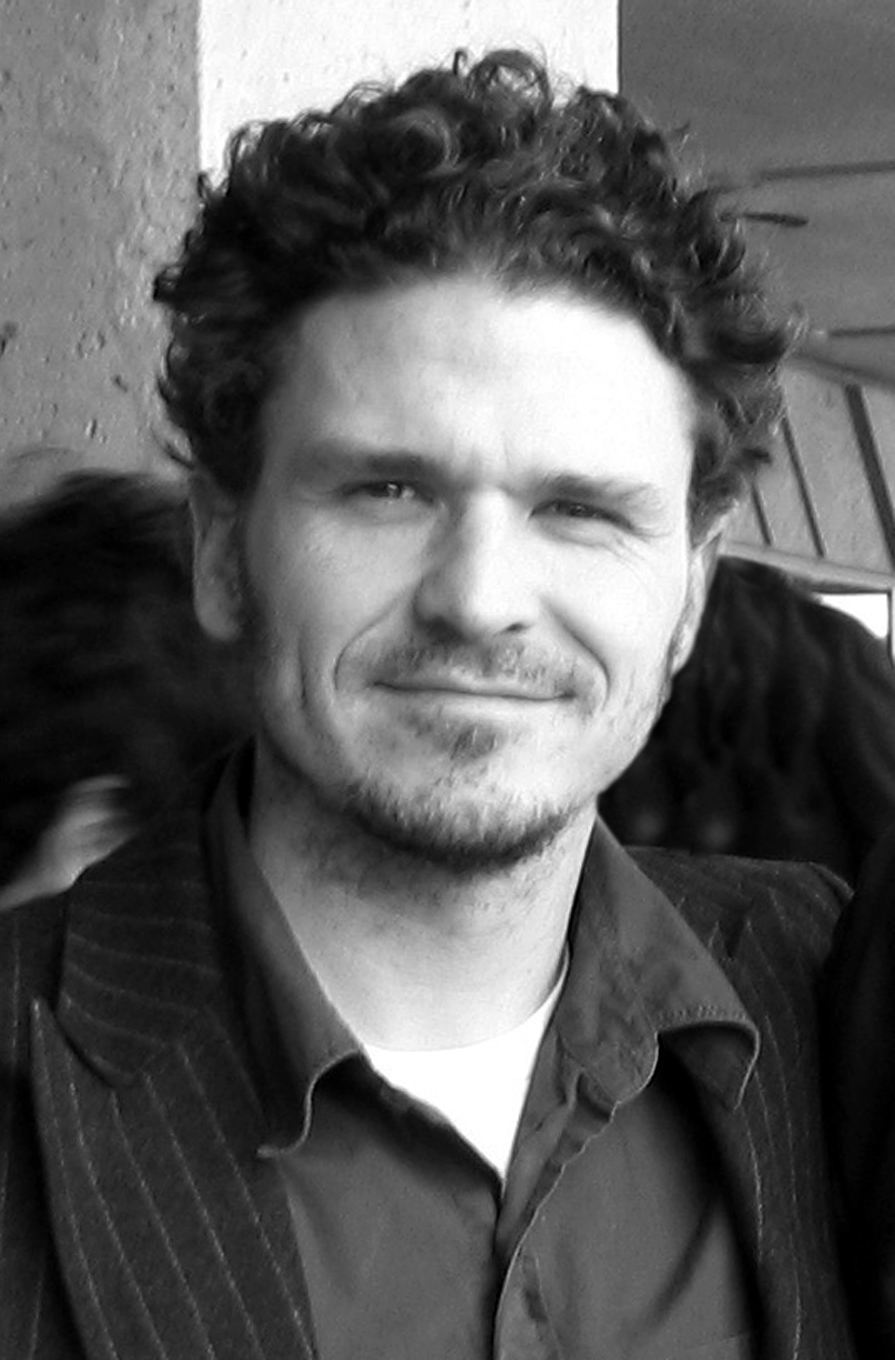
So far, not many have come out. I was able to only identify only two so far and, oddly enough, both of them with articles published in the UK Guardian: Barbara Kingsolver, the author of 14 books including climate fiction masterpiece “Flight Behavior” and Dave Eggers, a prolific author  spanning from non fiction, a best-selling memoir “A Heartbreaking Work of Staggering Genius” to fiction, including “The What is What“an extraordinary novel about a Sudanese child immigrant in the US.

How about the New York Times and Impakter magazine coming forward with similar pieces? As a Senior Editor of Impakter, I would welcome such articles…

Kingsolver strikingly summed up post-election America like this:

Losses are coming at us in these areas: freedom of speech and the press; women’s reproductive rights; affordable healthcare; security for immigrants and Muslims; racial and LGBTQ civil rights; environmental protection; scientific research and education; international cooperation on limiting climate change; international cooperation on anything; any restraints on who may possess firearms; restraint on the upper-class wealth accumulation that’s gutting our middle class; limits on corporate influence over our laws. That’s the opening volley.

Quite a strong volley!

What’s left standing? Not much, it would seem – and hits to international trade and the fight against climate change can affect the whole world, cause a word-wide recession, perhaps a repeat of the Big Depression and even threaten the planet’s very survival as global warming proceeds unabated. We all need America on the front line of the climate change struggle, but with Trump in charge, can this happen?

Kingsolver minces no words, she calls on everyone to stand up and fight:

Many millions of horrified Americans are starting to grasp that we can’t politely stand by watching families, lands and liberties get slashed beyond repair. But it’s a stretch to identify ourselves as an angry opposition. We’re the types to write letters to Congress maybe, but can’t see how marching in the streets really changes anything. […]

But politeness is no substitute for morality, and won’t save us in the end.[…] So many of us have stood up for the marginalized, but never expected to be here ourselves. It happened to us overnight, not for anything we did wrong but for what we know is right. Our first task is to stop shaming ourselves and claim our agenda. […]

We keep our commitments to fairness in front of the legislators who oppose us, lock arms with the ones who are with us, and in the words of Congressman John Lewis, prepare to get ourselves in some good trouble. Every soul willing to do that is part of our team, starting with the massive crowd that shows up in DC in January to show the new president what we stand for, and what we won’t.

There’s safety in numbers, but only if we count ourselves out loud.

Dave Eggers piece is in many ways the opposite of Barbara Kingsolver’s: he manifests surprise, he is almost awed by the divided country he sees as he travels through it. It’s a long, thoughtful piece, beautifully written, but his concluding comment is no less moving than Kingsolver’s, he is deeply worried, he tells us, because:

We are entering an era where uniquely vindictive men will have uniquely awesome power. Dark forces have already been unleashed and terrible plans are being made. On 3 December, the Ku Klux Klan are holding their largest public rally in years, to celebrate Trump’s victory, which they claim as their own. […]
You should be worried, too. George W Bush, a man of comparative calm and measured intellect, started two foreign wars and cratered the world economy. Trump is far more reckless.
We are speeding toward a dark corridor, my friends. Keep your eyes open, your hearts stout and be ready for the fight.

Are you ready?

Comments Off on How Trump is Changing America and What Writers have to Say

Filed under politics

Death of the Euro: Thinking the Unthinkable

Impakter Magazine just published my latest article, here it is:

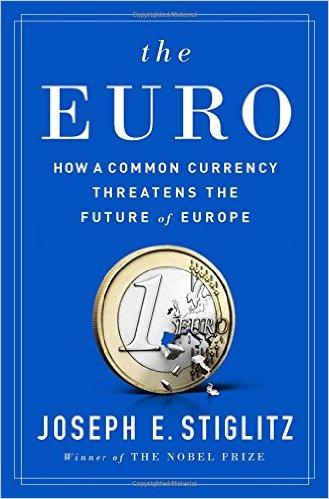
BOOK REVIEW “THE EURO: HOW A COMMON CURRENCY THREATENS THE FUTURE OF EUROPE” BY JOSEPH. E. STIGLITZ (PUBLISHED BY W.W. NORTON & CO, AUGUST 16, 2016)

Nobel laureate Joseph Stiglitz’s latest literary effort, a new book about the travails of the Euro and Europe, published in August with the apt title “The Euro: How a Common Currency Threatens the Future of Europe” couldn’t land in the muddy European political waters at a more appropriate time.

The summer of 2016 was a turning point for the so-called “European Project” – Europe’s long-run attempt to build a United States of Europe that began with the 1957 Treaty of Rome setting up the European Economic Community (EEC) with six founding members (Germany, France, Italy, Belgium, the Netherlands and Luxemburg), and continued in 1993, with the Maastricht Treaty, the European Union (EU) with (up to now) 28 member countries.


Problems have piled up this summer, relentlessly.

The opening salvo came in June with the UK referendum that unexpectedly led to “Brexit”, the decision to leave the European Union with 17.4 million Brits voting in favor. For the first time since its foundation, the EU is expected not to expand but to contract, down to 27 members – probably by 2019, when UK exit negotiations will be completed.


The most recent problem came in October with another referendum, this time in Hungary, calling on the population to disregard EU policies on refugees and reject quota obligation to accommodate asylum seekers. The referendum did not break the 50% threshold and the result was therefore declared illegal, but it did demonstrate that once again, a hefty minority, 3.6 million Hungarians (43% of voters), supported their government’s continuing opposition to Brussels.

 
Against this background, Joseph Stiglitz’s book has special resonance.
 
As he convincingly argues, the Euro was supposed to bring the European project forward but it has done nothing of the kind – if anything, the European Project has suffered setbacks just as much outside as within the countries of the Eurozone, the 19 EU members who use the Euro as a common currency. Incidentally, this is not a minor currency: The 19 European countries together account for roughly 14 percent of world GNP, making it the third largest economy in the world, after the United States (20 percent) and China (18 percent).
 
Do not delude yourself into thinking this is not important for the rest of the world: should the Euro collapse, the shock would shake the whole world.
 
It could even start another Great Depression.

A SLOW DEATH

Stiglitz minces no words in roundly chastising European leaders for “muddling through” a succession of Euro crises, ever since the first Greek debt scandal broke out in 2010. The book is a convincing diagnosis of what went wrong and why successive “bailouts” of Greece (three so far) have failed miserably, leaving the country six years later with an inexorably rising debt and a Gross Domestic Product diminished by a quarter, while the exceptionally high unemployment (a mind-boggling 50% for the young) won’t budge – really as bad as a war. Stiglitz’ detailed description of the Greek case is harrowing. A must read for anyone who hasn’t followed the drama closely.

And he is equally convincing in arguing that Ireland, often promoted (mostly by Germans) as the “poster child” of the success of Europe’s monetary and austerity policies is no such thing. EU-imposed austerity measures “helped ensure that Ireland’s unemployment rate remained in double digits for five years, until the beginning of 2015, causing untold suffering for the Irish people and a world of lost opportunities that can never be regained.”

Tough words that apply equally well to the other “crisis countries” of the Eurozone. For example, Portugal, also promoted by the IMF as a “success”, is far from that: The facts are that “the government might be borrowing with more ease, but the Portuguese people never experienced a real recovery.” Indeed, across Europe, excessive reliance on austerity and monetary policy “has resulted in even greater inequality: the big winners are the wealthy, who own stocks and other assets […]; the big losers are the elderly who put their money in government bonds, only to see the interest rates generated virtually disappear.”


The reason for such a deplorable state of affairs?  

First, a misplaced belief in what another famous economist, Paul Krugman, calls the “confidence fairy”: the idea that with austerity and a balanced budget, business confidence will be restored, which overlooks the simple fact that when consumer demand is depressed, business has no incentive to invest. In a recession, the confidence fairy, as Krugman says, becomes a zombie.


To read the rest, click here

NOTE TO MY READERS: Stiglitz’s advice on how to fix the Euro is truly excellent, and I sincerely hope our political leaders will read this book and act on it. I’ve tried to focus on the policy measures that are really doable among the many ideas Stiglitz presents. Eminently practical, they would take VERY LITTLE EFFORT… if only Germany would stop focusing on stupid austerity policies that are destroying Europe!

Go over to Impakter to read about those policy measures and tell me what you think!

Comments Off on Death of the Euro: Thinking the Unthinkable

Filed under Book review, Economics, European Union, politics, Uncategorized

Europe: Time to Clean Up Your Act!

Seven months ago, I blogged about the ignominious stance of Ms. Merkel’s Germany, weighing down on poor little Greece, stripping it bare so it would repay its debt – in short, dangerously rocking the Euro boat and nearly sinking it. That post was titled: “Shame on You Germany, You are Killing the European Project”.

How times have changed in just seven short months!

Now Europe is facing the twin challenge of Brexit and the refugee crisis.

Student debate held at Speak Up November 2015 (video here)

Brexit – if it actually leads to the UK’s exit from the EU and, for now, the chances that it will are about even – could open the way for other Euro-skeptical countries to leave, particularly East European countries like Poland and Hungary that seem to have forgotten how happy they once were to escape from the Soviet Empire.

The refugee crisis has seen an extraordinary change of heart in Merkel: all of a sudden, she has turned into Europe’s paladin, fighting for a generous, dignified humanitarian stand (in fact, the only one that would do justice to Europe’s values). By contrast, East and Central European countries, in a selfish, amoral and ungenerous fit, led by Hungary and Poland in this case too, are fighting Merkel and closing their borders with razor-thin walls, reminiscent of the infamous Berlin Wall.

This is a continent truly divided: on its western and eastern borders, EU members are hitting hard at the European project, while at the center, particularly in Germany, it has to valiantly grapple with the influx of over a million refugees and economic migrants.

The crisis is not longer at its doors, it’s within. Yet, in spite of the deadly urgency, the EU is still grappling in the dark, EU meeting after EU summit, for a solution.

Paralyzed.

Why? Are all our politicians stupid, don’t they realize that if they do nothing, voters at home will make them pay? Or is it the EU institutional framework that is causing paralysis? That framework was carefully constructed to preserve “sovereignty” so that no country joining the Union would lose one shred of its precious “national identity”.

Result? Political paralysis. Inability to take any decisions. Focus on irrelevant details (like the length of bananas or wrapping mozzarella cheese in paper) rather than keeping an eye on the main road.

Of all the institutional stupidities, the worst offender is the EU presidential system: here, since the Lisbon Treatycame into force in 2009, we have two “presidents” of Europe, one for the EU Council who is full time – first it was the Belgian Herman van Rompuy; now, since December 2014, it is Poland’s Donald Tusk –  and then we have a continuing six-month rolling presidency as each EU member country takes its turn at the helm. The next EU presidency falls to Slovakia.

And Slovakia in its recent elections has taken a turn away from Europe: its parties are dangerously anti-European. If you don’t believe me, read this excellent analysis in the New York Times: Slovakia’s Governing Party Loses Majority as Far Right Makes Gains.

My question is: why do we need a rotating presidency of EU member countries if we have a European President of the Council, a man who presides over the Council that consists of the heads of states or government of EU members as well as the President of the European Commission? Why is this President that comes closest to an individual selected by ALL European citizens (since he is elected by the European Parliament), why is he set aside every six months by whatever country that happens to take over the “EU presidency”?

This is a perfect recipe for political paralysis.

What kind of game are our politicians playing at? Obviously, this is a way to have more juicy positions to fill their pockets as they “rush to Brussels”. But it is at the clear expense of European citizens and tax contributors. Slovakia, once it is sitting in the presidential driving seat next July, can be counted upon to at best do nothing and leave the European machine stalled, and at worst, to promote its own anti-European agenda and force the European machine to backtrack.

Time to put a stop to this game and reform the EU institutions. Unifying Europe is a management matter: countries will need to leave behind  chauvinistic nationalism in order to rise up to the challenges and make decisions. Solutions will never be reached as long as countries cling to their antiquated national identity.

To begin with: cancel the six-month presidency turn-over game.  This is the only way to have a real European Union President. Someone we know who is dedicated to the European project. Someone who will push it forward and not stall it – as Slovakia no doubt will.

It’s only a start, but it would be a good start. Your views?

Update: Turkey is suddenly playing tough on EU demands to help it stem migrant flows – a stiff bargain that reveals how weak the EU really is. “EU Welcomes Bold Turkey Plan to Stop Migrants” is the way Reuters titled it (see here) EU “welcomes”? “Bold Turkey Plan”? In fact, the Turks simply asked for twice the money!

Comments Off on Europe: Time to Clean Up Your Act!

Filed under European Union, politics

Poverty in America vs. Poverty in India: The Making of Bestsellers?

I just wrote this article and uploaded it on Thingser, the only social network that lets you do this – write an article and post it on the platform – if you don’t believe me, try doing this on Facebook!

It comes with the Thingser logo as a featured image to draw attention to this special feature:

And here’s the article:

POVERTY IN AMERICA vs. POVERTY IN INDIA: A JUICY SUBJECT FOR BESTSELLERS?


Featured image on NYT review of Evicted, published February 26, 2016

 A book about poverty, Evicted: Poverty and Profit in the American City, by Matthew Desmond, a sociologist and Harvard University professor and Co-director of the Justice and Poverty Project, was defined by the New York Times as “an astonishing book”. Before going on sale on March 1, 2016, it had already 23 positive “customer reviews” on Amazon. The publisher, Crown Publishers, is ensuring this will be a smashing hit, including pricing the hardcover edition lower than the digital edition. The objective? Echo Katherine Boo’s success with her 3-year study of a Mumbai slum. Here are the reasons why such a book, in spite of its dark, depressing content, is very likely to make it as a major best seller and perhaps even as a future blockbuster movie.   

In a recent and impassioned review of Matthew Desmond’s latest book, Evicted:Poverty and Profit in the American City, to be published shortly (on 1 March 2016, Crown Publishers), the New York Times wryly noted: “Poverty in America has become a lucrative business, with appalling results”.

The author of the review is Barbara Ehrenreich, the noted political activist who was perhaps the first one to publish a best seller about the subject of poverty,  Nickel and Dimed that came out in 2001.

It caused a stir and inspired others to follow in her path, including Adam Shepard with Scratch Beginnings: Me, $25 and the Search for the American Dream and Charles Platt with his blog “Boing, Boing”.

Ms. Ehrenreich is also the founder of the Economic Hardship Reporting Project (EHRP) dedicated to “supporting journalism, photo and video about economic struggle”. EHRP is run by editor-in-chief Alissa Quart, a professor at Columbia University’s School of Journalism and author of a socially-oriented non-fiction book Branded: the Buying and Selling of Teenagers .

Published in 2003, it was considered a “substantive follow-up to Naomi Klein’s No Logo” (Publishers’ Weekly).

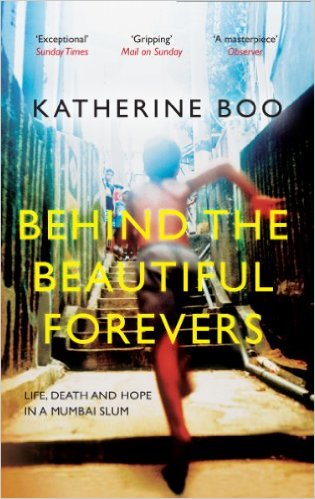
In 2012, Katherine Boo, a New Yorker journalist and recipient of a Pulitzer prize, erupted on this American scene focused with her best selling book about poverty in India, Behind the Beautiful Forevers: Life, Death and Hope in a Mumbai Slum .

It instantly earned praise from everyone that counts (1,851 customer reviews on Amazon, over 8,000 reviews on Goodreads) and an accolade from best-selling author Junot Diaz on the New York Times, calling it “a book of extraordinary intelligence and humanity…beyond groundbreaking”.

What have all these authors in common?

They all did something unusual…

Click here to read the rest.

Comments Off on Poverty in America vs. Poverty in India: The Making of Bestsellers?

Filed under non-fiction, politics, Publishing, social media

The Western Sahara

 Another one of my articles on Impakter magazine:
Western Sahara

on February 22, 2016 at 5:25 PM

The Western Sahara scandal. The last colonial war in Africa is still unresolved, in spite of over 40 years of efforts on the part of the United Nations. A people has been destroyed, its rights to its native soil confiscated, half of its people living in refugee camps – three generations now that have never known a normal, free life – while the rest barely ekes out a living in the barren eastern part of the country, just beyond a Berlin-like wall built by the occupant, Morocco.

And all the riches of the country from ocean fisheries and phosphate mining go to Morocco, leaving not a cent for the native people of the Western Sahara, the Sahrawis.
Morocco has brought into the country some 350,000 Moroccan immigrants; they help exploit the phosphate mines and have even set up modern agricultural infrastructures producing tomatoes, while the exploration rights to oil recently discovered in the ocean have been sold to Americans. The Moroccan tomatoes bought by Europeans are often in fact grown in the Western Sahara.

Who knew?

Actually, nobody knows. Or cares. This is an international scandal, one of the worst offenses against human rights and human dignity. And a conspicuous United Nations failure.

How did it all start?

Comments Off on The Western Sahara

Filed under politics, Uncategorized, United Nations

The Key for Peace: The Indispensable Role of the United Nations

Once again, one of my articles, just published on Impakter, with a remarkable introduction from the Editor (he is a millennial, a man deeply concerned about the issues of our time, value-driven like his whole generation, and this too is reason for hope in a better future). This is the beginning, to read the rest, go on Impakter, click here.

THE KEY FOR PEACE: THE INDISPENSABLE ROLE OF THE UNITED NATIONS

on 16 November, 2015 at 19:00

Note from the Editor: In these hours, following the tragic killing of innocents in Paris and Beirut,  our thoughts are with the people of France and Lebanon.

Impakter is a global publication. Our team comes from every corner of our beloved World. We represent the citizens of the World. Furthermore, our aim is to express that through this publication. Today we want this thought to reach higher than ever before. 

We believe that the current events taking place during the G20 could potentially be a significant milestone in our human history. A unprecedented event. The G20 could potentially regroup all the citizens of the World.  All united into delivering a safer and united future for all the generations to come.

The road is full of challenges, but  we will all walk through it under one flag, that of Peace. This is without a doubt a key turning point in our history. Like the Phoenix, we are to be reborn from the ashes of our World’s darkest hours.

Now, more then ever, we must move upwards and onwards. 

This is a first analysis of what might be happening next.

LESSONS LEARNED FROM THE PARIS ATTACKS – THE WAY FORWARD

Once the United Nations Security Council is unblocked, we can hope to see an end to the Syria crisis. So far, because of Russia’s repeated use of its veto power at the Security Council, supported by China, its usual ally, the international community has not been able to move forward in a concerted fashion. Syria, after three years of a devastating civil war, is now pounded by Russian and American forces and their respective allies, but they haven’t agreed on common objectives: Russia supports Bashir al Assad, the United States targets Daesh, a.k.a ISIS or IS. But now things are changing.

On Sunday 15 November, at the G20 meeting in Turkey, a major political decision was reportedly taken, a page in the difficult relationship between Russia and the West appears to have been turned. It seems that Putin and Obama had an eye-to-eye talk that lasted half-an-hour and their meeting was caught on Turkish television.

Negotiations under the aegis of the United Nations between the Syrian opposition and the regime [meaning Bashir al Assad] and a cease-fire

A White House spokesman said afterwards…

Comments Off on The Key for Peace: The Indispensable Role of the United Nations

Filed under politics, Uncategorized, United Nations

What Turns a Police Thriller into a Bestseller? Lessons from Faceless Killers

Discovering Henning Mankell (here)

Let me start with a confession: I’m not a habitual reader of police thrillers and murder stories. Like everyone, I’ve read Agatha Christie when I was young, I’ve gone through all the classics from Arthur Conan Doyle to Ngaio Marsh but I’m not a fan, call me a dispassionate reader.
Why? Because too often, I can see through the plot and it all looks depressingly formulaic.

When Henning Mankell died this month (see this excellent article in the Atlantic Monthly, here),  I was reminded of his stature in Scandinavian literature – the Atlantic Monthly calls him the “dean of Nordic Noir“, with 30 million copies of his Kurt Wallander series sold since the first one came out, 25 years ago, in 1990.

Of course, I’m familiar with the character of Kurt Wallander, an ordinary, middle-aged policeman working in a small town in Southern Sweden, having seen several episodes of a series featuring him on ARTE TV. But now I wanted to find out more, I thought I would try and uncover the roots of his success by reading that first book in the Wallander series, the one that “made it”, with the arresting title Faceless Killers.

Here’s what I found – the main “lessons learned” to ensure that your next thriller is going to rise above the genre and make it as a global bestseller.

As you will see, there are only two rules to follow.

First, let me say it’s a great read, the pace never slackens. When it does slow down – as inevitably it must if you’re following a police investigation step-by-step, an indispensable aspect of making this novel realistic – then Kurt Wallander’s personal life butts in. He has problem with his senile, grumpy and lonely father, a landscape artist endlessly painting the same landscape, his cool wife Mona who has just left him, causing him to dream of making love to a black woman (inexplicably black but then dreams are not always explainable) and his complicated daughter Linda, an independent young woman who lives with her boyfriend from Kenya and can’t make up her mind about attending college. You get the sense that Kurt Wallander, ordinary as he is, has in fact a complex life and you, the reader, feel for him.

This observation leads directly to:

Rule #1: establish empathy with your main character – even if this is a police procedural and the implications are that police procedures and the thrill of the chase should trump characterization.

To transcend the genre and establish credentials as a genuine, world-class work of literature, follow Mankell’s example: develop your main character. Kurt Wallander soon becomes someone you feel you know, someone who goes through the same (often depressing) experiences so many of us go through our lives as a marriage grows stale, as a child turns into a rebellious teenager, as a parent slowly sinks into old age.

The other striking aspect of Faceless Killers is its social dimension. 

This is a book that has deep roots in Swedish society, and by extension, in the society of any advanced country that calls itself (like Sweden) a democracy, that believes it has humanitarian traditions. And it’s a book that does not shy from raising deep, uncomfortable questions. In fact, Mankell himself had lived in Africa and brought his own views to his books and the character Kurt Wallander. As he explained on his website,

“Racism for me is a crime, and therefore it seemed natural that I wrote a crime novel. It was after that the idea of a policeman was born.”

The book is peppered with Mankell’s personal opinions about racism and how refugees are viewed and ill-treated in refugee camps in Sweden. One, a Somali, father of nine children, while walking alone down a country lane near his camp, gets his head blown off  by a ruthless killer with an accomplice in a near-by car ready to whisk him away from the crime scene.

But the book does not merely “show”, Mankell is not afraid of “telling”, here are some examples:

  • [One character says:] “We have a refugee policy in this country that must be followed.” [The other answers:] “Wrong. It’s precisely the lack of  refugee policy that creates chaos.”
  • [Then this character amplifies his thinking]: “Right now we’re living in a country where anyone with any motive at all can come in anywhere in this country at any and in any manner. Control of the borders has been eliminated. The customs service is paralyzed. There are plenty of unguarded strips where the dope and the illegal immigrants are unloaded every night.”

Sounds familiar? Yes, it’s amazingly relevant to our own times and the current migrant crisis in Europe. Germany expects to have to take in one million refugees this year, Sweden less of course, but it is still a favorite destination of the millions of migrants pouring into Europe through Greece, the Balkans and Italy – most of them from war-ridden countries like Syria, Afghanistan and Sudan (Darfur, remember it?)

I wonder if any of those migrants has read Faceless Killers?

The book gives you the whole range of feelings – pro and against – caused by waves of migrants, here are a few more samples:

  • “For brief moments [Wallander] could also detect contradictory sympathies in himself for some of the anti-immigrant arguments that came up in discussions and the press while the trial was in progress [trial about the murder of the Somali man]. Did the government and the Immigration Service have any real control over which individuals sought to enter Sweden? Who was a refugee and who was an opportunist? Was it possible to differentiate them all?”

And then comes the conclusion, one that is haunting all of us these days in Europe as we watch waves upon waves of migrants entering the continent:

  • “How long would the principle of the generous refugee policy be able to hold without leading to chaos? Was there any upper limit?

Indeed, that is precisely what we wonder about now. And we are all like Kurt Wallander, who, as Mankell writes:

  •  “He realized that he harbored the same vague apprehension that so many other people did. Anxiety about the unknown, about the future.”

This is what makes this book so extraordinary, and enables it to rise above the “genre” of mysteries, leaving behind the usual tropes and reaching out to the level of “real” literature – not pure thrills, not entertainment for the sake of entertainment but applying a lens to reality that makes you understand reality better, and perhaps in a way you have never understood it before. In short, great literature.

And this brings us to:

Rule #2: Root your story in reality – address real life issues.

In this case, migrants, what to do with them, how to integrate them in our society. In a globalized world shaken by war and injustice, this is the kind of issue that will stay with us a long time. Think of it, Faceless Killers was written 25 years ago, yet the issues it raises are incredibly relevant to our situation today.
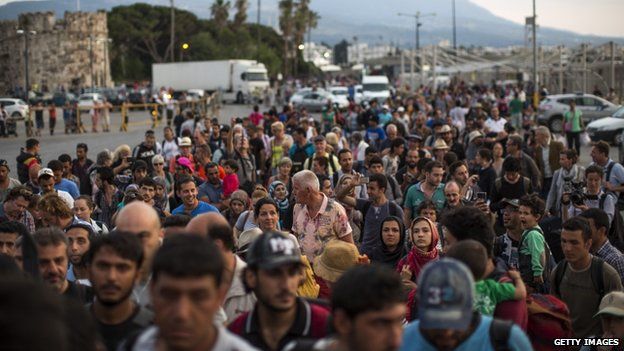
From BBC article: “What can Europe Achieve?” (see here)

You may wonder whether those two rules actually apply beyond thrillers and mysteries.

Of course they do!

In my view, applying those two rules to any genre novel will lift it to the level of
(a) a bestseller; and
(b) literature with a capital “L”.

You may make a lot of money with strictly genre books, selling by the millions like 50 Shades of Grey did, but you won’t reach the top. To achieve that, as Menkell shows, you need to go beyond mere thrills and open the doors of the real world for your readers, you need to make them think.

And you may ask, what is the benefit for you, the writer? Not much beyond some splendid obituaries like the one Henning Mankell got in the Atlantic Monthly or the New York Times and of course, why should you care?

But if you’re an activist who would like to see the world become a better place, then you do care. I know I do. How about you?

Comments Off on What Turns a Police Thriller into a Bestseller? Lessons from Faceless Killers

Filed under Literature, politics