For the 2020 Top 100 Global Brands, a list derived from Forbes World’s Most Valuable Brands, the goal of sustainability continues to be out of reach, despite their many claims to the contrary. This is what the findings of a three-month analysis carried out by the Impakter Index team has just revealed (results published on 18 December 2020).
The conclusion is clear: Most companies have a long way to go before they achieve full sustainability in line with the UN Sustainable Development Goals and targets pertaining to their area of activity – if ever.
A high level of “greenwashing” is still prevalent among major household names. Some of them haven’t even started on the road to sustainability, others can never make it because of the very nature of their activities (based on/using fossil fuels or dangerous chemicals). Most are doing an average job though they claim otherwise, and none is one-hundred-percent sustainable. Not one.
I know that many of my readers who’ve read my article when the Index was launched this summer (31 July), or saw Common Place editor, Quincy Childs’ endorsement, will want to go directly to the Impakter Index and check out their favorite brand (go to the Impakter home page or click here to see). You may well be surprised (or perhaps not) to find that in most cases, there is a stunning gap between what companies claim and what they actually deliver in terms of sustainability and social responsibility.
Look at the findings, the table provides a summary view of the ratings obtained by the top 100 brands:
To find out how they are rated by the Impakter Index, go to my article, click here.
I promise you, you’ll be surprised (I know I was)!
Last week I reviewed two amazing books that propose a new world after COVID, doing away with capitalism as we know it but using radically different means to achieve this goal. Both my reviews were published on Impakter. Here’s the opening of my article:
Post-COVID: Blueprints to End Capitalism As We Know It
Capitalism as we know it is morphing into an “awful kind of techno feudalism” that only deserves to die, says Yanis Varoufakis. A radical statement but coming from the former finance minister of Greece who famously battled the European Troika for the Greek cause at the height of the debt crisis in 2015, it is no surprise.
Can activists in their battle against shareholder capitalism use financial engineering to bring Wall Street to its knees? That is the scenario Varoufakis proposes in his latest book Another Now: Dispatches from an Alternative Present (published in September 2020 by Vintage), arguing that finance is the Achilles heel of capitalism. And here’s the other must-read book I reviewed:
How To Reform Capitalism – Mariana Mazzucato’s Moonshots
The Trojan horse comes from another economist, an Italo-American, a woman, Mariana Mazzucato who has already shaken up the academic world of economics with her bestselling The Entrepreneurial State, published in 2015 with the subtitle: “Debunking Public vs. Private Sector Myths”.
Her solution for post-Covid reconstruction? Work from inside the system.
Give back to the state the role it played back in the 1960s when America, engaged in a space race with the Soviet Union, unleashed the power of the Federal Government.
Mazzucato is Professor in the Economics of Innovation and Public Value at University College London (UCL) where she is also Founder and Director of the Institute for Innovation and Public Purpose. And her ideas have already been adopted both by the European Commission and the Scottish government.
Both are highly recommended reads! Curious? Take a look at my article, click here.
You know, not everything is bad about climate change: It’s forcing the car industry to THINK DIFFERENTLY for the first time in decades and come up with exciting new electric models! I spent last Sunday researching it, and here’s the amazing stuff I found, the stuff of dreams! Check it out, here’s the opening salvo of my article published on Impakter:
Are electric cars just the cherished dream of eco-conscious consumers or a soon-to-become reality? With the coming of Biden’s strong climate policies and the Trump administration’s odious support of the fossil fuel industry finally out of the way, the United States as a whole – and not just Tesla – is back in the electric car race. Three days ago, on 28 January, GM announced that it would go much further than simply selling hybrid cars or a few electric models: By 2035, it would sell only zero-emissionvehicles.
This means that GM will phase out their most successful products: Gaz-guzzling S.U.V.s and pickup trucks. Thus putting another nail in the coffin of the internal combustion engine and heralding the coming of electric cars.
The March of Electric Cars Around the World
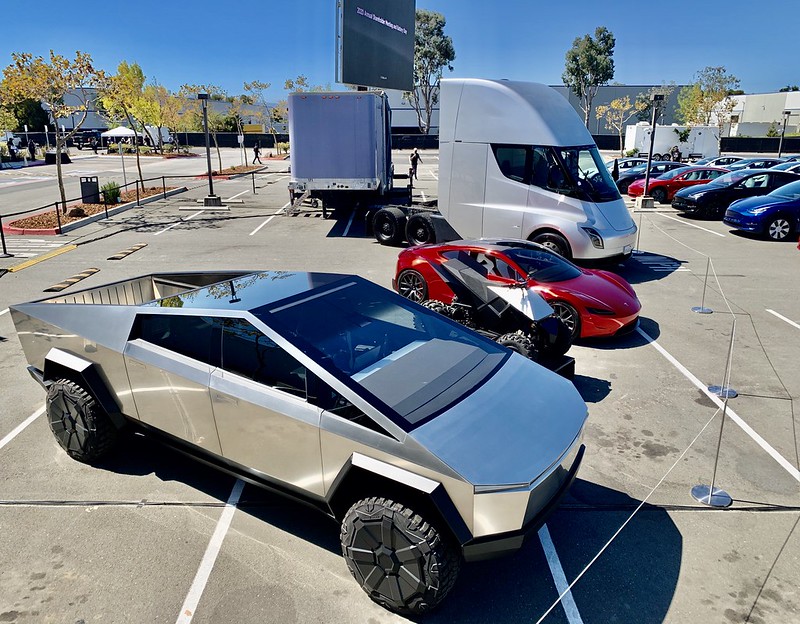
Since GM is America’s car behemoth, employing 1 million people, more than any other carmaker in the U.S., the news made headlines and shook up the American car industry. The expectation is that much of the American car industry has no choice but to follow GM’s example. And catch up with Tesla that in the meantime has unveiled last year its famous electric trucks, the Tesla Semi and Cybertruck. Not to mention Tesla’s future roadster that should become available in three years, an astonishing machine capable of hitting 0-100km (60 miles) in 1,9 seconds flat, with a 400 km/hour top speed and a 1000 km autonomy: a supercar by any metrics (including the price: over $200,000).
And the American industry is definitely coming up with exciting new products in an “old” established category, pickup trucks, that has long been popular in the United States:
WATCH THE VIDEO, IT’S REALLY COOL! Go to Impakter, click here. I hope you enjoy reading it (and watching the videos) as much as I did writing it!
In the featured image: Tesla Lineup Photo by Steve Jurvetson
The World Needs to Wake Up: At Risk the Survival of Humanity
At a time when the world, battered by COVID-19, is watching with dismay the rocky transition from Trump to President-Elect Biden, a group of 17 world scientists reminds us that maybe all our worries are futile. What is at risk is something far more important: The very survival of humanity. The prognosis is dire and it comes in a just-released major perspective paper: “Underestimating the challenges of avoiding a ghastly future” published in Frontiers in Conservation Science.
On the basis of a comprehensive yet concise assessment of the state of our civilization, these scientists – experts from major institutions including Stanford University, UCLA, and Flinders University – are telling us in no uncertain terms that the very survival of all species, ours included, is threatened.
And that the outlook is far more dire and dangerous than is generally understood.
The causes are well known: A loss of biodiversity and accelerating climate change in the coming decades coupled with ignorance regarding the state of our environment and political inaction across the planet.
In the researchers’ view, world leaders need a ‘cold shower’ to come to their senses and plan and act in time to avoid a “ghastly future”. Professor Paul Ehrlich of Stanford University noted that no political or economic system, or leadership, is prepared to handle the predicted disasters, or even capable of such action:
“Stopping biodiversity loss is nowhere close to the top of any country’s priorities, trailing far behind other concerns such as employment, healthcare, economic growth, or currency stability.
While it is positive news that President-elect Biden intends to reengage the US in the Paris Climate accord within his first 100 days of office, it is a minuscule gesture given the scale of the challenge.
Humanity is running an ecological Ponzi scheme in which society robs nature and future generations to pay for short-term economic enhancement today”.
A year ago, Paul Ehrlich was adamant that our civilization is about to collapse
…
Read the rest on Impakter, click here. Share the news, let me know what you think.
Just published a piece about the shameful compromise the EU Council has reached with Hungary and Poland in order to approve the €1.1 billion EU Budget and the Covid Recovery Fund. Here is the story.
To Unblock EU Budget: Hungary and Poland Off the Hook
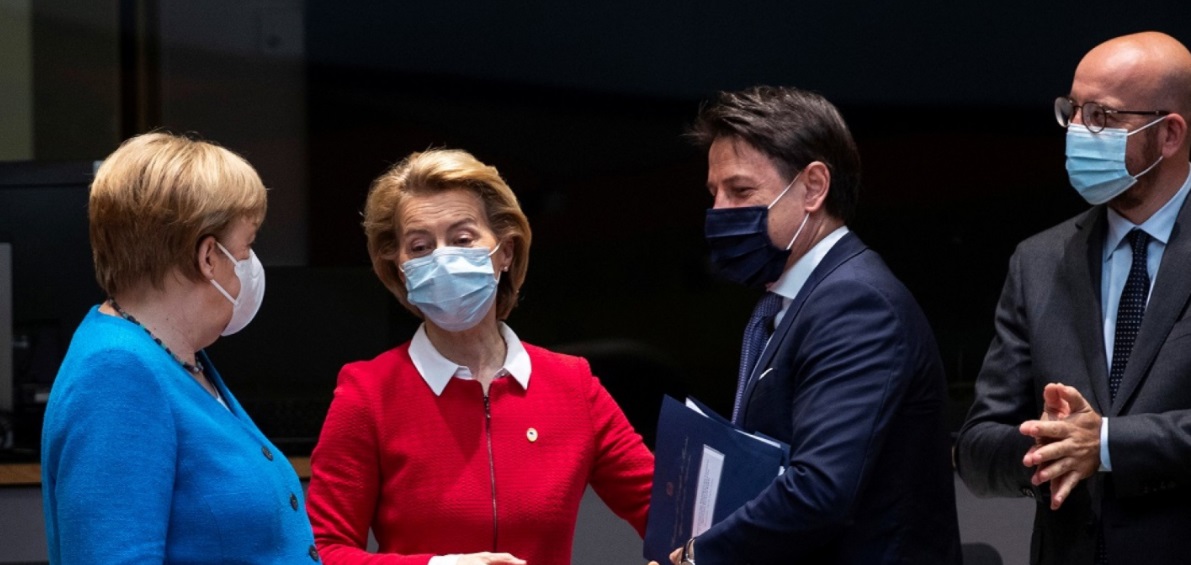
Updated 11 December 2020: EU Budget effectively unblocked, Veto from Hungary and Poland is lifted, rule of law in the EU is compromised. The first to announce the news was the President of the EU Council, Charles Michel on Twitter.
It is time to consider whether countries like Hungary and Poland that flout the rule of law have any place in the European Union. And the European Council, all the European leaders starting with Merkel and Macron are sending out the wrong signal. Where did “European values” go? Disappeared in the Brexit fog? Indeed, why not have a Hungarexit and Polexit? And renegotiate their status in the Union with a new treaty similar to the one with Norway?
What follows here and was published yesterday explains what happened.
To find out what happened, read the rest on Impakter, click here.
By the end of last year, as is the custom when a decade ends, I started thinking about the future. Obsessively. Climate change, environmental degradation, the collapse of democracy – if you project those facts into the future, you have to wonder: are we are living at the end of times? But there is an odd fact right under our nose, a small fact that sounds more like a piece of gossip than real news: The battle of billionaires.
Yet this is no fluffy gossip, it’s very real! We tend to discount the political role of billionaires. We shouldn’t. Consider that not all billionaires are bad news. Some fight for social justice and the preservation of the environment. A battle between the two kinds of billionaires is shaping up and could last well into the coming decade. I just wrote about this in an article for Impakter, here’s the opening:
The 2010s are coming to a close. Reviewing the decade, what can we say about the future? A tech person will look at technological progress (stunning). A sociologist will look at cultural diversity (explosive). My take (disclosure: I’m an economist) is that this decade, with growing income inequality, saw an unprecedented number of billionaires taking center stage. “Good” billionaires like Bill Gates concerned about climate change and equity, “bad” ones like Betty De Vos, defunding and dismantling America’s public education system.
This fact alone, the rise of the billionaires, will shape our future, for better (a peaceful, balanced world) or for worse (climate Armageddon).
Much depends on what kind of billionaire takes power. Some of them can be alarmingly aggressive, for example, Trump ordering the summary execution of Iran’s General Qassem Suleimani killed last Friday at Baghdad airport via a drone strike. A strike that could escalate dangerously in the Middle East’s explosive environment.
Unsurprisingly, the 2020 campaign for the US presidency is seeing the rise of left-wing Democrat Bernie Sanders with declarations like this one (in Los Angeles on 21 December):
“Our campaign is not only about defeating Trump, our campaign is about a political revolution. It is about transforming this country, it is about creating a government and an economy that works for all people and not just the 1%.”
I am highlighting this because it is a remarkable statement. It marks the distance we’ve covered in a single decade: This is the language of the Occupy Wall Street movement that opened the decade in 2011. And now the once derided concept of the 1% against the 99% has gone mainstream. So much so that it can buoy a candidate in his bid for the White House (Sanders, as I write, is just behind Biden and ahead of Warren).
You see rants in headlines, like this one from C-Net’ s Jackson Ryan: “We see the effects of climate change and our leaders continue to ignore the science”. A rant coming not just from journalists but scientists too.
Now, in 2019, we can all agree that the “world is on fire” and that the 2010s have been a “lost decade”. Yet back in 2013, K.C. Green, a talented cartoonist could still joke about it in a stunning piece of black humor. This is the closing panel of his 6-panel piece(screenshot):
My latest article on Impakter. I’m proposing a very easy-to-apply, simple fix that could save democracy. Interested? Here’s the opening:
Democracy doesn’t work. Plato thought it was a terrible system, a prelude to tyranny, giving power to selfish and dangerous demagogues. Watching what is happening these days in democracies around the world, it’s hard to disagree with Plato. Democracy appears to produce an abundance of incompetent and dishonest political leaders, who exploit people’s credulity and prejudices and thrive on emotion-driven discourse and fake news.
This Impakter essay looks at the problems and proposes an easy fix – if only we had the courage to implement it.
First, let’s quickly review what’s wrong with democracy.
Why People Have Lost Trust in Democratically-Elected Politicians: The Rise of Incompetent Political Leaders
Most people don’t trust democracy to deliver. According to 2019 Pew survey, trust in government is at a historical low: only 17% of Americans today say they can trust the government to do what is right “just about always” (3%) or “most of the time” (14%).
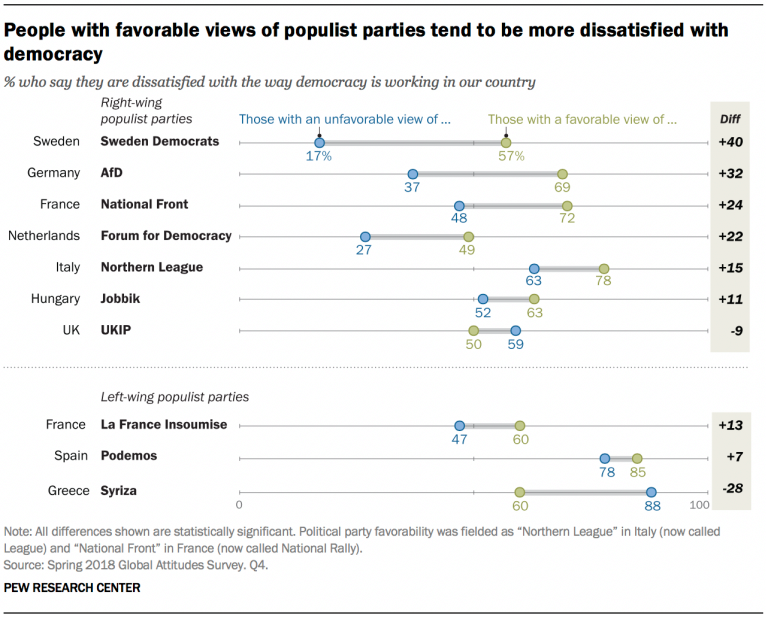
The situation in the rest of the world is not much better. A 27 countries Pew survey (April 2019) revealed that a majority (51%) are dissatisfied with the way democracy is working. Anti-establishment leaders, parties and movements have emerged on both the right and left of the political spectrum. And most people in developing countries find authoritarian figures more trustworthy than democratically-elected politicians. Hence the success of the “China model”.
Bottom line, elections don’t deliver the kind of political leaders people want.
After a honeymoon period between voters and their winning candidate, often as short as a month, he or she always disappoints. Why? Is it the fault of the voters, do they expect too much? Or don’t they understand what is going on – how complex the job of governing can be, how campaign promises can’t be kept?
It has been convincingly argued that, yes, it’s the voters’ fault. Dambisa Moyo, the well-known Zambian economist and author of Dead Aid (2009) in which she famously argued that foreign aid made Africa poorer, placed the blame squarely on voters:
“Voters generally favor policies that enhance their own well-being with little consideration for that of future generations or for long-term outcomes. Politicians are rewarded for pandering to voters’ immediate demands and desires…”
“Because democratic systems encourage such short-termism, it will be difficult to solve many of the seemingly intractable structural problems slowing global growth without an overhaul of democracy.”
Let’s put aside for the moment the question whether our overall goal should be “global growth”: A good argument could be made that the unrestrained pursuit of continued economic growth in a world of finite resources (and where there is no Planet B) can only be achieved at the expense of the planet’s ecological balance.
Yes, climate change is real, have you heard? Ms. Moyo appears not to consider the possibility. But she does make some excellent points regarding “governance” – how we humans govern ourselves. And in particular, governance in a liberal democracy which is (still) considered, to use Churchill’s phrase, the least bad system. The actual quote is: “Indeed it has been said that democracy is the worst form of Government except for all those other forms that have been tried from time to time…’ Obviously, democracy is always better than dictatorship.
So what are the obstacles to good governance? Let’s list the obstacles Moyo has identified – plus a few of my own:
(1) Too many elections: She sees “the short electoral cycle embedded in many democratic systems” as a major problem…
Click here to read the rest. It’s (as always) on Impakter. Yes, I’m still Senior Editor there – I was there when it all began, back in 2014, as I’m sure some of you remember…
Happy Holidays to all, and let me know what you think!
Just published my latest article on Impakter magazine, here’s the opening:
SUSTAINABLE FINANCE: HOW TO ADDRESS NATURE RISKS AND CLIMATE CHANGE
As our environment is undergoing ever faster collapse, with the rainforest burning in the Amazon, the ice melting in the Arctic and now California ravaged by fires, the goal of achieving sustainable finance appears ever more elusive. It is obvious that nature risks directly translate into financial risks. And with climate change accelerating, it is equally obvious that growing natural risks is the cause of equally growing financial instability.
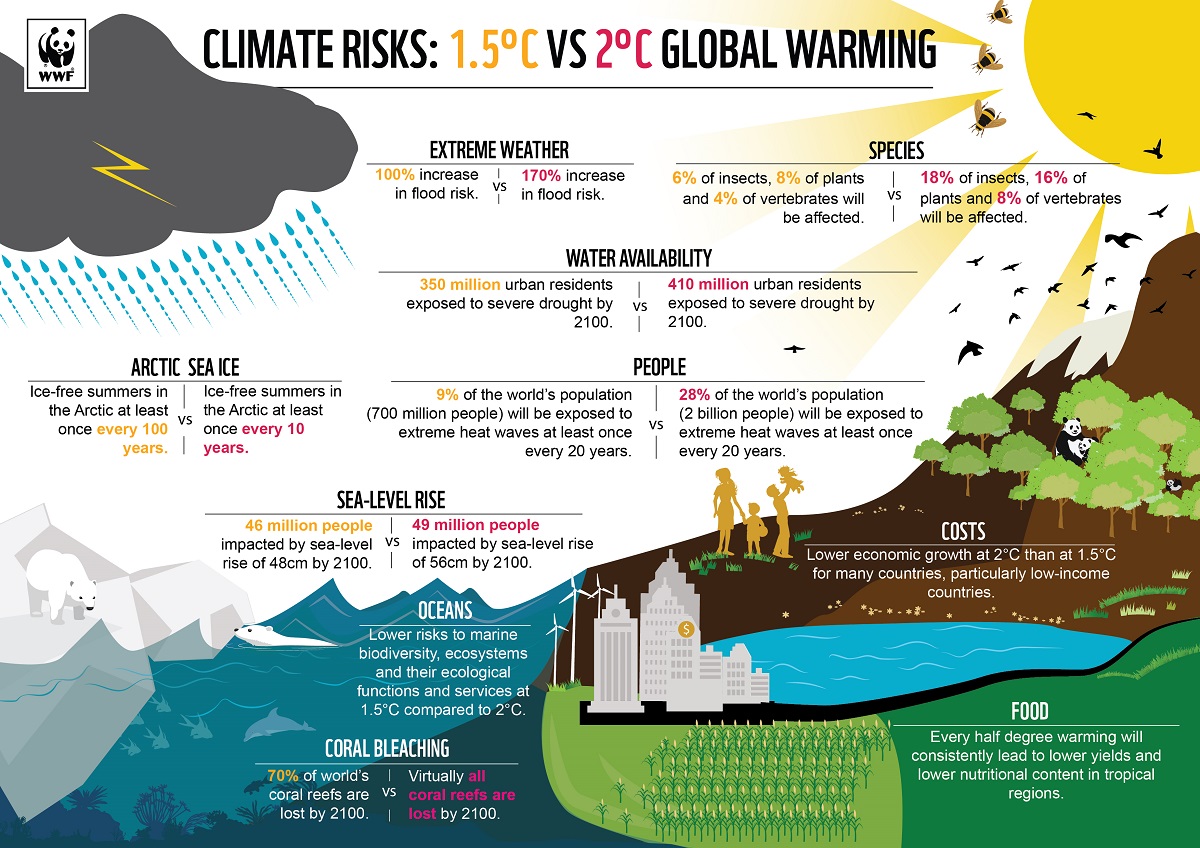
While the relation between nature, climate and sustainable finance is obvious, the exact impact is not so clear. Natural disasters, from floods to air pollution events to wildlife species extinction, can impact businesses and whole economic sectors in variable ways, some more than others. And a small further rise in global warming, as small as a half degree centigrade, can make a stunningly huge difference:
To illustrate with the famous case of a highly valuable wildlife species threatened by extinction, i.e. bees whose pollination activities are fundamental for agricultural production. A prosperous European pharmaceutical company suddenly faced catastrophic financial losses after it had acquired in 2018 an agrochemical company accused of causing adverse impacts on bee populations that led to a series of health-related trials. Suddenly, it lost almost 40% of its market capitalization in less than one year, causing shareholders billions in losses.
To put a name on these firms: the pharmaceutical company is Bayer, the agrochemical is Monsanto and the cause of the bee-killing is, of course, a pesticide, the infamous “Roundup”. In short, Bayer is worth less today than the $63 billion it paid for Monsanto about a year ago.
As a first step to ascertain what the effects of nature risks are on the finance industry, a number of academics at the University of Hamburg have formed a Research Group on Sustainable Finance and analysed for the first time the existing academic literature which highlighted the relationship between nature risks and financial risks. The study has been financed by WWF Switzerland and will be uploaded to their website this month.
They identified 154 peer-reviewed articles published between 1966 and 2019. These articles covered four areas: banking, insurance, real estate, and stock markets; and nine nature risks: disease, drought, erosion, flooding, invasive species, oil spills, pollution/environmental contamination – of air, groundwater, soil/land and surface water -, solid waste, and bushfires.
“Destruction of ecosystems results in financial risks”
Overall, the articles confirmed that the destruction of ecosystems results in financial risks. They also found that nature risks are not adequately reflected in current risk models of financial institutions and therefore not priced correctly.
Incorrect pricing is a major concern. It means that financial institutions urgently need to identify how the activities they finance impact the natural world. Developing a framework for investors to analyse nature risks and integrating these systematically in their valuation models is crucial. It would be the first indispensable step to achieve sustainable finance.
What is interesting is how the literature reviewed by the Research Group on Sustainable Finance identified variable impacts depending on the sector and the kind of nature risk. The sector that tends to suffer the most from nature risks is real estate. The greatest threats to valuation in the real estate sector include flooding followed by air pollution (and environmental contamination in general) and bushfires.
That of course, is a massive financial problem – but it is a problem for individual property owners too. The house you just bought, or that you inherited from your parents, could be worth next to nothing in just a few short years.
Sorry for the silence, my friends, I’ve been working on a new book – a book for young children told in the voice of my dog Pepy (woof!) – but I didn’t stop working as Senior Editor at Impakter magazine, also contributing articles (yeah, I confess, there’s been a break of several weeks, but I was wrapped up in writing the first draft of my Pepy book …). Now a new article is out, so, as usual, here’s the opening:
The climate emergency makes the comparison between humans and dinosaurs inescapable: Both face extinction from a climate crisis. But with a difference. The dinosaurs didn’t bring it on themselves. An asteroid hitting Earth and a giant volcano did it for them. By contrast, humans are doing it to themselves. The scientific evidence is incontrovertible, the climate emergency results from the industrial revolution.
And the climate emergency is much more than rising temperatures and sea levels. It’s choking pollution, it’s a calamitous drop in biodiversity, with more than half the world’s species gone over the last 30 years. In short, it’s the 6th mass extinction. And it’s happening now. The Artic melted this summer like never before. The question is: Can we survive as a species?
The question is urgent. We can no longer afford to waste time discussing scientific facts with climate deniers. We need to consider what to do concretely to avert disaster – anything less is irresponsible.
That is the point made by a mild-mannered professor at a British university, Dr. Rupert Read who teaches at the University of East Anglia (UK) and self-describes as a committed climate and environmental campaigner. Most recently, he has been a frequent spokesperson for Extinction Rebellion and a member of their political liaison team. For anyone who hasn’t heard yet about the Extinction Rebellion, here is a quick video that sums it up:
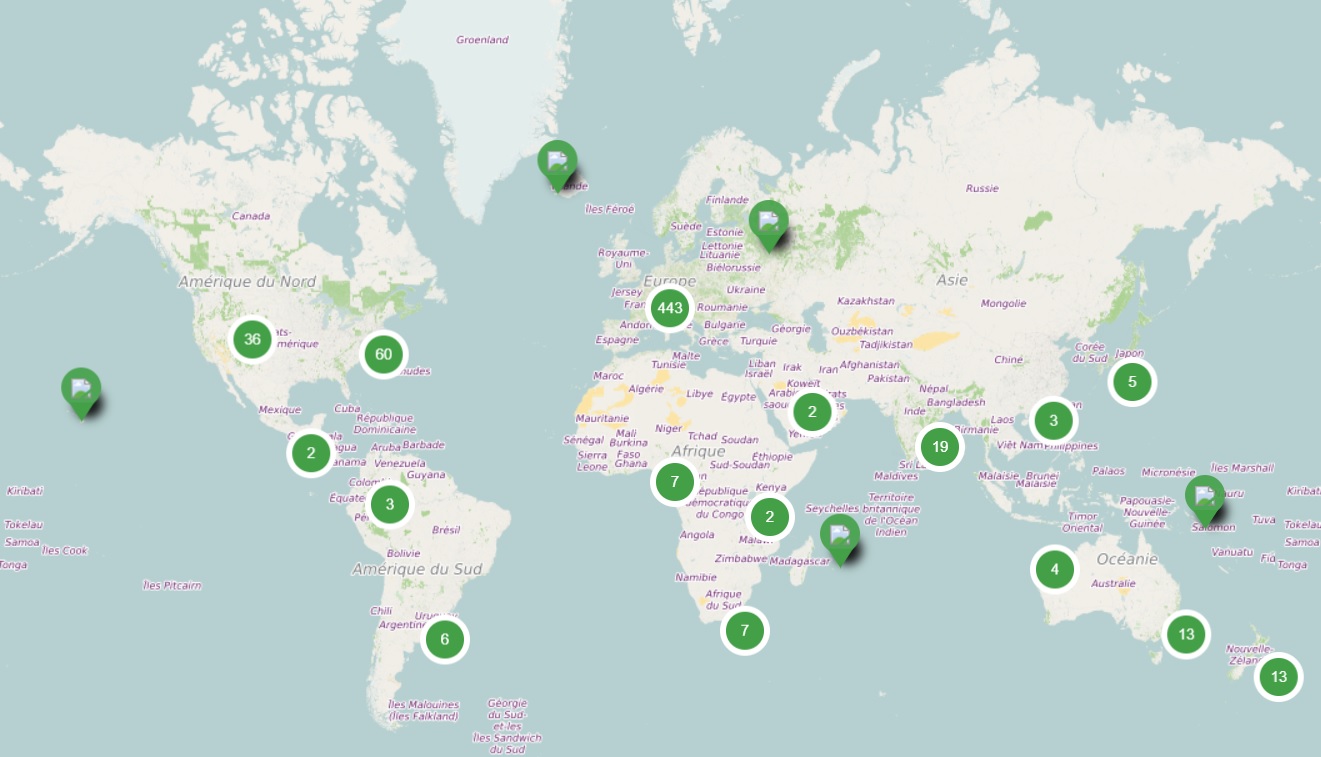
Extinction Rebellion is a people’s movement that was launched in May 2018 with protests in the UK and is now active around the globe. Starting 7 October, and for two weeks, protests are planned in London (you can sign up here) and other major cities (to join, check this site). The movement has become truly worldwide:
It has already achieved one of its goals: It got the UK Parliament to declare on May 1st 2019 a state of “climate emergency”. Through the summer, the parliaments of other countries joined with similar declarations: Ireland, the Holy See, Canada, France, Argentina, Spain, Austria, in that order. Local administrations joined too, including New York and San Francisco in the US; Sidney and Melbourne in Australia; Paris and Mulhouse in France; most towns in Canada and Germany. The list is endless and growing.
At the moment of writing, Extinction Rebellion protesters are defying the London city ban on protests and nursing mothers target Google. Why Google?
…
To find out why Google has excited the ire of Extinction Rebellion (and much more), read the rest on Impakter, click here.
If you’re curious about my other articles published on Impakter magazine (I started in 2014), here’s a list, click here.
Two political developments threaten Europe: A no-deal Brexit that would certainly hurt the British economy but would also be painful on the continent, and an out-of-control deficit in Italy. Taken separately, Europe could handle the issues. But the problem is that they come together.
The power of Eurosceptic politicians is definitely on the increase across Europe. It has always been so in the Visegrad group of countries (Czech Republic, Hungary, Poland and Slovakia) where populists are firmly in government, running increasingly “illiberal democracies”. Hungary’s battle against philanthropist George Soros is a good illustration of what is wrong in those countries.
Yet the threat to Europe seems relatively minor. After all, those countries were always on the periphery of Europe. They were latecomers to the European Union and, because of the Soviet legacy, it surprises no one that the bulk of their population is apparently not attached to democratic values.
What is new is that traditionally liberal West European democracies are now also following in the populist footsteps of Visegrad countries. It first happened in the UK with the June 2016 decision to leave the EU.
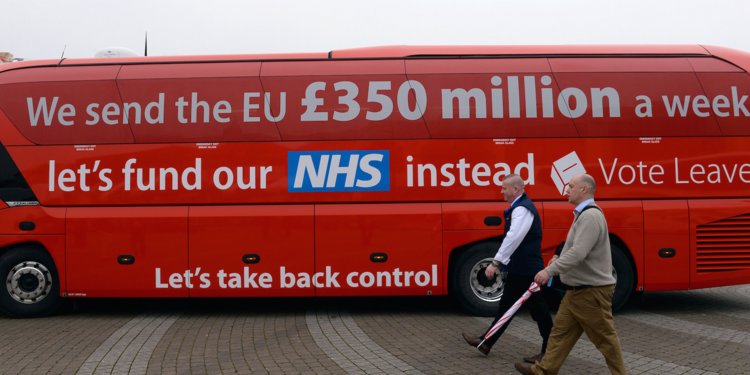
The Brexit referendum was astonishingly mismanaged from the start with no requirement to ensure that a real majority had voted Brexit (they hadn’t) and no control over fake news (notably over supposed migrant invasions or Boris Johnson’s famously false promise of regaining £350 million pounds from Brussels).
Yet Conservatives ignored the democratic failures of that referendum and were quick to jump on the bandwagon of Brexit, claiming that it was the sacrosanct “will of the people” and had to be honoured at all costs.
Since June 2018, the UK is no longer alone on that path. Italy joined it when two populist politicians, Di Maio, the Five Star Movement leader and Salvini, the Lega leader came together to form a government. The alliance looked fragile from the start, the two are unlikely bedfellows.
The Five Star Movement is a leftist populism colored by some socialist fantasies (like the Reddito di Cittadinanza, citizens’ income). The Lega is extreme right, with neo-Nazi tendencies – but the government is holding up surprisingly well, even though the balance of power has totally shifted, putting Salvini firmly in the driver seat. Not only did Salvini win a hefty 34% at the European parliament elections in May, but the latest polls in June show he’s ahead by another two points, around 36% against Di Maio’s paltry 16%, a further one percent drop.
Let’s take a closer look at what is happening in the UK and Italy, the two major battlegrounds where the future of Europe is now being played.









 Claude Forthomme's Blog about Social Issues and Books

