Category Archives: politics

Murderers in the Mediterranean: How to Stop Them

Just published on Impakter:

Two days ago, 117 people died in the Mediterranean. People talk of massacres whenever migrants drown. And then forget about it, overwhelmed by the relentless news cycle of our digital age. Perhaps if we called a spade a spade, people wouldn’t forget: Murderers at work in the Mediterranean is a better description of what happened.

Consider the facts.  They had been 120 when they escaped from Libya in hope of a better life in Europe. Then, after about eleven hours of navigation, their overloaded rubber dinghy deflated and capsized. They tried to swim for hours, but most couldn’t make it. There were ten women among them, one was pregnant. And there were two children, one of which was a two-month baby. Most of them came from Nigeria, Cameroon, Gambia, Ivory Coast and Sudan. Three survived to tell the story and were brought by helicopter to the Italian island of Lampedusa.

All the others could have been saved but weren’t.

With modern satellite technology, any boat crossing the Mediterranean can be spotted. For years, the Italian navy did a magnificent job of spotting them and saving lives, earning people’s gratitude and admiration across the world.
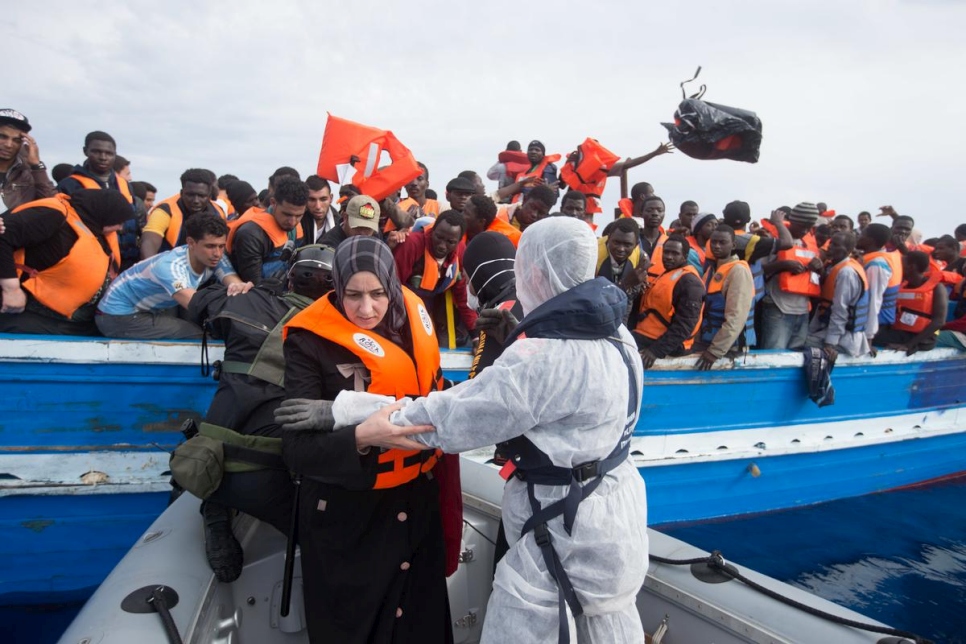
In the Photo: An over-crowded boat of refugees and migrants is rescued in the Mediterranean by the Italian Navy as part of the Mare Nostrum operation. Source:  © Massimo Sestini for the Italian Navy

But with far-right populist leader Matteo Salvini in charge (he is Italy’s Interior Minister), all that has changed. Of course, we have no proof that the Italians watched as people drowned. Only one thing is certain: These people fought for hours in freezing waters before going under.

Salvini has made his policy crystal clear: He has closed Italian ports and accuses NGOs of playing the game of human traffickers, saying:  “As long as European ports will remain open…sea traffickers will continue to do business and kill people.”

This causes an excruciating moral dilemma. People are killed anyway, closing ports and looking the other way is no solution. There are ways to stop “sea traffickers”. For example, one could work out agreements with governments on the southern coast of the Mediterranean – especially with Libya and Turkey – to gain control and police the areas where the traffickers actually operate – and not in the open sea, when it’s too late. But Salvini is doing none of this. 
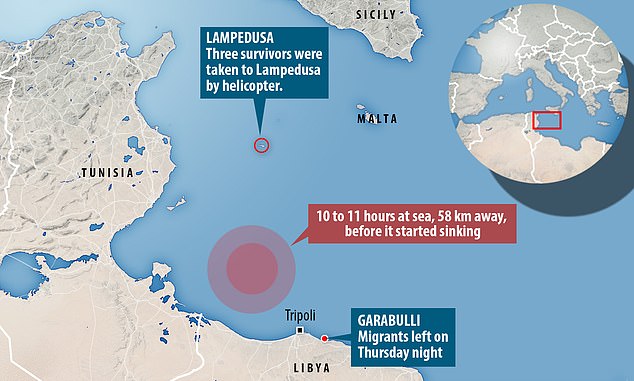
MAP showing where the rubber dinghy with 120 people aboard sank. Source: Mail Online

For now, the situation is in an ugly stall. Countries (like Italy) that should welcome refugees are not doing so. And putting themselves in the unwanted role of murderers at sea.

For example, exactly two days after 117 people were left to die, one of the ships of the NGO Sea Watch saved 47 migrants including 8 unaccompanied children. These were migrants in similar circumstances, clinging to a sinking dinghy. They were found by Sea Watch in international waters north of Zuwarah in Libya. Who will take them in?

A few days earlier, in another angle of the Mediterranean, in the western sea of Alboan, another 53 people had died in similar circumstance, with only one survivor – a fact documented by UNHCR.

This brings the total for this month to 170 deaths from drowning. A lot of deaths in just a few days.

The overall number of people who died crossing the Mediterranean in 2018 was, according to UNHCR, 2,262. Too much, even if we are far from the peak of 2015 when German Chancellor Angela Merkel famously opened the doors of Germany to a “million refugees”. UNHCR’s data speaks volumes:
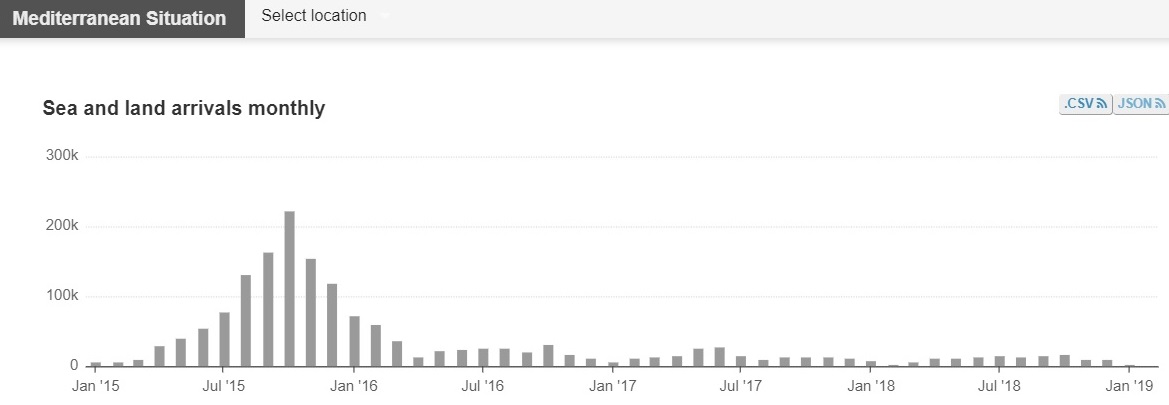
Source: UNHCR

UNHCR tweeted dismay at the latest tragedy:

“We cannot turn a blind eye to the high numbers of people dying on Europe’s doorstep.”

@cochetelhttps://t.co/wJ7yVHbxH6

— UNHCR, the UN Refugee Agency (@Refugees) January 20, 2019

The President of Italy Sergio Mattarella was also moved to issue a press release expressing his “profound sorrow for the death of over one hundred people, including women, men and children”.

The only one who remained silent was Salvini.

Yet, his policy of closing borders is putting him at odds with international law, in particular, the principle of “non refoulement” ( a French term, in deference to the fact that French has been traditionally the language of international diplomacy) – as explained in this UNHCR video:

The rest , including UNHCR’s excellent video about the non refoulement principle, is on Impakter. To read, click here.
Comments Off on Murderers in the Mediterranean: How to Stop Them

Filed under politics, Uncategorized

Brexit Deadlock: What Next?

I wrote about the Brexit deadlock for Impakter and here is the start of my updated article that examines the options following the U.K. Parliament’s rejection of May’s “Brexit deal” and her surviving the no confidence vote called for by Labour on 16 January 2019:

Ten weeks to Brexit. March 29, the date of UK’s exit from the EU, is closer than ever. But right now we are living through a “Brexit deadlock”. And it shows no sign of resolving: First there was the historic contrary vote in Parliament on 15 January that rejected Prime Minister May’s controversial “Brexit deal”. The margin of defeat was enormous, May lost by 230 votes. Next, on 16 January, May survived the vote of no confidence Labour Leader Corbyn had called for, with a thin majority of 19 votes.

The defeat, however predictable and expected, still managed to shock many people. And EU Commission President Juncker expressed regret:

I take note with regret of the outcome of the vote in the @HouseofCommons this evening. I urge the #UK to clarify its intentions as soon as possible. Time is almost up #Brexit https://t.co/SMmps5kexn

— Jean-Claude Juncker (@JunckerEU) January 15, 2019

The EU Commission also released a formal statement on 15 January by President Juncker highlighting that the “process of ratification of the Withdrawal Agreement continues.  Because this Withdrawal Agreement (i.e. May’s “Brexit deal”) is:

“a fair compromise and the best possible deal. It reduces the damage caused by Brexit for citizens and businesses across Europe. It is the only way to ensure an orderly withdrawal of the United Kingdom from the European Union.”

The EU won’t budge on the Irish border problem. This is it – end of the road. As EU Council President Donald Tusk was quick to note , the U.K. should cancel Brexit since no better deal can be negotiated.

The problem is a political one. As Guardian’s John Henley said, ““The crux of the problem is that there is no parliamentary majority for any solution. There is no majority for May’s deal, there is no majority for no deal, there is no majority for a second referendum, and there is no majority for the various alternative deals mooted by MPs.”

The logic is to go back to the people and vote again, as suggested by Susan Wilson in her recent article on Impakter celebrating “2019: The Year We Finally Bury Brexit“. That is also what the markets expect and the pound immediately rebounded.

Unfortunately, little time is left to organize a referendum. Some people argue there’s no time left at all.

Yet a no-deal Brexit was excluded by a crucial Parliament vote on 8 January that passed almost unobserved by the mainstream media. But that vote ensured, to use Labour Leader Jeremy Corbyn’s expression, that the UK cannot “legally go crashing out” of the EU on 29 March 2019:

The rest on Impakter, click HERE to read. Let me know what you think!

Comments Off on Brexit Deadlock: What Next?

Filed under politics

Gilets Jaunes Protests: The Roots of French Discontent

My analysis of the Gilets Jaunes (yellow vests) crisis, just published on Impakter. It is far more complex than just another political crisis caused by Facebook. Here is the start of the article:

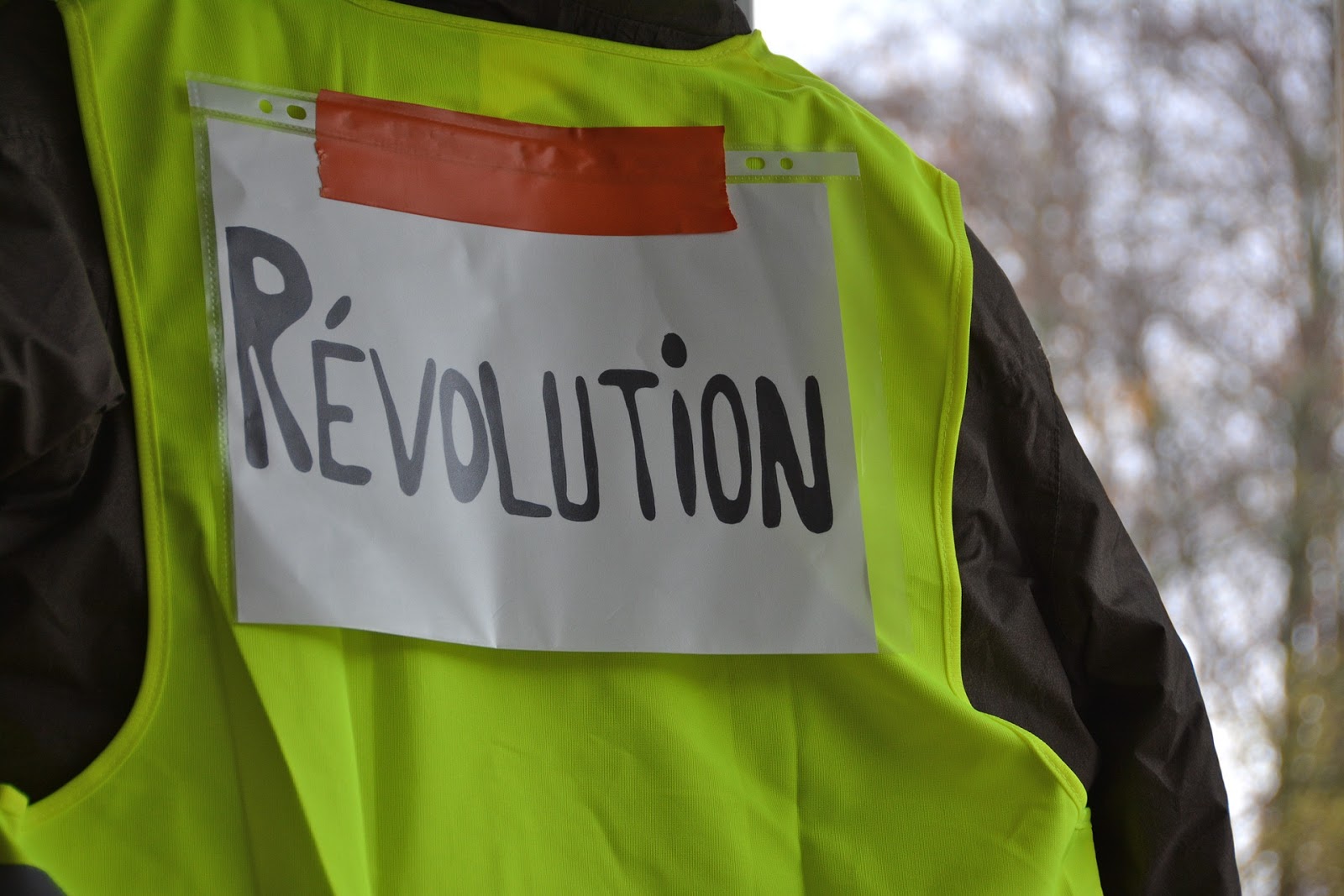
“He deserves to have his head chopped off, symbolically,” said Claudio, a 47 year-old mason and father of four (last name withheld), referring to French President Macron who has been often accused of draping himself in the symbols of pre-revolutionary France. Claudio lives in the northern town of Le Mans famous for car racing. Like many “Gilets Jaunes”, he likened their protests to the 1789 French Revolution. That, of course, is wishful thinking.

But wearing “Gilets Jaunes” (the yellow roadside safety vests required by law) is a stroke of genius. It made protesters highly visible both on the road and in the media. Ever since they began three weeks ago, Saturday 17 November, that is all one sees on our screens: yellow vests.

It turns out that Macron’s tax hikes on diesel fuel was the straw that broke the camel’s back and fueled the Gilets Jaunes’ anger. For them, what is at issue is fiscal justice. They can’t stomach his decision to raise taxes on pensioners at the same time that he scrapped wealth taxes. No matter he meant them as a tax break for investors to encourage them to invest in French business (notoriously under-invested) and create jobs.

The decision was perceived as unfair by the working classes, bogged down by taxes while the rich evades them, escaping to fiscal paradises. Macron is seen as “the president of the rich”. Out to impoverish the middle class.

“The guy thinks he’s God!” exclaimed Claudio, exasperated, as he dug in at a blockade outside a fuel depot of Le Mans, fortifying barricades. Along with some 50 companions, he is preparing for a long winter of discontent.

Read the rest on Impakter, click here. Find out what Facebook’s role in this crisis really was. Let me know what you think!

Comments Off on Gilets Jaunes Protests: The Roots of French Discontent

Filed under politics, Uncategorized

G20 Surprise Show

Just published on Impakter:

The big news from the G20 meeting that just closed in Buenos Aires is the 90-day truce in the U.S.-China trade war that has rattled financial markets and threatened global growth. The smaller news is that Trump did not pull the rug under this meeting the way he had done at the last G7 meeting in Canada.

The prospect of a no-statement Summit similar to the G7 debacle had looked very real. As it turned out, the show was very different from what everyone expected, largely thanks to the strong action of French diplomacy, spurred by Macron who wanted a G20 summit statement on his favorite issues, climate change, globalization and growth. But the G20 meeting confirmed the previous G20 in Germany (July 2017): American isolationism is back.

To understand what happened, it helps to take a step back and consider what the G20 is really all about – just like the G7, acting at the margin of the United Nations.

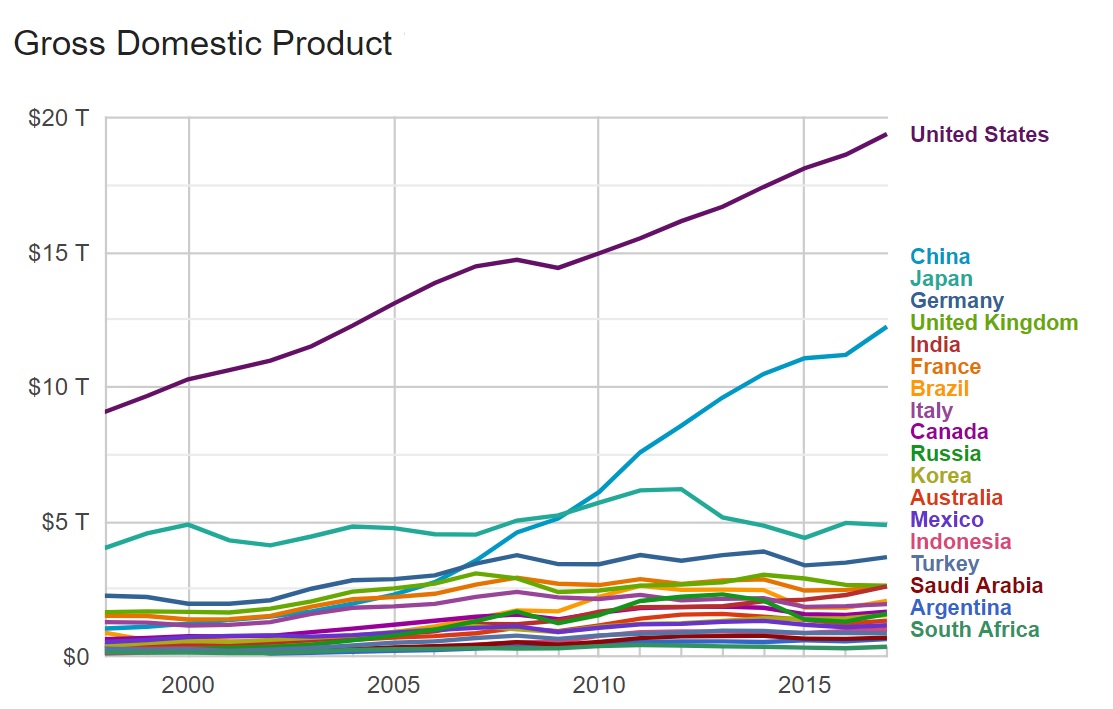
The G20, born of a G7 meeting of finance ministers and central bankers in 1999, is made up of the world’s 19 most important countries in terms of their GDP, plus the European Union. The two giant state members are the United States ($19.39 trillion) and China ($12.24 trillion). Since the G20 was founded, both superpowers have distanced themselves from the pack as most countries’ GDP flat-lined:

In the diagram: Evolution of G20 Member countries Gross Domestic Product since foundation of G20 (1999) SourceData from World Bank  Last updated: Jul 6, 2018  ©2014 Google

In spite of the limitations of GDP as an indicator (it doesn’t capture social progress),the diagram is a striking depiction of the varying impacts of globalization, with the U.S. and China the big winners, at the expense of the rest of the world. And it shows clearly how the U.S., contrary to what Trump says, has always been “great” with the 2008 Big Recession a mere blip on its growth rate.

And it didn’t help that Europe (as a region) showed up in disarray at the meeting: The UK struggling with Brexit and not getting the expected support from Trump; Russia embroiled in an escalating fight with Ukraine; Merkel on her way out and rumored to be aiming for the presidency of the European Council; Macron battling yellow vests protests that are now in their third week and devastated Paris last Saturday.

That leaves on the international scene the two superpowers, the US and China. Some even talk of the emergence of a G2. In a sense, when Trump dined with Xi and crafted a truce in their trade war, that was a G2 meeting.

But if one of the superpower – in this case, Trump’s America – chooses to isolate itself with trade wars and its America First agenda, then China is left free to interact with the rest of the world. Which is precisely what happened. Let’s take a closer look.

The US-China 90-Day Trade Truce

Read the rest on Impakter, click here.
 
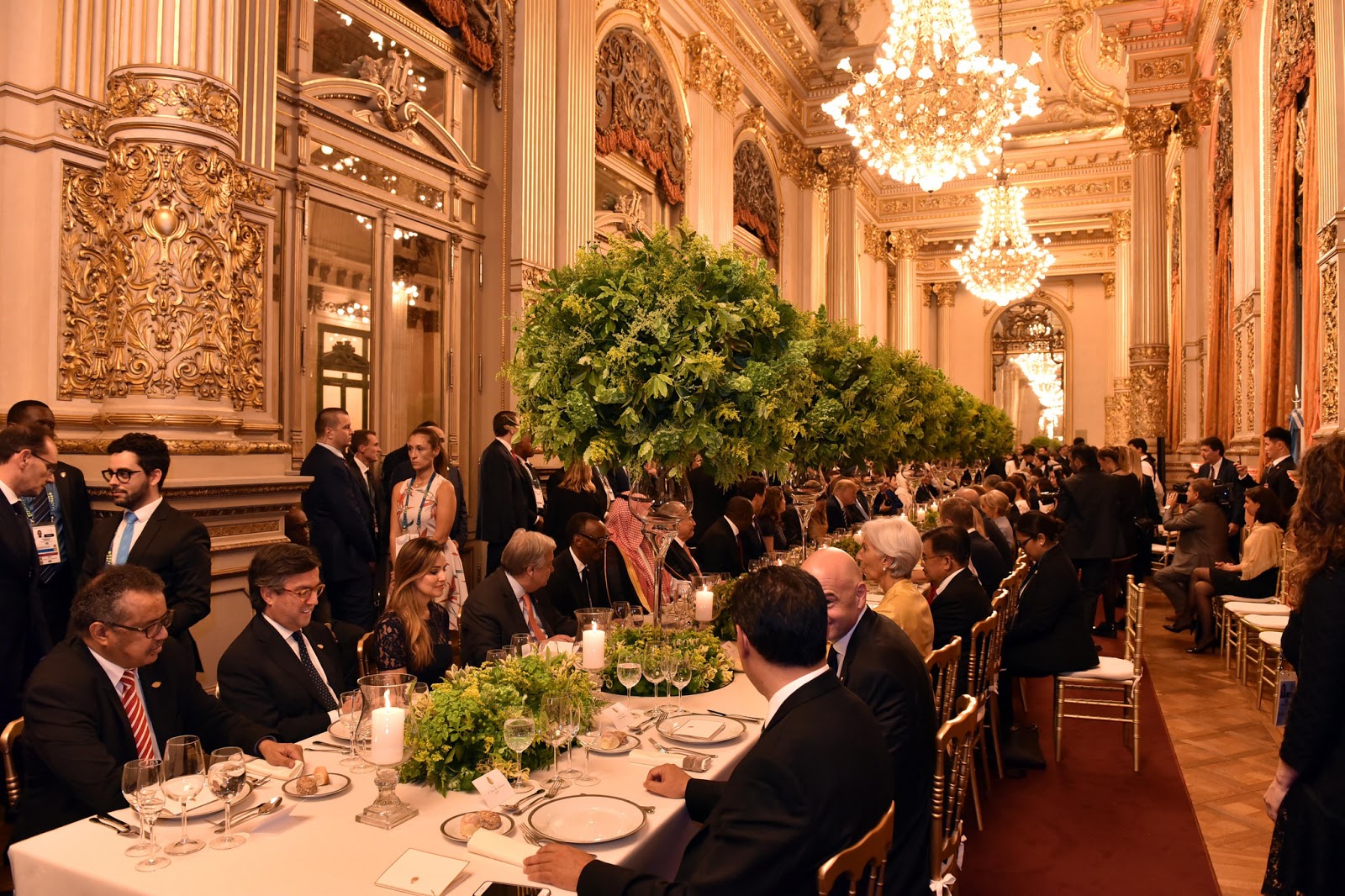
Featured photo: G20 Gala dinner 30 November 2018  Source: Official photo G20 Secretariat 

Comments Off on G20 Surprise Show

Filed under politics

The Future: America vs. Eurasia

Europe and China could change the course of History as Trump’s America First policies move America to the sidelines…Here’s the opening of my new article, just published on Impakter:

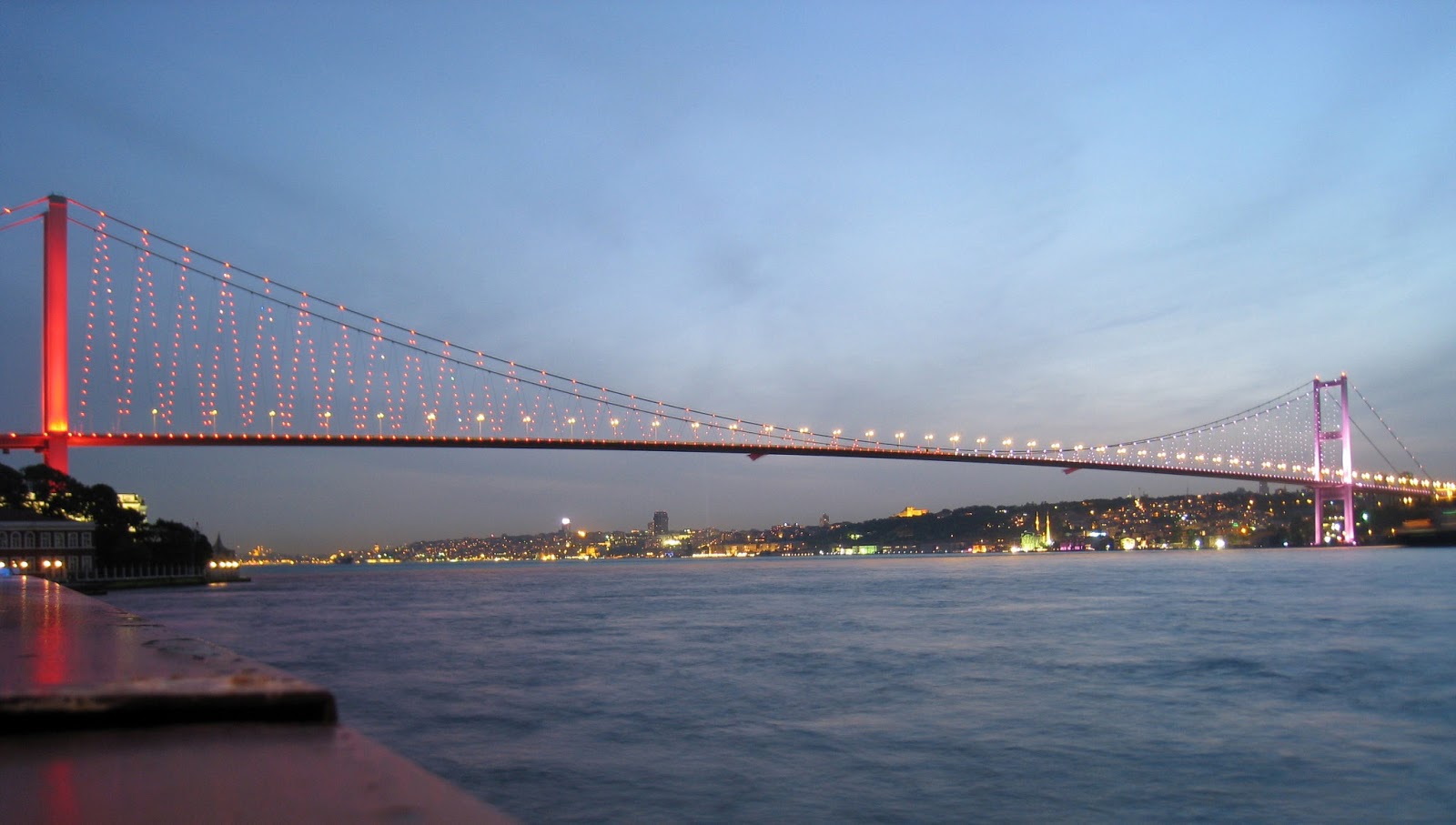
Bosphorus Bridge (Turkey) linking Europe to Asia – PHOTO JORGE1767


How will the future play out? Will Europe follow America’s example and sink into nationalist populism that will inevitably tear apart the European Union and open the way to Trump’s divide-and-conquer America First strategy? Will America’s trade war with China escalate in a real war that could go global as Trump’s stranglehold on world trade tightens further? I believe there is hope that neither will happen. Instead, we might witness something utterly different and much more likely: the rise of Eurasia.

Two events these days are early signs of such a shift for anyone who cares to look. One just took place in Paris at the 100th anniversary of the end of World War I organized by French President Macron. The other, thousands of miles away in Singapore, is the ASEAN Summit, from 11 to 15 November where a major new trade deal, the Regional Comprehensive Economic Partnership (RCEP) that for the first time included China, was on the agenda.

The trip was a diplomatic disaster for Trump. He started on the wrong foot even before leaving for Paris. On 9 November, Trump, misunderstanding a Macron statement about the formation of a “true European army”, sent an insulting tweet:

The misunderstanding was soon clarified: Macron had referred to the announced U.S. withdrawal from the I.N.F. nuclear arms treaty with Russia as a reason for establishing an independent army, not that the U.S. was an enemy. Macron in a speech welcoming 84 world leaders to the celebration on November 11, made another statement that shook Trump who considers himself a nationalist:

“Patriotism is the exact opposite of nationalism. Nationalism is a betrayal of patriotism by saying: ‘Our interest first. Who cares about the others?’ I do defend my country. I do believe that we have a strong identity. But I’m a strong believer in cooperation between the different peoples, and I’m a strong believer of the fact that this cooperation is good for everybody.”

From the ashes of the two World Wars came hope, he said. “This hope is called the European Union, a union freely entered into, never before seen in history, a union that has freed us of our civil wars”. Trump appeared “grim” and clapped only tepidly afterward. Significantly he missed the opening of a 3-day conference, the Paris Peace Forum that followed the ceremony to discuss how to strengthen multilateralism.

The next day, on 13 November, Trump took again to Twitter in a series of five aggressive tweets, astonishingly rude and misinformed, including this one:

Not the way to treat the leader of an American allied country. He forgets (or doesn’t know) that his own approval rating in France is abysmal (around 9%).  Macron was forced to respond. France, a historic ally, is “not a vassal state” he said in an interview on French TV: “At every moment of our history, we were allies, so between allies, respect is due. I don’t think the French expect me to respond to tweets but to continue this important history.”

Now that Angela Merkel is on her way out and Brexit is wobbling to its pell-mell conclusion – barring a last-minute legal reversal or a political crisis – there is no doubt that Macron is emerging as the main defender of a United States of Europe. A Europe increasingly under assault by Trump’s America First policies.

Meanwhile, at the other end of the Euroasian continent, in Singapore, RCEP is the second major trade deal under discussion since Trump ditched the Trans-Pacific Partnership (TPP) in January 2017. A serious political blunder considering that the goal of the TPP in the Obama administration’s intention, had been to exclude China. In March 2018, the situation had been reversed and it was America that was isolated: the remaining TPP members (including Canada and Australia) signed the first major Pacific trade agreement, keeping the original TPP content largely intact but renaming it the Comprehensive Progressive Trans-Pacific Partnership (CPTPP) – to take effect soon, on 30 December 2018.

Brookings Institute experts see the new RCEP as something much bigger, “an optimistic answer to populist and protectionist trends around the globe”.

Massive, the new RCEP brings together 16 countries covering 3.6 billion people for a total GDP of some $25 trillion, exceeding that of the United States. The point is that it brings China in for the first time, together with India, Japan and South Korea. It builds on commitments already taken in the World Trade Organization (WTO). Not without difficulty of course. Of the 21 chapters of the treaty, so far agreement was obtained on only seven.

RCEP negotiations are expected to be completed only at the next ASEAN summit in Thailand in 2019. Predictably, problems range from India’s fear of being overrun with products from China, Korea and Japan to Trump’s trade wars, making some countries anxious of “losing” the American market.

How Likely is Eurasia to Replace America as World Leader?

Euroasia: A little used term for a vast continent that extends from Cape Dezhnev (Russia) in the East to the Monchique Islet (Portugal) in the West to Dana Island (Indonesia) in the South. A new geo-political entity that is not yet born. The road is rocky but if it emerges, it will be the largest ever, encompassing two-thirds of the world population.

Find out! Read the rest on Impakter, click here.

Comments Off on The Future: America vs. Eurasia

Filed under politics

Trump’s Hold on International Trade and Finance

Just published on Impakter:

The midterms handed the House to the Democrats but not the Senate, despite receiving some 12 million votes more than Republicans in Senate races. As a result, Trump’s ability to pursue his conservative agenda is largely crippled. But where he can count on the backing of the Senate, Trump retains full power, including the ability to nominate judges and pursue foreign policy. His hold on international trade and finance, notably through sanctions and tariffs, remains intact. With potentially devastating consequences.

The trade war on China is not about to stop but that is only the most visible part of the Trumpian iceberg. There are, as this article will show, other, more discreet elements buried under the surface, such as America’s grip over SWIFT, the payments transfer system universally used by banks everywhere.

Packing the Federal Court System with Conservative Judges

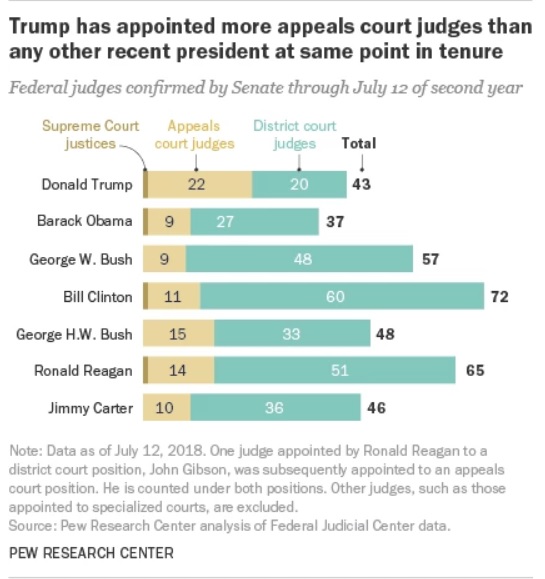
We all know how Trump packed the Supreme Court with two conservative judges, most recently with Brett Kavanaugh, a highly controversial figure. What is less well known is how Trump is also “packing” the Federal court system. As of 4 November, the Senate has confirmed 29 judges for the United States Courts of Appeals, 53 judges for the United States District Courts, all nominated by Trump. In fact, according to the Pew Research Center, Trump has successfully appointed more federal appeals court judges at the same point in his tenure than Barack Obama and George W. Bush combined:

Source: Pew Research Center. (Screenshot; note data stops at July 12, 2018 and does not include the second Supreme Court appointment made by Trump)

Expect many more nominations over the next two years. Here however I am taking a close look at foreign policy, and in particular the area that has traditionally underpinned American “soft power”: international trade and finance.

Bending World Trade and Finance to the America First Agenda

Trump has now carte blanche to reshape the rules-based world trade system to serve his America First agenda – and this is something that should deeply worry America’s allies and foes alike.

This week-end Trump is in Paris for a meeting of world leaders, invited by French President Macron to celebrate the centenary of the end of World War I. A meeting that includes Putin and that is poignantly far away from the trip taken 100 years ago by President Wilson, his idealistic predecessor, bent on rebuilding the world. The reverse of Trump’s goal which is to take it apart. And he will not stop there. Trump is scheduled to attend in November the G20 meeting (China will be there). Expect fireworks.

Will Trump change his confrontational approach to American allies, especially Europeans? Not likely. So far, he has loudly pulled out of numerous treaties (the Trans-Pacific Partnership with Asia and the equivalent treaty with Europe, the Paris Climate Agreement, the Iran nuclear agreement). Recently he has announced he will abandon the Intermediate-Range Nuclear Forces Treaty signed with Russia by Reagan; he threatens sanctions against the International Criminal Court and is pulling out of an 144 year-old postal treaty as part of his fight against China. He has repeatedly cheered Brexit, attacked NATO partners and declared that the “European Union is a foe”.

At the heart of Trump’s “art of the deal” are bullying tactics, plain and simple. And in a perverse way, they make sense.

The Strategy Behind Trump’s Bullying: Divide to Rule

Consider the world that we lived in until the 2016 U.S. presidential elections.

Read the rest on Impakter, click here. Do let me know what you think! 

Comments Off on Trump’s Hold on International Trade and Finance

Filed under politics

Trump’s Midterms Strategy: Fear and Anger

Just published on Impakter, here’s the opening:

Previous articles about why populism is dangerous have addressed the issue of austerity (here), the public health crisis (here),  the false “migrant crisis” (here), and the propensity for war (here). This article explores Trump’s midterms strategy to drive voters to the ballot on November 6: stoking up fear and anger with fabricated crises and false solutions.

The 6 November midterm elections are seen by many as a referendum on how American citizens are ranking Trump’s performance as President. Democrats are favored to win the House and Republicans the Senate.

Surprisingly, even though the economic news are favorable, with 55% of Americans rating current economic conditions as excellent or good, the political climate is not correspondingly as good for Republicans and Trump, the latest Gallup poll shows.

Congress’ 21% job approval rating is 10 points below the average since 1974 and similar to approval ratings in the 2010 and 2014 midterms. Trump’s approval rating at 40% is well below the 52% average at midterms since 1974 and is one of the lowest ever for a president prior to a midterm election.

With such results, it is not surprising that Trump has pulled all the populist stops at his disposal:  fake news, fabricated crises, false solutions. All designed to fuel emotions, stoking fear and anger to push voters to the polls. Even famous memes are used, like the Stark family motto of HBO’s Game of Thrones “Winter is coming”, to announce the reimposition of sanctions on Iran. They will take effect on Monday 5 November, the day before the elections. To make sure everyone would notice, Trump exceptionally took the trouble of pinning the tweet at the top of his thread:

This caused a storm on Twitter and HBO did not appreciate the use of its intellectual property for political purposes.

No matter that this stokes divisions. That the country is increasingly polarized. That people die while praying in a synagogue. That the public postal system is used to send pipe bombs. For Trump, it’s collateral damage of little import. The point is to win.

This is the populist strategy for maximum voter turnout: as a populist, you may hold a minority of the voters but your hold on them is stronger because they are emotionally pumped up. It’s not a question of pushing the “undecided vote” as analysts have traditionally called it; it’s a question of pushing those who already support you to actually go to the voting booths. You don’t need to convince them (that’s done). What you need to do is fire them up so that they will make the effort to vote.

Trump’s Fear and Anger Strategy

Trump is in campaign combat mode. The language on race and gender is strident, the  anti-immigrant message oppressive.

The rest on Impakter, click here to read. Let me know what you think, I love to hear from you! 

2 Comments

Filed under politics, Uncategorized

Why Populism is Dangerous: The Propensity for War

My latest article just published on Impakter:

Populism is dangerous and has shown overtime an irresistible propensity for war. Public safety, health and the economy are at risk. But populist propaganda is hard to resist. Populist politicians thrive on fake news: it is so much easier to fuel people’s emotions if you feed them fabricated news of imaginary crises. And if you divert their attention from real economic problems with the irresistible lure of national identity politics and blaming foreigners.

Previous articles have addressed the issue of austerity (here), the public health crisis (here) and the false “migrant crisis” (here). Here we take a look at populism’s propensity for war. Historically, populist leaders have been warmongers, Hitler first among them, for waging war across national borders and Pol Pot within borders. Nowadays, exhibit A is Putin’s invasion of Ukraine’s Crimea in 2014, diverting Russians’ attention from a deepening recession. Exhibit B is Trump’s rising militarism that has just jumped to the next level with John Bolton’s visit to Moscow this week to tell Putin the U.S. will withdraw from the I.N.F. Treaty.

Mikhail Gorbachev, former president of the Soviet Union, has no doubts: A new nuclear arms race has begun, he writes in an opinion piece for the New York Times. He should know what he’s talking about. He is the man who signed with President Reagan in 1987 the I.N.F. treaty, one of the major arms non-proliferation treaties. For Europe, it is the most important since it aims at eliminating the arsenal of intermediate and shorter-range missiles.

Back then, Gorbachev was at the helm of a dying Soviet Union shaken by the fall of the Berlin Wall, and he, more than anyone, believed in a new age of peace and international cooperation. He famously talked of a “Common European Home” and hoped to bring Russia inside Europe as an equal partner.

That did not happen and the rise of Putin put paid to those hopes.

In that article, Gorbachev reminds us that the I.N.F. treaty was followed by two more important ones, the Strategic Arms Reduction Treaty (a.k.a. Start 1, signed in 1991 by George H.W. Bush) and the New Start Treaty (2010 signed by Obama). By 2015, The US and Russia were able to report at the United Nations Nuclear Nonproliferation Review Conference that 85% of the arms had been retired and mostly destroyed.

An amazing success that Trump, another Republican President, is about to reverse. 

Predictably, Russia is accused of violations, the standard way to break off treaties. And yet, the Republican party was not always the party of the military-industrial complex, a notion another Republican President warned America against: It was Eisenhower, in his farewell address in 1961, who identified the threat and famously coined that phrase.

In the Trump era of America First, it’s hard to remember that just three decades ago, in the 1980s, there were politicians who had genuine liberal, progressive ideas – even in the Soviet Union that after 70 years of dictatorship looked like a hopeless case. Especially in the Soviet Union which, as events showed with Gorbachev’s Perestroika, was ready for a dramatic change, putting its Communist past and the Cold War in the dustbin of History.

Now, History’s dustbin is about to be emptied on the world stage, bringing the Cold War back. Firebrand John Bolton, Trump’s National Security adviser (appointed last April) is having his moment of glory.

A former U.S.Ambassador to the United Nations (under Bush), Bolton has always hated international treaties in general and the United Nations in particular. His fondest memory, he recalls in his 2007 memoir, was to pull the U.S. out of the International Criminal Court treaty. No matter the Court presented no particular danger to American sovereignty and that it was a major step forward for international law and justice. Bolton is an uncompromising hawk. For him the world is a jungle, justice is for sissies and the U.S. needs to be top dog.

Now he is pushing Trump to withdraw from all international treaties – including further blocking the ICC and even moving out of some minor treaties like the Universal Postal Union, a 144 year-old postal treaty run by the United Nations, accusing it of letting China ship goods at an unfair discount. That was done last week.

The fact that the ICC, as per its mandate, cannot prosecute any American without the consent of an American court is not mentioned by John Bolton or anyone in the Trump administration. They all prefer to present the ICC as illegitimate and a threat to American sovereignty. They do not accept the simple fact that the ICC is a UN body and therefore not illegitimate; and that it is never a threat to a country that respects international law and justice. And America used to be a paladin of justice but with populists in power, that has changed. Trump’s priority now is moving out of nuclear arms treaties – and that fits in nicely with his military build-up strategy.

Let’s tick off the ways Trump has gone about re-militarizing the U.S.:

  1. Pumping up the defense budget to a historic high of $717 billion, even though America has always spent more than the rest of the world combined on military expenditures; of special note: $21.9 billion for the Department of Energy’s nuclear weapons programs that includes research and testing;
  2. Getting out of the 2015 deal to limit Iran’s nuclear activities;
  3. And now systematically pulling out of all remaining non-proliferation arms deals.

To be fair to Trump, the U.S. had already pulled out of the Antiballistic Missile Treaty in 2002. That was done by the Bush administration without a good explanation, much to the dismay of the Federation of American Scientists, an association created in 1945 by the scientists who built the first atomic bomb. Their 2001 letter of protest to Congress ended with the following words that apply equally well to all the treaties that Trump is seeking to undo:

“America has always sought to lead the world by example. Yet if other countries were to follow the example we have just set, the framework of international law would disintegrate. President Bush has just released NMDs first shot, and it has landed squarely in the heart of American security.”

Bolton’s trip this week in Russia was clearly intended to lay the ground to kill off the I.N.F. arms treaty, much to Putin’s barely concealed amusement. Watch him smile:

...(video)

See the video (it’s fun to watch) and read the rest on Impakter, click here.

2 Comments

Filed under politics

Why Populism is Dangerous: The False Migrant Crisis and The Real One

My latest article in the “Populism is Dangerous” series, just published on Impakter:

In the photo: Migrants: Germany to accept 50 rescued migrants after Italy’s plea July 15, 2018 Source:Reuters article

Populism is dangerous and puts public health and the economy at risk. But it is hard to resist. Populist politicians thrive on fake news: it is so much easier to fuel people’s emotions if you feed them fabricated news of imaginary crises. Particularly the so-called “migrant crisis”.

Italy is a harbinger of things to come in liberal democracies. It is where political change often happens first. The largest communist party in Europe outside the Soviet Union was in Italy; yet it was the first to go after the fall of the Berlin Wall. Berlusconi, a showy media tycoon who came to power in 1994 was a proto-Trump.

Previous articles have addressed the issue of austerity (here) and the public health crisis (here). Now we look at the false “migrant crisis” fabricated by populists. Yet  there is a real migrant crisis caused by the lack of assimilation of migrants already in Europe. Because the issue is not correctly diagnosed, no European country, or for that matter the U.S., has yet developed a set of policies to address it – with the exception of Sweden with its pro-active labor policies and Italy with its “Riace model”.

There is a migrant crisis for sure, but it’s not the one described by populists.

Exhibit ABrexit. The UK voted to leave the European Union, panicked by the imagined threat of a migrant invasion and is now facing economic disaster.


In the photo: Brexit poster used by UKIP  

Exhibit B: Trump, with his assault on migrants and Muslims. In view of the midterm elections, he’s upped the ante in an exceptional op-ed he wrote for USA Today on 12 October and a few days later, he re-opened his “caravan” scare on Twitter.

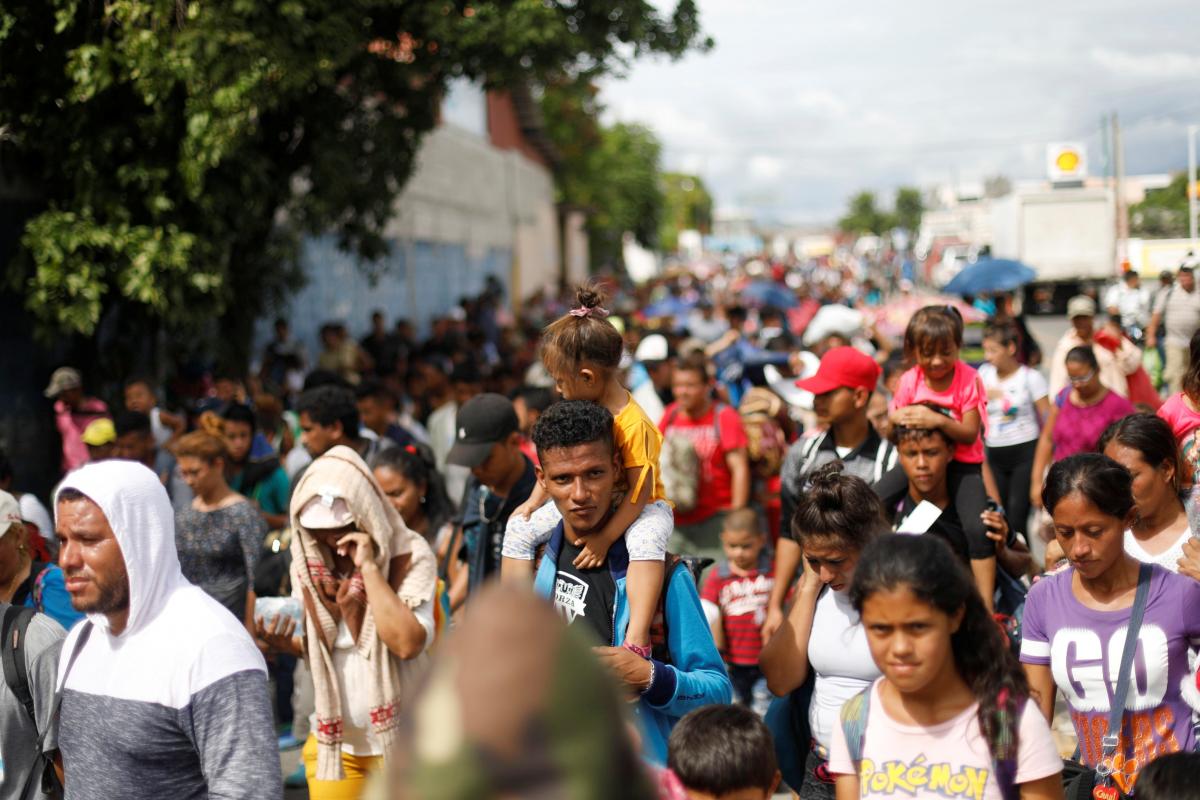
In the photo: Note how they move from right to left, just as in the UKIP Brexit poster, but there are children here.  These are Honduran migrants, part of a caravan trying to reach the U.S., during a leg of their travel in Chiquimula , Guatemala October 16, 2018.  Source: REUTERS/Edgard Carrido Reuters article and video

In a string of tweets, he threatened to cut off funding to the countries from where immigrants fled (Guatemala, Honduras and El Salvador) and demanded that Mexico put a stop to it. If it can’t, he announced he would use the military to shut the southern border. The most striking tweet is this one:

It encapsulates his favorite accusation against the opposition (“All Democrats fault for weak laws!”) but it puts forward an astonishing new notion: His trade wars, he says, are less important to him, even the newly achieved NAFTA that now goes by the name USMCA, U.S.-Mexico-Canada Agreement (it still awaits ratification). That’s remarkable, considering that he could claim USMCA as an achievement.

Like any good populist strategy, such technical considerations are set aside: the point is to divert public attention to fabricated issues – like “caravans” – that readily stir up emotions. Nothing is better than the true and tried recipe of evoking migrant invasions – just as was done by Brexit supporters. By comparison, trade is profoundly dull.  To whip emotions to a frenzy, there’s nothing like spreading fake news:  “A lot of money has been passing to people to come up to try and get to the border by Election Day,” Trump declared, without any evidence for this.

He immediately got support from the Republican party. U.S. Representative Michael McCaul, the Republican chairman of the House Homeland Security Committee and a member of the House Foreign Affairs Committee, said U.S. border security was a key election issue: “We have to secure that border once and for all,” he told Fox News in an interview.

The False Migrant Crisis

Trump tweets of “criminal elements and DRUGS pouring in”, a vivid, scary image. But how bad is it really to allow migrants to enter the country?

Historically, America has been a beacon for migrants because of its “values”. Which is exactly what Europe also offers. And Italy in particular, a Catholic country that hosts the Leader of the Universal Church, the Pope.  What values are they exactly? A respect for human rights and human dignity. And for political refugees in particular, the protection provided by the 1951 Refugee Convention that sets out the rights of individuals who are granted asylum and the responsibilities of host countries.

However that welcoming environment changed in Italy well before the populists came to power in March 2018, as this PBS video makes clear:

The ground was laid out for the arrival of the populists. What we need to realize is that the austerity policies imposed on Europe since the Greek debt crisis exploded in 2010 are the root cause of the problem.

Countries that are impoverished by austerity policies  – Greece lost half its GDP, Italy is stagnant and its youth suffers from one of the highest unemployment rates in Europe  – are easy prey to populist anti-immigration policies. Blaming foreigners for one’s woes is far easier and more satisfactory than trying to sort out the problem and come to a constructive solution.

Europeans have very negative views of migrants, and the countries with the most negative views (for example, Hungary) are those that close their borders, build walls and refuse to cooperate with European Union members:

Read the rest on Impakter, click here.

Comments Off on Why Populism is Dangerous: The False Migrant Crisis and The Real One

Filed under politics

Trump vs. Macron at the United Nations

This 2018 session of the UN General Assembly gave us a special show: Trump vs. Macron. I just published an article about this, here’s the opening:

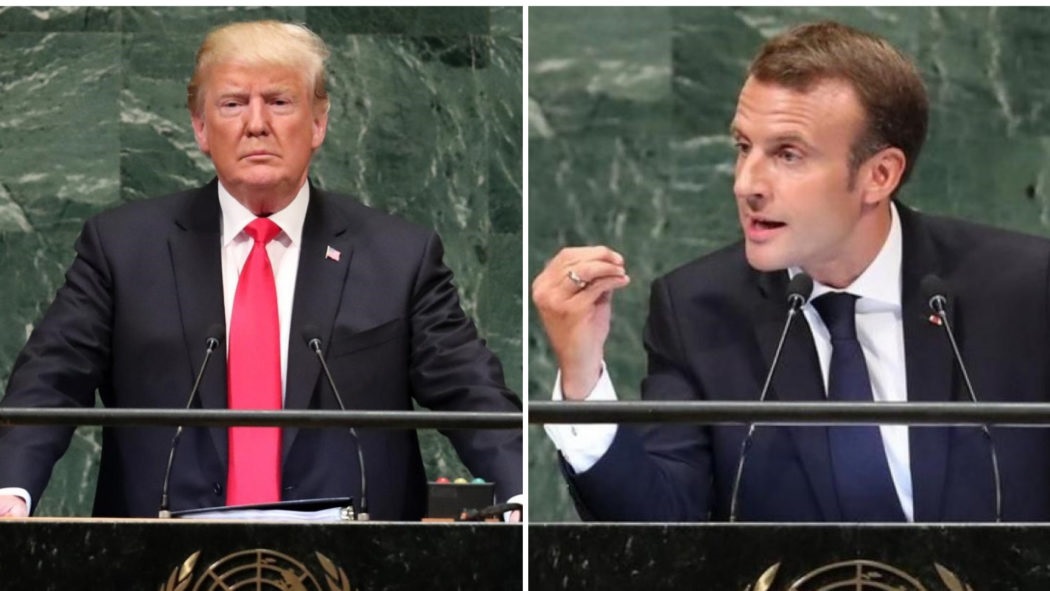
The fight between US President Trump and French President Macron at the United Nations General Assembly hit headlines around the world. It was a classic clash of values, openness and multilateralism promoted by Macron vs. unilateral nationalism, the “doctrine of patriotism” touted by Trump. Here are the highlights:

But the real differences in the style of the two leaders exploded at the UN Security Council on 26 September, this year exceptionally chaired by Trump.

He started with a long speech that was singularly devoid of specifics but included an unexpected attack on China, accusing the Chinese to interfere in the upcoming midterm elections – unexpected because it was totally off-topic, the agenda of that particular UN Security Council being the question of nuclear proliferation and how to address it (including the question of Iran and the sanctions the US are placing on anyone trading or investing in Iran). Here is Trump’s long-winded, meandering opening of the Security Council session:

See the rest on Impakter, click here.

Comments Off on Trump vs. Macron at the United Nations

Filed under politics