Category Archives: Uncategorized

The Trump Effect: The “Clash” between the Pope and the Order of Malta

Here’s another of my articles, just published on Impakter:
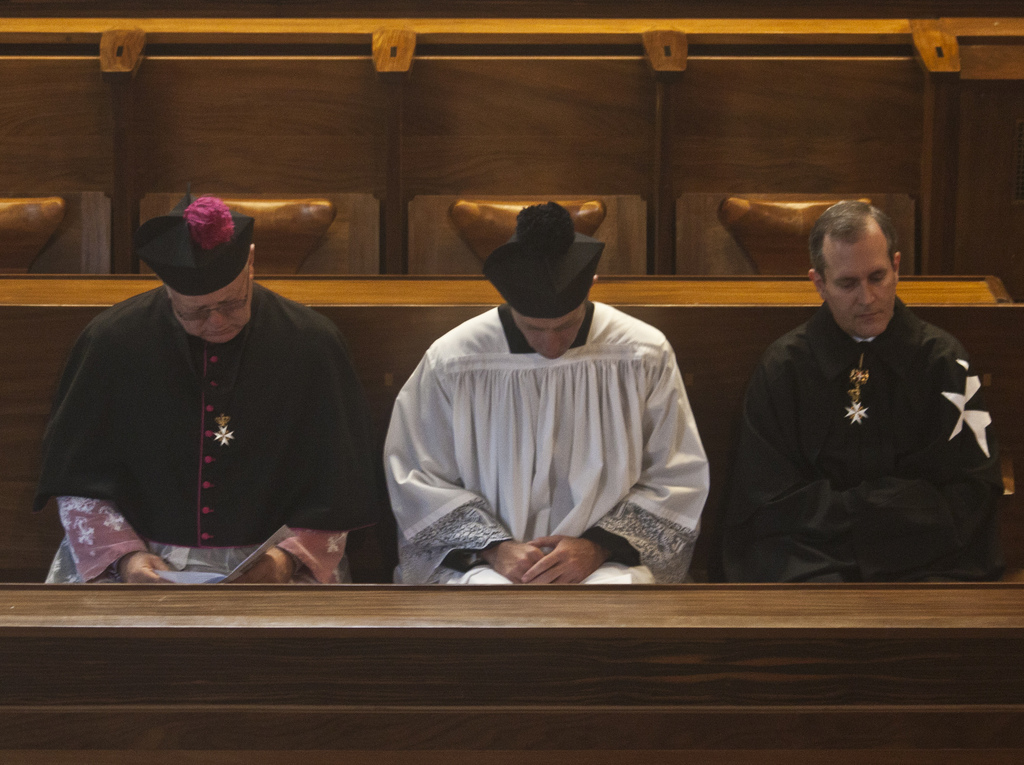
The media has recently reported some eye-popping news about the Pope and the Order of Malta allegedly engaged in a power struggle, with the Grand Master of the Order losing the battle and “forced” to resign.

What we have here is the kind of spectacle the media relishes: On one side, the Pope is depicted as the “anti-Trump Pope” for example, see the New Yorker’s article written by James Carroll, an American Catholic reformer and author of eleven novels and eight works of non-fiction, clearly in search of his next plot. On the other side, the Order of Malta, a millenarian Catholic institution with a global, humanitarian mandate, is presented as helplessly in the grips of Cardinal Edmund Burke, a well-known hardliner. An American, Cardinal Burke is adamant about fighting Islam and he is a darling of the populists. So what do you get? A juicy alt-right picture of a clash between a supposedly rigidly conservative Order and a progressive Pope.

In the photo: Pope Francis receives the Grand Master in audience, in earlier better days (June 2006) Photo credit: Order of Malta website  

To make it more credible, the Order is reported by some as an out-of-step relic of the Catholic Church, with its members parading around in “nutcracker” red uniforms.  Instead, it is, historically, the oldest existing humanitarian organization. It started out nine hundred years ago to assist pilgrims in Jerusalem. Today, its mandate has broadened to cover children, the homeless, handicapped, refugees, elders, terminally ill and lepers around the world without distinction of ethnicity or religion.
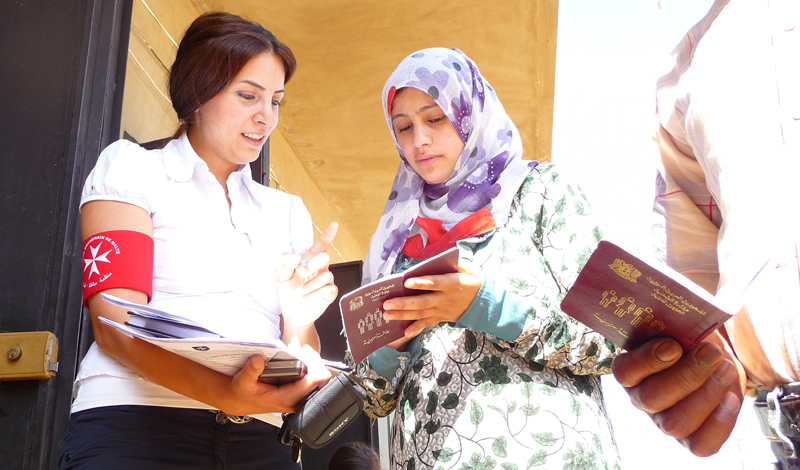
In the photo: Upholding human dignity and caring for the people in need. PHOTO CREDIT: Order of Malta website

The Order deploys 120,000 people, some 13,500 Knights, Dames and auxiliary members, 25,000 paid medical personnel and 80,000 volunteers. With its world-wide relief agency, Malteser International, it provides emergency aid in natural disasters, epidemics and war.

The Order is not just another charitable organization: it maintains diplomatic relations with 106 countries, the European Union and the United Nations (the latter as permanent observer), thus effectively linking diplomacy with aid. In short, it has a status similar to that of a government-in-exile, having surrendered its territory – the island of Malta – to Napoleon in 1798 and never recovered it, in spite of a resolution of the 1802 Amiens Treaty and the 1815 Congress of Vienna (it was never applied, the English refused to give it back).

In fact, in this complicated story which we can only glean through partial and even fake news (!), the American Cardinal seems to play a key role. And, as I show below, this is not, contrary to stories in the press, a clash between the Pope and the Order of Malta: They are, and never stopped being together on the same side of human values.

THE ORDER’S GOVERNMENT CRISIS, THE FIRST IN OUR TIME

On 6 December 2016, the unthinkable happened: The Prince and Grand Master, Frà Robert Matthew Festing, the third Englishman to serve as Grand Master, suspended the Grand Chancellor, Albrecht Freiherr von Boeselager, a German national and moved to expel him from the Order. The Grand Chancellor, who had been faithfully serving the Order for 40 years (since 1976), immediately denied all allegations of wrong-doing, refused to resign or leave the Order and reportedly contacted Cardinal Parolin, close to the Pope, to obtain guidance.

To read the rest on Impakter, click here.

Comments Off on The Trump Effect: The “Clash” between the Pope and the Order of Malta

Filed under politics, Religion, Uncategorized

SILICON VALLEY: WHAT IT TAKES TO DO STARTUPS – Book Review

Here’s another one of my articles published today on Impakter:


SILICON VALLEY: WHAT IT TAKES TO DO STARTUPS

Book Review: Chaos Monkeys: Obscene Fortune and Random Failure in Silicon Valley by Antonio Garcìa Martinez (HarperCollins, 2016, 528 pages)

Chaos Monkeys Book Cover

Silicon Valley continues to be hot news in the age of Trump and anti-globalization and it should come as no surprise that a clever book about it by someone in the know, loaded with revelatory insights on how it really works, was going to be a sure-fire hit. And that is exactly what happened when Antonio García Martinez’s half memoir-half prescriptive tech guidebook came out last year on 28 June 2016, becoming an instant “New York Times bestseller”. Considered an “irreverent exposé of life inside the tech bubble”, all the major book reviewers rushed in with praise, from the New York Times’ Jonathan E. Knee (“an irresistible and indispensable 360-degree guide to the new technology establishment”) to Bloomberg’s Ellen Huet (“dives into the unburnished, day-to-day realities: the frantic pivots, the enthusiastic ass-kissing, the excruciating internal politics”).

In short, in just six months, “Chaos Monkeys” has become the most popular and widely read book about Silicon Valley. I was curious to find out whether it merited its sudden glory. I uploaded it to my Kindle (disclosure: living far from bookstores, I am a fan of e-books) and I spent a couple of pleasant days enjoying the read. And I soon discovered that the best passages, literally pearls in the text, had been highlighted hundreds of time by enthusiastic fans. In fact, Amazon in its “about the book” section informs you that (at the time of my reading) 3,769 passages had been highlighted 122,000 times (ah, the joys of Big Data).

It is a clever book with a clever title, and a great read. In case you’re wondering about the title, it comes from the name given to the software procedure used to test the stability and resilience of online services/websites – and this neatly expresses the main message of the book: That tech entrepreneurs are society’s chaos monkeys, out to disrupt the way we live, from photo-sharing (Instagram), dating (Tinder) and movie viewing (Netflix) to transport (Uber), lodging (AirBnB) and space travel (SpaceX).

Unquestionably, the author’s persona was as much part of the excitement as his bracing writing style. Described as an “industry provocateur” on his Amazon book description page, he has lived up to his reputation and become something of an industry guru: today, whenever big news or scandals roil Silicon Valley, journalists rush to ask him his opinion.


Garcìa Martinez started his working life as a strategist for Goldman Sachs, survived three years and surprised everyone by abandoning New York for the West Coast. After learning the ropes at an IT advertising outfit called Adchemy, he launched his own start-up AdGrok with a couple of engineering pals (called “the boys” in his book). Ten months later, after raising some venture capital and before even making AdGrok operational, he sold it to Twitter for $5 million. However, it was not an unmitigated success; his team broke up, “the boys” went to work for Twitter to develop AdGrok while he accepted a more lucrative position at Facebook as product manager. Tasked with leveraging Facebook’s user data to make its advertising more effective and fix its monetization problem, he was outcompeted by a colleague and fired – the circumstances of his firing make for fascinating reading.

The description of what Facebook is like, what happened there and why he eventually left and landed an advisory position at Twitter is certainly one of the more interesting parts of the book – anyone thinking of joining Facebook should read it very carefully, drawing lessons from it.

The rest on Impakter, to read it, click here.

Comments Off on SILICON VALLEY: WHAT IT TAKES TO DO STARTUPS – Book Review

Filed under Book review, Digital Revolution, Publishing, Startups, Tech, Uncategorized

WHY 2017 COULD BE BETTER THAN YOU THINK

I just had my latest piece published on Impakter magazine, the fast-growing magazine for millennials where I am Senior Editor – and this is also my way to wish you all a very Happy, Hyggelig …

Source: WHY 2017 COULD BE BETTER THAN YOU THINK

Comments Off on WHY 2017 COULD BE BETTER THAN YOU THINK

Filed under Uncategorized

WHY 2017 COULD BE BETTER THAN YOU THINK: Happy New Year!

I just had my latest piece published on Impakter magazine, the fast-growing magazine for millennials where I am Senior Editor – and this is also my way to wish you all a very Happy, Hyggelig New Year!

Here is the beginning of the article:

Why 2017 Could Be Better Than You Think

light-person-woman-fire-sweater


At the end of the year, the prediction game becomes a top sporting event in the publishing industry, with everyone throwing their predictions on the wall to see if they stick. I’ll throw mine too but I’ll do it in reverse. I shall bet against most other people’s predictions.

Let’s start with populism: that’s a basic trend everyone has identified in recent events, from Brexit to Trump – a new trend trumpeted as the end of neo-liberal democracy as we have known it since World War II. We are into another era, the new age of populism, nationalism, nativism, racism, identity politics, return-to-our-roots culture, anti-globalization, xenophobia, you name it. Dictionary.com has made xenophobia the word of the year. In short, everyone sees populism as a major feature that will govern what happens politically in 2017 (see #2017Predictions).

But what if everyone was wrong?

Read the rest on Impakter, click here.

All the best!

Claude

My new website: www.claudeforthomme.com


1 Comment

Filed under Uncategorized

Death of the Euro: Thinking the Unthinkable

Impakter Magazine just published my latest article, here it is:

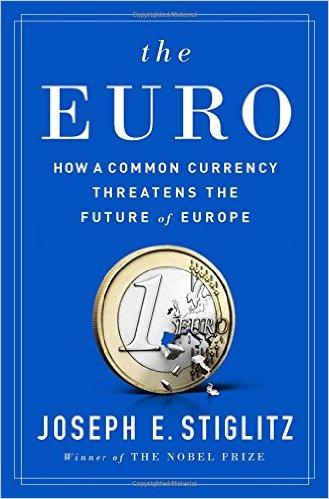
BOOK REVIEW “THE EURO: HOW A COMMON CURRENCY THREATENS THE FUTURE OF EUROPE” BY JOSEPH. E. STIGLITZ (PUBLISHED BY W.W. NORTON & CO, AUGUST 16, 2016)

Nobel laureate Joseph Stiglitz’s latest literary effort, a new book about the travails of the Euro and Europe, published in August with the apt title “The Euro: How a Common Currency Threatens the Future of Europe” couldn’t land in the muddy European political waters at a more appropriate time.

The summer of 2016 was a turning point for the so-called “European Project” – Europe’s long-run attempt to build a United States of Europe that began with the 1957 Treaty of Rome setting up the European Economic Community (EEC) with six founding members (Germany, France, Italy, Belgium, the Netherlands and Luxemburg), and continued in 1993, with the Maastricht Treaty, the European Union (EU) with (up to now) 28 member countries.


Problems have piled up this summer, relentlessly.

The opening salvo came in June with the UK referendum that unexpectedly led to “Brexit”, the decision to leave the European Union with 17.4 million Brits voting in favor. For the first time since its foundation, the EU is expected not to expand but to contract, down to 27 members – probably by 2019, when UK exit negotiations will be completed.


The most recent problem came in October with another referendum, this time in Hungary, calling on the population to disregard EU policies on refugees and reject quota obligation to accommodate asylum seekers. The referendum did not break the 50% threshold and the result was therefore declared illegal, but it did demonstrate that once again, a hefty minority, 3.6 million Hungarians (43% of voters), supported their government’s continuing opposition to Brussels.

 
Against this background, Joseph Stiglitz’s book has special resonance.
 
As he convincingly argues, the Euro was supposed to bring the European project forward but it has done nothing of the kind – if anything, the European Project has suffered setbacks just as much outside as within the countries of the Eurozone, the 19 EU members who use the Euro as a common currency. Incidentally, this is not a minor currency: The 19 European countries together account for roughly 14 percent of world GNP, making it the third largest economy in the world, after the United States (20 percent) and China (18 percent).
 
Do not delude yourself into thinking this is not important for the rest of the world: should the Euro collapse, the shock would shake the whole world.
 
It could even start another Great Depression.

A SLOW DEATH

Stiglitz minces no words in roundly chastising European leaders for “muddling through” a succession of Euro crises, ever since the first Greek debt scandal broke out in 2010. The book is a convincing diagnosis of what went wrong and why successive “bailouts” of Greece (three so far) have failed miserably, leaving the country six years later with an inexorably rising debt and a Gross Domestic Product diminished by a quarter, while the exceptionally high unemployment (a mind-boggling 50% for the young) won’t budge – really as bad as a war. Stiglitz’ detailed description of the Greek case is harrowing. A must read for anyone who hasn’t followed the drama closely.

And he is equally convincing in arguing that Ireland, often promoted (mostly by Germans) as the “poster child” of the success of Europe’s monetary and austerity policies is no such thing. EU-imposed austerity measures “helped ensure that Ireland’s unemployment rate remained in double digits for five years, until the beginning of 2015, causing untold suffering for the Irish people and a world of lost opportunities that can never be regained.”

Tough words that apply equally well to the other “crisis countries” of the Eurozone. For example, Portugal, also promoted by the IMF as a “success”, is far from that: The facts are that “the government might be borrowing with more ease, but the Portuguese people never experienced a real recovery.” Indeed, across Europe, excessive reliance on austerity and monetary policy “has resulted in even greater inequality: the big winners are the wealthy, who own stocks and other assets […]; the big losers are the elderly who put their money in government bonds, only to see the interest rates generated virtually disappear.”


The reason for such a deplorable state of affairs?  

First, a misplaced belief in what another famous economist, Paul Krugman, calls the “confidence fairy”: the idea that with austerity and a balanced budget, business confidence will be restored, which overlooks the simple fact that when consumer demand is depressed, business has no incentive to invest. In a recession, the confidence fairy, as Krugman says, becomes a zombie.


To read the rest, click here

NOTE TO MY READERS: Stiglitz’s advice on how to fix the Euro is truly excellent, and I sincerely hope our political leaders will read this book and act on it. I’ve tried to focus on the policy measures that are really doable among the many ideas Stiglitz presents. Eminently practical, they would take VERY LITTLE EFFORT… if only Germany would stop focusing on stupid austerity policies that are destroying Europe!

Go over to Impakter to read about those policy measures and tell me what you think!

Comments Off on Death of the Euro: Thinking the Unthinkable

Filed under Book review, Economics, European Union, politics, Uncategorized

The Western Sahara

 Another one of my articles on Impakter magazine:
Western Sahara

on February 22, 2016 at 5:25 PM

The Western Sahara scandal. The last colonial war in Africa is still unresolved, in spite of over 40 years of efforts on the part of the United Nations. A people has been destroyed, its rights to its native soil confiscated, half of its people living in refugee camps – three generations now that have never known a normal, free life – while the rest barely ekes out a living in the barren eastern part of the country, just beyond a Berlin-like wall built by the occupant, Morocco.

And all the riches of the country from ocean fisheries and phosphate mining go to Morocco, leaving not a cent for the native people of the Western Sahara, the Sahrawis.
Morocco has brought into the country some 350,000 Moroccan immigrants; they help exploit the phosphate mines and have even set up modern agricultural infrastructures producing tomatoes, while the exploration rights to oil recently discovered in the ocean have been sold to Americans. The Moroccan tomatoes bought by Europeans are often in fact grown in the Western Sahara.

Who knew?

Actually, nobody knows. Or cares. This is an international scandal, one of the worst offenses against human rights and human dignity. And a conspicuous United Nations failure.

How did it all start?

Comments Off on The Western Sahara

Filed under politics, Uncategorized, United Nations

Only 40 Self-Published Authors are a Success, says Amazon

The cat is out of the bag, finally we know exactly how many self-published authors make it big: 40.

Yes, that’s not a typo.

40 self-published authors “make money”, all the others, and they number in the hundreds of thousands, don’t. This interesting statistic, recently revealed in a New York Times article, applies to the Kindle Store, but since Amazon is in fact the largest digital publishing platform in the world, it is a safe bet that self-published authors are not doing much better anywhere else.

“Making money” here means selling more than one million e-book copies in the last five years. Yes, 40 authors have managed that, and have even gone on to establishing their own publishing house, like Meredith Wild. Her story is fully reported in the New York Times, here, and well worth pondering over. And wondering what “making money” really means.

That story reveals some further nuggets about the current fluctuating state of the publishing industry: it seems that last year, a third of the 100 best-selling Kindle books were self-published titles on average each week. Conversely, that means legacy publishers only raked in two-thirds. Perhaps this is not such a surprising result, given their habit of pricing e-books at stratospheric levels, from $12 to $16 or more compared to self-published authors who deem that $3 to $5 is the “right” price…One has to wonder why publishers do this, even at times pricing e-books more than their own printed versions of the title. Perhaps they are afraid of digital?

The digital market is indeed scary, primarily because of its dimension: over 4 million titles today in the Kindle Store, compared with 600,000 six years ago (again, the data is from the same article). This means “book discovery” has become the number one problem. How can your book stand out in such a vast crowd?

There are many answers in the industry (and savvy marketing certainly has big role), but some of the more ground-breaking solutions come from the successful self-published authors themselves, like Meredith Wild and a few others that have (more or less) followed her example, like Bella Andre, Barbara Freethy, H.M.Ward, C.J.Lyons. They have struck deals with Ingram Content Group, a major book printer and distributor, thus getting their novels in bookstores, big-box stores and airports. Because,let’s face it, when you’re selling big in the digital market, you don’t want to lose out in the printed one: 36% of book buyers still read only print books (according to a 2015 Codex Group survey – for more about how print books hold their own, see this article).

What does this mean in terms of the future of the industry?  According to David Montgomery of Publishing Technology:

“There isn’t one book market anymore: there are two, and they exist in parallel. One continues to be dominated by major publishers, and increasingly uses agency pricing as a strategy to support print book sales. The second publishing market is almost exclusively made up of e-books, and is driven by Amazon-published and KDP content sold at a substantial discount to the product produced by traditional publishers.”

And he foresees a growing divide in 2016 between the two markets. Yet the success of Meredith Wild and the other authors like her suggests that something else might be happening: self-publishing could be encroaching in a territory that used to be seen as exclusive to legacy publishers.

Time to celebrate? Not yet. There is a caveat and it’s a big one: only 40 such authors are likely to bridge the divide. In fact, writing is a poor man’s occupation. As Publisher’s Weekly noted in an article published last year: the majority of authors earn below the poverty line. The statistics are grim:

Given that a single person earning less than $11,670 annually sits below the poverty line, 56% of respondents would qualify, if they relied solely on income from their writing. The survey also indicated that not only are many authors earning little, they are, since 2009, also earning less. Overall, the median writing-related income among respondents dropped from $10,500 in 2009 to $8,000 2014 in 2014, a decline of 24%. (highlight added).

That’s way below the poverty line! Small wonder that most authors depend on another job to survive…

So if you’re not selling your books, take heart, you’re not the only one. If you’re considering becoming a writer, think twice, it won’t make you rich. To be honest, if I could do my life over, I wouldn’t go into writing (though I love story-telling), I’d go into…film making! That is the art of the future, people don’t read books, they go to the movies, they binge on TV series, they play video-games. And in all these – movies, TV, games –  good story-tellers are more needed than ever

No, the art of writing is not dead, it is just undergoing a change of venue!


NOTE: This was published over a year ago and has garnered more comments than any of my blog posts has ever done before and I warmly thank my commentators including those who didn’t agree with my reading of the data – no doubt this avalanche of comments is a testimony to the (high) number of writers (self-published and non) wondering where they stand and what they can expect from a writing career. Bottom line: if you enjoy writing, just do it and don’t worry whether it’s going to bring in the bacon or not. One thing is will do for sure: it will make you happy. And that’s worth far more than any money you might ever make…Happy writing!


178 Comments

Filed under Publishing, Uncategorized

2016: The Year of the Writer?

There are signs that after the dramatic 2009 digital disruption that brought in the self-publishing tsunami, the publishing industry is stabilizing. And Kristine Kathryn Rusch, a best-selling author and dispenser of cool, much sought-after advice has even decreed on her blog in a year-end post, that 2016, is going to be “The Year of the Writer”.

Kristine Kathryn Rush’s blog, click here

Hooray! Or is it too early to celebrate? KK Rusch notes that in 2015 a lot of indie writers suffered from burnout (disclosure: my case too). But she has words of wisdom to soothe the pain:

If you’re destined to be a career writer, you’ll come back to it—or rather, it’ll come back to you. One day, a story will pop into your head, a story that needs to be told. I just got an e-mail from a long-time published writer who said that very thing. For the longest time, he thought he was done writing, and now he’s turning his attention to a new novel.

So nice to hear I’m not the only one (and yes, now too I’m turning my attention to a new novel).

So why this high rate of burnout in 2015? Simple: because of marketing pressures:

  1. You have to market your book in every possible way, Twitter, Facebook, book tours, Goodreads, you name it – exhausting;
  2. You have to write your next book in the series – yes, it’s a series of course, the best way to keep your readers glued to your books – and you have to do it as fast as you can, you’ve heard that best-selling authors come out with a new book every three months (yikes, how do they manage that?) – even more exhausting, especially if coupled with (1) above.
No surprise then that authors collapse.
But as KK Rush says, why do it? The solution to burnout is simple: write what you want. And, as she notes:

It does take courage to write what you want. To follow your own creativity and see where it will lead you. To walk down a path that doesn’t exist yet.So maybe I should modify my conclusion and call 2016 the Year of the Courageous WriterBecause we’ll be seeing a lot of courage in print this year.

Ready to be courageous? Ready to do your own thing?

Well, maybe not quite yet. Also, there are many ways to deal with burnout. For example, you could step sideways – move into non-fiction. That’s what I did: since 2014, I’ve moved into a lot of non-fiction writing (mostly articles about the United Nations) and working as Senior Editor for Impakter – and it’s been a wonderful experience, I’ve come across a lot of new, hugely talented young writers contributing exciting articles to Impakter.

Impakter – The United Nations section, click here to see.

Meanwhile the number of readers on Impakter has grown exponentially, to the extent that it has become a lead magazine for Millennials, even exceeding the New Yorker…That has made my experience with burnout as a fiction writer a lot easier to bear!

But KK Rush does not stop there in her predictions. She has just published a fascinating analysis of what went wrong: “Business Musings: The Reactive Business Model“. What she is arguing is that traditional publishers, starting in the 1970’s, have been “reacting” to surprise best-sellers by imitating them.

In order to survive commercially, they’ve churned out as fast as they could books that are as close as possible to the surprise best seller. And now, indie writers have fallen in the same trap, writing in the genre that supposedly “sells”, following as closely as they can the example set by best-selling authors. And you get a slew of would-be Hunger Games, slavishly applying what KK Rusch calls the “reactive business model”. And she predicts:

More and more indie writers will leave the business if their business plan is based on the Reactive Business Model.Traditional publishers have forgotten that they used to partner with writers. Writers created the material and publishers published it to the best of their abilities. Because traditional publishers are owned by large corporate entities, the pursuit of profit has become the mantra, and if an imprint isn’t profitable in the short term (five years or so), it gets absorbed, replaced, or dissolved.
Indie writers don’t have to follow that model—and shouldn’t. They need to go back to the old model.

And of course, the “old model” – the reason writers abandoned traditional publishing and went down the road of self-publishing in the first place –  is exactly that:

Write what you want to write. Don’t think about marketing until the project—whatever it is—is done. Then consider how to market the project. Be creative in the marketing too. Don’t just imitate what was done before.

Wise words, no doubt about it. And when writing your next book, she warns:

 “Don’t act like traditional publishers and manipulate your next book to be like someone else’s success. […] Move forward in your career. Don’t look back. Following the Reactive Business Model is by definition looking backwards.

Definitely good advice.

I would only add: don’t worry about marketing at all.

I know, this may sound counter-intuitive in a time when book discovery has become incredibly difficult given the large number of available titles – more than 4 million in the Kindle store alone.

The theory that the “cream rises to the top” and that the best books will be inevitably discovered has proved wrong time and again. A book, to be properly launched, needs strong marketing. A push. And of course, be ready to do it when the time comes but don’t overdo it, and especially not at the expense of your writing time.

You can always do some more book promotion later, if and as needed. It may take longer for you to be recognized, but at least in this digital age, indie writers have an advantage over traditionally published authors of the past: their books don’t disappear from book stores after three months, digital versions stay in the cloud forever, they have a so-called “long tail” that is (eventually) working for them.

This simple technical fact ensures that your books remain available on Amazon and other platforms as long as you, the author, don’t retire them.

So hang on in there!

And Happy 2016!

2 Comments

Filed under book marketing, genre fiction, Publishing, Uncategorized

The Weather War: UN Report Shows Toll of Climate Change

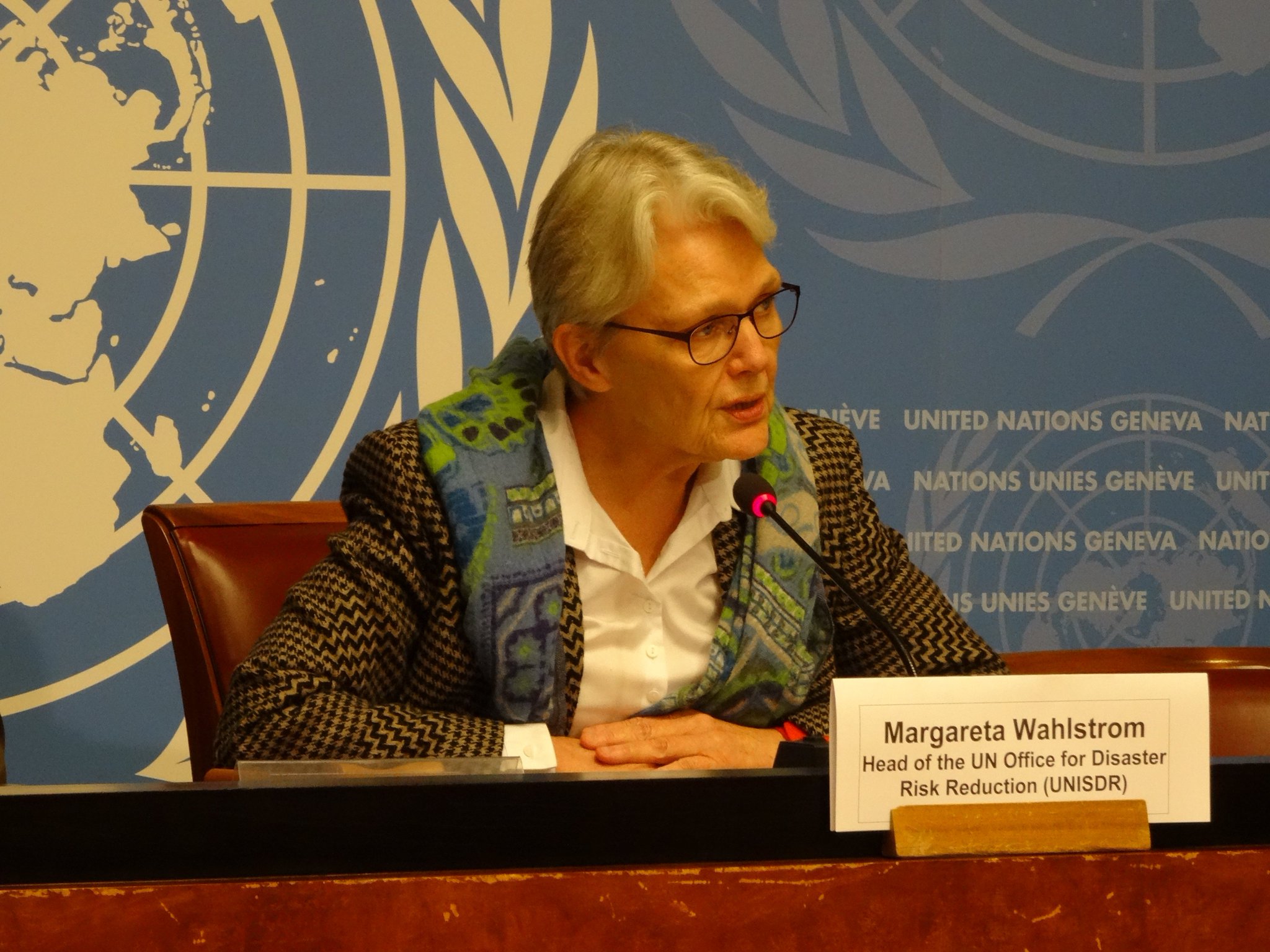
On 23 November, just a week before the opening of COP 21, the Climate Change Conference in Paris, the United Nations issued a fascinating (and scary) report showing the unexpected toll of climate change over the past 20 years (see here). The author of the report is the UN’s office for disaster risk reduction (UNISDR). Headquartered in Geneva with 5 regional offices, UNISDR is an organizational unit of the UN Secretariat, headed by Margareta Wahlström and tasked to support the implementation, follow-up and review of the Sendai Framework for Disaster Risk Reduction 2015-2030 that was adoped by UN Member States in Japan in March 2015.

Margareta Wahlstrom, presenting the report. She is Special Representative of the Secretary-General (SRSG) for Disaster Risk Reduction, appointed since 2008. A citizen of Sweden, she started her international career with the Red Cross (1995-2000).

The numbers are mind-boggling. Did you know that over the past twenty years, since the first Climate Change Conference (COP1) in 1995, over 600,000 people have lost their lives and over 4 billion have been injured  in weather-related events? Losses to property are of course commensurate and enormous: 87 million homes were damaged or destroyed over the period of the survey; the total cost of property losses – including from earthquakes and tsunamis – is between US$250 billion and US$300 billion annually (a UNISDR estimate, noting that loss data is systematically under-reported).

Perhaps the most remarkable thing is that weather-related events account for 90% of disasters. We always think of disasters in terms of war and other human-related causes (and of course, those are the worst, on ethical grounds because they could be avoided) and we tend to accept passively disasters caused by climate change.

But we shouldn’t. The pace of climate-related events is increasing: An average of 335 weather-related disasters were recorded per year between 2005 and 2014, an increase of 14% from 1995-2004, and almost twice the level recorded during 1985-1995. That is truly scary.

Yet, there is a silver lining in all this. In the upcoming Climate Change Conference, we have a chance to finally do something constructive. This report proves that, in purely economic terms, engaging in measures to control gas emissions and reduce global warming results directly in lives and property saved. And that translates into an automatic reduction in the costs of controlling climate change. So it’s not a straight exchange, one on one, between economic growth and climate change control. By choosing to curb emissions, even developing countries would find that they are enjoying a better quality economic growth.

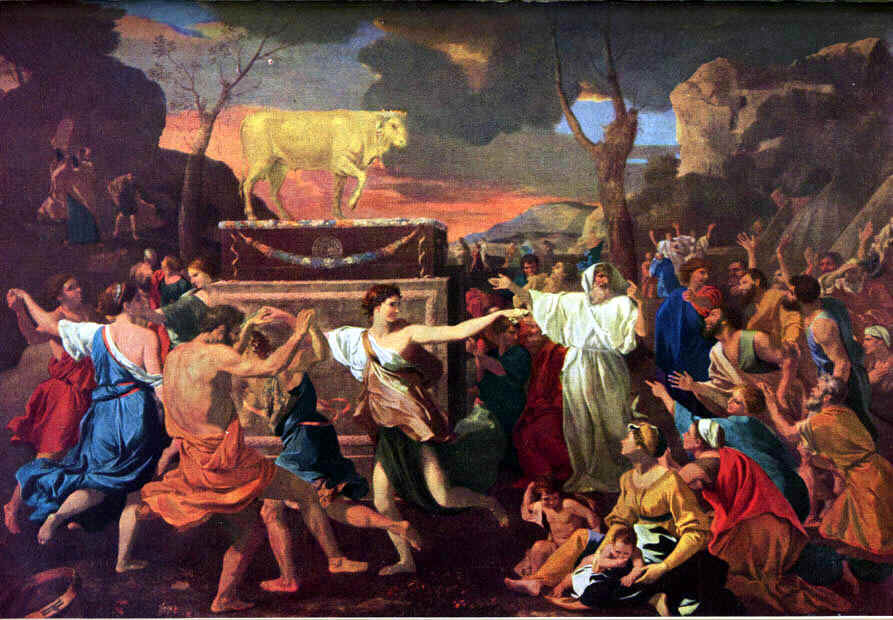
And then there’s the moral question. Do we really have the choice of sacrificing lives to the God of Economic Growth and the Golden Calf of Profit?

Adoration of the Golden Calf by Poussin


Comments Off on The Weather War: UN Report Shows Toll of Climate Change

Filed under Uncategorized, United Nations

The Key for Peace: The Indispensable Role of the United Nations

Once again, one of my articles, just published on Impakter, with a remarkable introduction from the Editor (he is a millennial, a man deeply concerned about the issues of our time, value-driven like his whole generation, and this too is reason for hope in a better future). This is the beginning, to read the rest, go on Impakter, click here.

THE KEY FOR PEACE: THE INDISPENSABLE ROLE OF THE UNITED NATIONS

on 16 November, 2015 at 19:00

Note from the Editor: In these hours, following the tragic killing of innocents in Paris and Beirut,  our thoughts are with the people of France and Lebanon.

Impakter is a global publication. Our team comes from every corner of our beloved World. We represent the citizens of the World. Furthermore, our aim is to express that through this publication. Today we want this thought to reach higher than ever before. 

We believe that the current events taking place during the G20 could potentially be a significant milestone in our human history. A unprecedented event. The G20 could potentially regroup all the citizens of the World.  All united into delivering a safer and united future for all the generations to come.

The road is full of challenges, but  we will all walk through it under one flag, that of Peace. This is without a doubt a key turning point in our history. Like the Phoenix, we are to be reborn from the ashes of our World’s darkest hours.

Now, more then ever, we must move upwards and onwards. 

This is a first analysis of what might be happening next.

LESSONS LEARNED FROM THE PARIS ATTACKS – THE WAY FORWARD

Once the United Nations Security Council is unblocked, we can hope to see an end to the Syria crisis. So far, because of Russia’s repeated use of its veto power at the Security Council, supported by China, its usual ally, the international community has not been able to move forward in a concerted fashion. Syria, after three years of a devastating civil war, is now pounded by Russian and American forces and their respective allies, but they haven’t agreed on common objectives: Russia supports Bashir al Assad, the United States targets Daesh, a.k.a ISIS or IS. But now things are changing.

On Sunday 15 November, at the G20 meeting in Turkey, a major political decision was reportedly taken, a page in the difficult relationship between Russia and the West appears to have been turned. It seems that Putin and Obama had an eye-to-eye talk that lasted half-an-hour and their meeting was caught on Turkish television.

Negotiations under the aegis of the United Nations between the Syrian opposition and the regime [meaning Bashir al Assad] and a cease-fire

A White House spokesman said afterwards…

Comments Off on The Key for Peace: The Indispensable Role of the United Nations

Filed under politics, Uncategorized, United Nations