Poverty in America vs. Poverty in India: The Making of Bestsellers?

I just wrote this article and uploaded it on Thingser, the only social network that lets you do this – write an article and post it on the platform – if you don’t believe me, try doing this on Facebook!

It comes with the Thingser logo as a featured image to draw attention to this special feature:

And here’s the article:

POVERTY IN AMERICA vs. POVERTY IN INDIA: A JUICY SUBJECT FOR BESTSELLERS?


Featured image on NYT review of Evicted, published February 26, 2016

 A book about poverty, Evicted: Poverty and Profit in the American City, by Matthew Desmond, a sociologist and Harvard University professor and Co-director of the Justice and Poverty Project, was defined by the New York Times as “an astonishing book”. Before going on sale on March 1, 2016, it had already 23 positive “customer reviews” on Amazon. The publisher, Crown Publishers, is ensuring this will be a smashing hit, including pricing the hardcover edition lower than the digital edition. The objective? Echo Katherine Boo’s success with her 3-year study of a Mumbai slum. Here are the reasons why such a book, in spite of its dark, depressing content, is very likely to make it as a major best seller and perhaps even as a future blockbuster movie.   

In a recent and impassioned review of Matthew Desmond’s latest book, Evicted:Poverty and Profit in the American City, to be published shortly (on 1 March 2016, Crown Publishers), the New York Times wryly noted: “Poverty in America has become a lucrative business, with appalling results”.

The author of the review is Barbara Ehrenreich, the noted political activist who was perhaps the first one to publish a best seller about the subject of poverty,  Nickel and Dimed that came out in 2001.

It caused a stir and inspired others to follow in her path, including Adam Shepard with Scratch Beginnings: Me, $25 and the Search for the American Dream and Charles Platt with his blog “Boing, Boing”.

Ms. Ehrenreich is also the founder of the Economic Hardship Reporting Project (EHRP) dedicated to “supporting journalism, photo and video about economic struggle”. EHRP is run by editor-in-chief Alissa Quart, a professor at Columbia University’s School of Journalism and author of a socially-oriented non-fiction book Branded: the Buying and Selling of Teenagers .

Published in 2003, it was considered a “substantive follow-up to Naomi Klein’s No Logo” (Publishers’ Weekly).

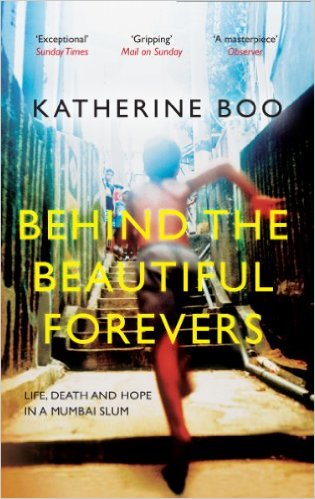
In 2012, Katherine Boo, a New Yorker journalist and recipient of a Pulitzer prize, erupted on this American scene focused with her best selling book about poverty in India, Behind the Beautiful Forevers: Life, Death and Hope in a Mumbai Slum .

It instantly earned praise from everyone that counts (1,851 customer reviews on Amazon, over 8,000 reviews on Goodreads) and an accolade from best-selling author Junot Diaz on the New York Times, calling it “a book of extraordinary intelligence and humanity…beyond groundbreaking”.

What have all these authors in common?

They all did something unusual…

Click here to read the rest.

Comments Off on Poverty in America vs. Poverty in India: The Making of Bestsellers?

Filed under non-fiction, politics, Publishing, social media

The Western Sahara

 Another one of my articles on Impakter magazine:
Western Sahara

on February 22, 2016 at 5:25 PM

The Western Sahara scandal. The last colonial war in Africa is still unresolved, in spite of over 40 years of efforts on the part of the United Nations. A people has been destroyed, its rights to its native soil confiscated, half of its people living in refugee camps – three generations now that have never known a normal, free life – while the rest barely ekes out a living in the barren eastern part of the country, just beyond a Berlin-like wall built by the occupant, Morocco.

And all the riches of the country from ocean fisheries and phosphate mining go to Morocco, leaving not a cent for the native people of the Western Sahara, the Sahrawis.
Morocco has brought into the country some 350,000 Moroccan immigrants; they help exploit the phosphate mines and have even set up modern agricultural infrastructures producing tomatoes, while the exploration rights to oil recently discovered in the ocean have been sold to Americans. The Moroccan tomatoes bought by Europeans are often in fact grown in the Western Sahara.

Who knew?

Actually, nobody knows. Or cares. This is an international scandal, one of the worst offenses against human rights and human dignity. And a conspicuous United Nations failure.

How did it all start?

Comments Off on The Western Sahara

Filed under politics, Uncategorized, United Nations

Only 40 Self-Published Authors are a Success, says Amazon

The cat is out of the bag, finally we know exactly how many self-published authors make it big: 40.

Yes, that’s not a typo.

40 self-published authors “make money”, all the others, and they number in the hundreds of thousands, don’t. This interesting statistic, recently revealed in a New York Times article, applies to the Kindle Store, but since Amazon is in fact the largest digital publishing platform in the world, it is a safe bet that self-published authors are not doing much better anywhere else.

“Making money” here means selling more than one million e-book copies in the last five years. Yes, 40 authors have managed that, and have even gone on to establishing their own publishing house, like Meredith Wild. Her story is fully reported in the New York Times, here, and well worth pondering over. And wondering what “making money” really means.

That story reveals some further nuggets about the current fluctuating state of the publishing industry: it seems that last year, a third of the 100 best-selling Kindle books were self-published titles on average each week. Conversely, that means legacy publishers only raked in two-thirds. Perhaps this is not such a surprising result, given their habit of pricing e-books at stratospheric levels, from $12 to $16 or more compared to self-published authors who deem that $3 to $5 is the “right” price…One has to wonder why publishers do this, even at times pricing e-books more than their own printed versions of the title. Perhaps they are afraid of digital?

The digital market is indeed scary, primarily because of its dimension: over 4 million titles today in the Kindle Store, compared with 600,000 six years ago (again, the data is from the same article). This means “book discovery” has become the number one problem. How can your book stand out in such a vast crowd?

There are many answers in the industry (and savvy marketing certainly has big role), but some of the more ground-breaking solutions come from the successful self-published authors themselves, like Meredith Wild and a few others that have (more or less) followed her example, like Bella Andre, Barbara Freethy, H.M.Ward, C.J.Lyons. They have struck deals with Ingram Content Group, a major book printer and distributor, thus getting their novels in bookstores, big-box stores and airports. Because,let’s face it, when you’re selling big in the digital market, you don’t want to lose out in the printed one: 36% of book buyers still read only print books (according to a 2015 Codex Group survey – for more about how print books hold their own, see this article).

What does this mean in terms of the future of the industry?  According to David Montgomery of Publishing Technology:

“There isn’t one book market anymore: there are two, and they exist in parallel. One continues to be dominated by major publishers, and increasingly uses agency pricing as a strategy to support print book sales. The second publishing market is almost exclusively made up of e-books, and is driven by Amazon-published and KDP content sold at a substantial discount to the product produced by traditional publishers.”

And he foresees a growing divide in 2016 between the two markets. Yet the success of Meredith Wild and the other authors like her suggests that something else might be happening: self-publishing could be encroaching in a territory that used to be seen as exclusive to legacy publishers.

Time to celebrate? Not yet. There is a caveat and it’s a big one: only 40 such authors are likely to bridge the divide. In fact, writing is a poor man’s occupation. As Publisher’s Weekly noted in an article published last year: the majority of authors earn below the poverty line. The statistics are grim:

Given that a single person earning less than $11,670 annually sits below the poverty line, 56% of respondents would qualify, if they relied solely on income from their writing. The survey also indicated that not only are many authors earning little, they are, since 2009, also earning less. Overall, the median writing-related income among respondents dropped from $10,500 in 2009 to $8,000 2014 in 2014, a decline of 24%. (highlight added).

That’s way below the poverty line! Small wonder that most authors depend on another job to survive…

So if you’re not selling your books, take heart, you’re not the only one. If you’re considering becoming a writer, think twice, it won’t make you rich. To be honest, if I could do my life over, I wouldn’t go into writing (though I love story-telling), I’d go into…film making! That is the art of the future, people don’t read books, they go to the movies, they binge on TV series, they play video-games. And in all these – movies, TV, games –  good story-tellers are more needed than ever

No, the art of writing is not dead, it is just undergoing a change of venue!


NOTE: This was published over a year ago and has garnered more comments than any of my blog posts has ever done before and I warmly thank my commentators including those who didn’t agree with my reading of the data – no doubt this avalanche of comments is a testimony to the (high) number of writers (self-published and non) wondering where they stand and what they can expect from a writing career. Bottom line: if you enjoy writing, just do it and don’t worry whether it’s going to bring in the bacon or not. One thing is will do for sure: it will make you happy. And that’s worth far more than any money you might ever make…Happy writing!


178 Comments

Filed under Publishing, Uncategorized

2016: The Year of the Writer?

There are signs that after the dramatic 2009 digital disruption that brought in the self-publishing tsunami, the publishing industry is stabilizing. And Kristine Kathryn Rusch, a best-selling author and dispenser of cool, much sought-after advice has even decreed on her blog in a year-end post, that 2016, is going to be “The Year of the Writer”.

Kristine Kathryn Rush’s blog, click here

Hooray! Or is it too early to celebrate? KK Rusch notes that in 2015 a lot of indie writers suffered from burnout (disclosure: my case too). But she has words of wisdom to soothe the pain:

If you’re destined to be a career writer, you’ll come back to it—or rather, it’ll come back to you. One day, a story will pop into your head, a story that needs to be told. I just got an e-mail from a long-time published writer who said that very thing. For the longest time, he thought he was done writing, and now he’s turning his attention to a new novel.

So nice to hear I’m not the only one (and yes, now too I’m turning my attention to a new novel).

So why this high rate of burnout in 2015? Simple: because of marketing pressures:

  1. You have to market your book in every possible way, Twitter, Facebook, book tours, Goodreads, you name it – exhausting;
  2. You have to write your next book in the series – yes, it’s a series of course, the best way to keep your readers glued to your books – and you have to do it as fast as you can, you’ve heard that best-selling authors come out with a new book every three months (yikes, how do they manage that?) – even more exhausting, especially if coupled with (1) above.
No surprise then that authors collapse.
But as KK Rush says, why do it? The solution to burnout is simple: write what you want. And, as she notes:

It does take courage to write what you want. To follow your own creativity and see where it will lead you. To walk down a path that doesn’t exist yet.So maybe I should modify my conclusion and call 2016 the Year of the Courageous WriterBecause we’ll be seeing a lot of courage in print this year.

Ready to be courageous? Ready to do your own thing?

Well, maybe not quite yet. Also, there are many ways to deal with burnout. For example, you could step sideways – move into non-fiction. That’s what I did: since 2014, I’ve moved into a lot of non-fiction writing (mostly articles about the United Nations) and working as Senior Editor for Impakter – and it’s been a wonderful experience, I’ve come across a lot of new, hugely talented young writers contributing exciting articles to Impakter.

Impakter – The United Nations section, click here to see.

Meanwhile the number of readers on Impakter has grown exponentially, to the extent that it has become a lead magazine for Millennials, even exceeding the New Yorker…That has made my experience with burnout as a fiction writer a lot easier to bear!

But KK Rush does not stop there in her predictions. She has just published a fascinating analysis of what went wrong: “Business Musings: The Reactive Business Model“. What she is arguing is that traditional publishers, starting in the 1970’s, have been “reacting” to surprise best-sellers by imitating them.

In order to survive commercially, they’ve churned out as fast as they could books that are as close as possible to the surprise best seller. And now, indie writers have fallen in the same trap, writing in the genre that supposedly “sells”, following as closely as they can the example set by best-selling authors. And you get a slew of would-be Hunger Games, slavishly applying what KK Rusch calls the “reactive business model”. And she predicts:

More and more indie writers will leave the business if their business plan is based on the Reactive Business Model.Traditional publishers have forgotten that they used to partner with writers. Writers created the material and publishers published it to the best of their abilities. Because traditional publishers are owned by large corporate entities, the pursuit of profit has become the mantra, and if an imprint isn’t profitable in the short term (five years or so), it gets absorbed, replaced, or dissolved.
Indie writers don’t have to follow that model—and shouldn’t. They need to go back to the old model.

And of course, the “old model” – the reason writers abandoned traditional publishing and went down the road of self-publishing in the first place –  is exactly that:

Write what you want to write. Don’t think about marketing until the project—whatever it is—is done. Then consider how to market the project. Be creative in the marketing too. Don’t just imitate what was done before.

Wise words, no doubt about it. And when writing your next book, she warns:

 “Don’t act like traditional publishers and manipulate your next book to be like someone else’s success. […] Move forward in your career. Don’t look back. Following the Reactive Business Model is by definition looking backwards.

Definitely good advice.

I would only add: don’t worry about marketing at all.

I know, this may sound counter-intuitive in a time when book discovery has become incredibly difficult given the large number of available titles – more than 4 million in the Kindle store alone.

The theory that the “cream rises to the top” and that the best books will be inevitably discovered has proved wrong time and again. A book, to be properly launched, needs strong marketing. A push. And of course, be ready to do it when the time comes but don’t overdo it, and especially not at the expense of your writing time.

You can always do some more book promotion later, if and as needed. It may take longer for you to be recognized, but at least in this digital age, indie writers have an advantage over traditionally published authors of the past: their books don’t disappear from book stores after three months, digital versions stay in the cloud forever, they have a so-called “long tail” that is (eventually) working for them.

This simple technical fact ensures that your books remain available on Amazon and other platforms as long as you, the author, don’t retire them.

So hang on in there!

And Happy 2016!

2 Comments

Filed under book marketing, genre fiction, Publishing, Uncategorized

What Really Happened at the Paris Climate Conference – and What Next

Impakter just published one of my articles about the United Nations – this one about the results of the Paris Climate Conference:

cop21-1050x677

The Paris Climate Conference Agreement – What Next

After the Copenhagen fiasco in 2009 when no agreement was reached, the subject of climate change looked dead and buried. Yet, this time in Paris, something positive happened at COP21. That’s the 21st Conference of the Parties (COP), i.e. the countries that have signed onto the United Nations Framework Convention on Climate Change (UNFCCC) back in Rio, at the 1992 Earth Summit. It took twenty-three years to get from there – in Rio – to here in Paris.

So, was COP21 a success or yet another failure? Actually, it was both

On Saturday, December 12th, at 7:30 pm, after 11 days of negotiations between 195 countries, including a 24 hour delay and a last minute panic caused by a typo in the text that suggested that one sentence in the agreement was binding when it was intended to be voluntary, an agreement was reached, met by a standing ovation.  Called the “Paris Agreement” by the French Foreign Affairs Minister Laurent Fabius and President of COP21, it was agreed to by “consensus” as is the habit at the United Nations, even though one country, Nicaragua, insisted that its perplexities be put on record.

If you listen to French President Hollande or the Secretary General of the United Nations Ban Ki-moon, it was a huge success, a “historic” agreement, the start of a new era. President Obama concurred, seeing the accord largely as a personal victory, the result of his agreement last year with President Xi Jinping of China to reduce greenhouse gas emissions  and  of the new regulations he issued this year to reduce carbon pollution from power plants. “We’ve transformed the United States into the global leader in fighting climate change,” he told the New York Times.

Yet, the deal falls far short of what is needed to slow global warming and reverse the environmental damage already done.

The rest on Impakter, to read click here.

Comments Off on What Really Happened at the Paris Climate Conference – and What Next

Filed under United Nations

The Weather War: UN Report Shows Toll of Climate Change

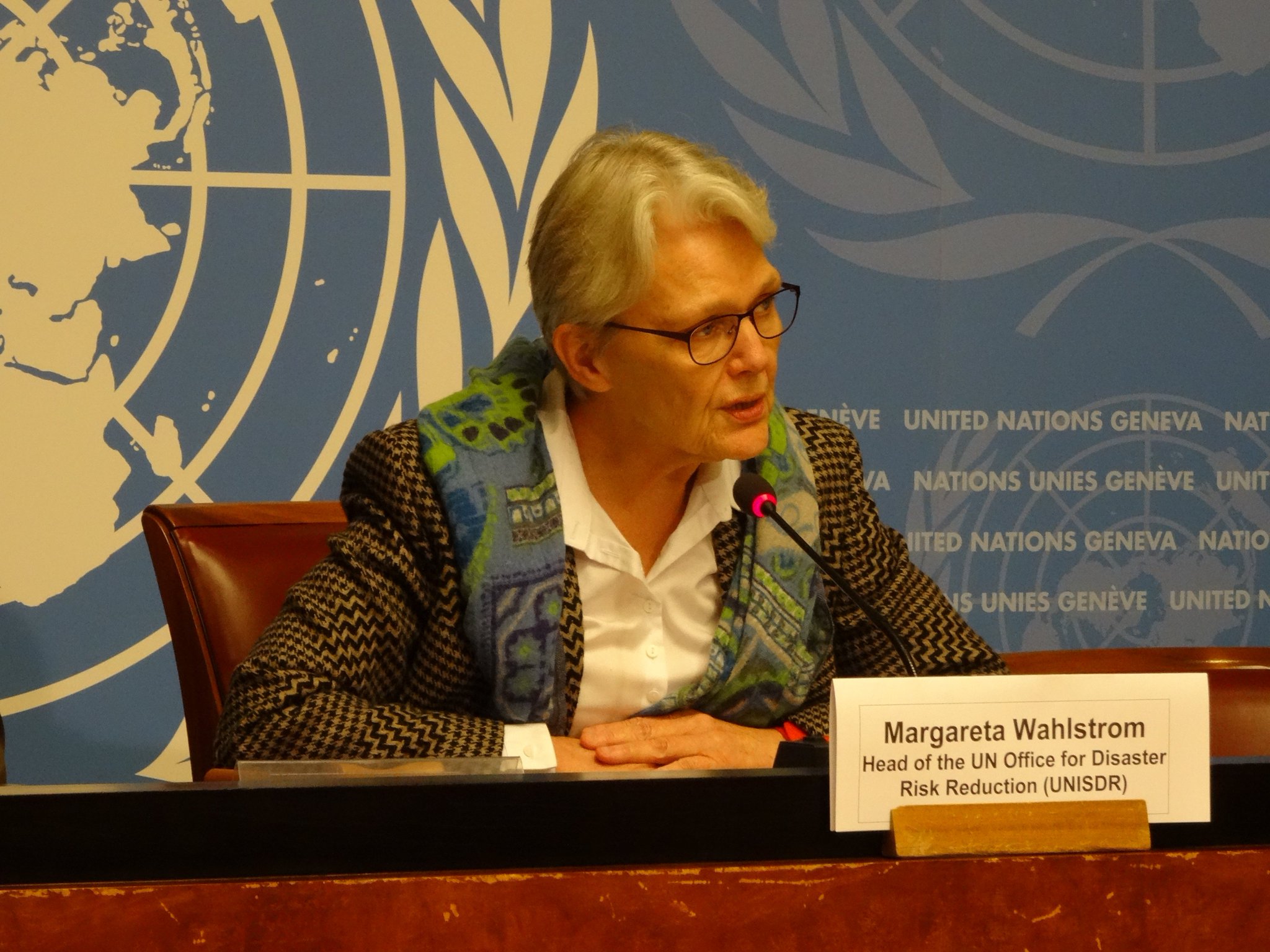
On 23 November, just a week before the opening of COP 21, the Climate Change Conference in Paris, the United Nations issued a fascinating (and scary) report showing the unexpected toll of climate change over the past 20 years (see here). The author of the report is the UN’s office for disaster risk reduction (UNISDR). Headquartered in Geneva with 5 regional offices, UNISDR is an organizational unit of the UN Secretariat, headed by Margareta Wahlström and tasked to support the implementation, follow-up and review of the Sendai Framework for Disaster Risk Reduction 2015-2030 that was adoped by UN Member States in Japan in March 2015.

Margareta Wahlstrom, presenting the report. She is Special Representative of the Secretary-General (SRSG) for Disaster Risk Reduction, appointed since 2008. A citizen of Sweden, she started her international career with the Red Cross (1995-2000).

The numbers are mind-boggling. Did you know that over the past twenty years, since the first Climate Change Conference (COP1) in 1995, over 600,000 people have lost their lives and over 4 billion have been injured  in weather-related events? Losses to property are of course commensurate and enormous: 87 million homes were damaged or destroyed over the period of the survey; the total cost of property losses – including from earthquakes and tsunamis – is between US$250 billion and US$300 billion annually (a UNISDR estimate, noting that loss data is systematically under-reported).

Perhaps the most remarkable thing is that weather-related events account for 90% of disasters. We always think of disasters in terms of war and other human-related causes (and of course, those are the worst, on ethical grounds because they could be avoided) and we tend to accept passively disasters caused by climate change.

But we shouldn’t. The pace of climate-related events is increasing: An average of 335 weather-related disasters were recorded per year between 2005 and 2014, an increase of 14% from 1995-2004, and almost twice the level recorded during 1985-1995. That is truly scary.

Yet, there is a silver lining in all this. In the upcoming Climate Change Conference, we have a chance to finally do something constructive. This report proves that, in purely economic terms, engaging in measures to control gas emissions and reduce global warming results directly in lives and property saved. And that translates into an automatic reduction in the costs of controlling climate change. So it’s not a straight exchange, one on one, between economic growth and climate change control. By choosing to curb emissions, even developing countries would find that they are enjoying a better quality economic growth.

And then there’s the moral question. Do we really have the choice of sacrificing lives to the God of Economic Growth and the Golden Calf of Profit?

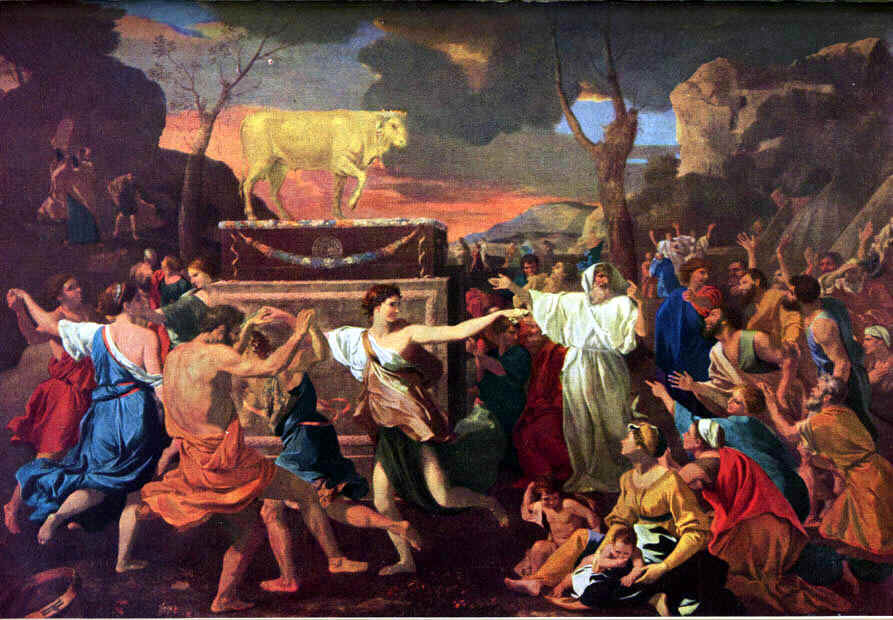
Adoration of the Golden Calf by Poussin


Comments Off on The Weather War: UN Report Shows Toll of Climate Change

Filed under Uncategorized, United Nations

The Key for Peace: The Indispensable Role of the United Nations

Once again, one of my articles, just published on Impakter, with a remarkable introduction from the Editor (he is a millennial, a man deeply concerned about the issues of our time, value-driven like his whole generation, and this too is reason for hope in a better future). This is the beginning, to read the rest, go on Impakter, click here.

THE KEY FOR PEACE: THE INDISPENSABLE ROLE OF THE UNITED NATIONS

on 16 November, 2015 at 19:00

Note from the Editor: In these hours, following the tragic killing of innocents in Paris and Beirut,  our thoughts are with the people of France and Lebanon.

Impakter is a global publication. Our team comes from every corner of our beloved World. We represent the citizens of the World. Furthermore, our aim is to express that through this publication. Today we want this thought to reach higher than ever before. 

We believe that the current events taking place during the G20 could potentially be a significant milestone in our human history. A unprecedented event. The G20 could potentially regroup all the citizens of the World.  All united into delivering a safer and united future for all the generations to come.

The road is full of challenges, but  we will all walk through it under one flag, that of Peace. This is without a doubt a key turning point in our history. Like the Phoenix, we are to be reborn from the ashes of our World’s darkest hours.

Now, more then ever, we must move upwards and onwards. 

This is a first analysis of what might be happening next.

LESSONS LEARNED FROM THE PARIS ATTACKS – THE WAY FORWARD

Once the United Nations Security Council is unblocked, we can hope to see an end to the Syria crisis. So far, because of Russia’s repeated use of its veto power at the Security Council, supported by China, its usual ally, the international community has not been able to move forward in a concerted fashion. Syria, after three years of a devastating civil war, is now pounded by Russian and American forces and their respective allies, but they haven’t agreed on common objectives: Russia supports Bashir al Assad, the United States targets Daesh, a.k.a ISIS or IS. But now things are changing.

On Sunday 15 November, at the G20 meeting in Turkey, a major political decision was reportedly taken, a page in the difficult relationship between Russia and the West appears to have been turned. It seems that Putin and Obama had an eye-to-eye talk that lasted half-an-hour and their meeting was caught on Turkish television.

Negotiations under the aegis of the United Nations between the Syrian opposition and the regime [meaning Bashir al Assad] and a cease-fire

A White House spokesman said afterwards…

Comments Off on The Key for Peace: The Indispensable Role of the United Nations

Filed under politics, Uncategorized, United Nations

Climate Fiction Update: It’s Now Eco-fiction!

The thread discussing climate fiction on the top-rated SFF World website is still on-going! If you haven’t read it yet, click here to see it. It has now veered to discussing what makes for a good story based on  an eco-fiction premise. And here I thought the thread had been winding down! But it hasn’t, you’re still in time to join the discussion and post your comment.  I’d even posted this comment that I thought would be my last:

I do hope that one lasting result of this excellent debate on SFFWorld is that we can put to rest the discussion around cli-fi vs. climate fiction vs. eco-fiction!

I vote for eco-fiction, particularly since it has shown to have proven historical antecedents – wow, back to 1971, as Burt pointed out, and with a string of big names from Asimov to Vonnegut to Steinbeck…That’s impressive and yes, I would certainly also sign on to that pitch Burt quotes:

“Eco-Fiction is a provocative and poignant collection of short stories that issue a plea to each individual to recognize his inevitable place and vital responsibility for the future of man on earth.” ​

Indeed, our responsibility “for the future of man on earth” is vital. This is what Mary and Bert do so beautifully: fighting for a better world with “provocative and poignant” stories – they, and all the other authors mentioned in this thread…

By the way, let me close by saying that I am looking forward to Ecotones!

Yes, I do think the debate around what to call a book set in a post-climate change world (or in the midst of the worst of it) has been laid to rest. And I much prefer the discussion around what makes for a good story. I was introduced to a soon-to-be published anthology of eco-fiction, called Ecotones, and I’m looking forward to it.

Here it is on Kickstarter, seeking to gather funds by 1 December:

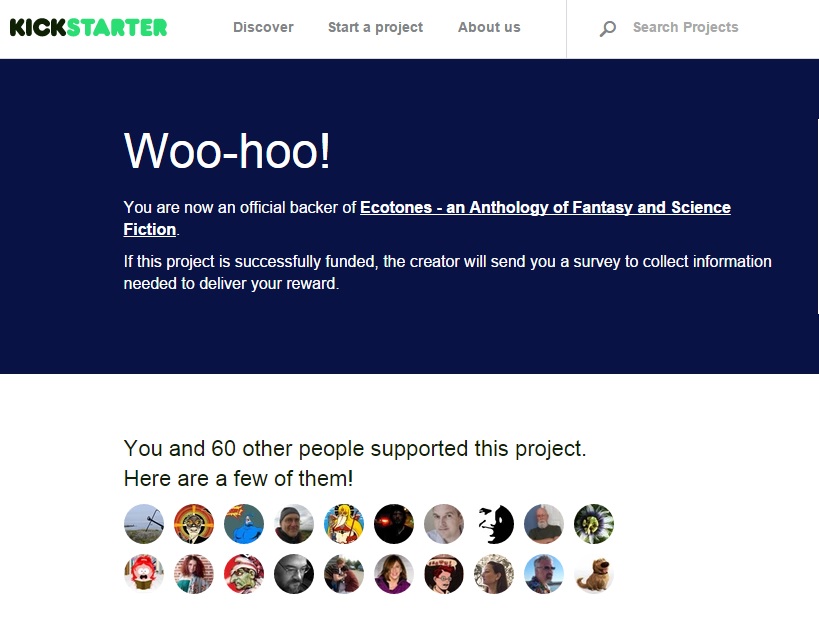
Hurry if you want to help them! I did, they’re half-way there. And you know how Kickstarter works, don’t you? If they don’t reach their stated goal (in this case £1,000) they don’t get the money, Kickstarter cancels the whole campaign and doesn’t take any money you have contributed. Here’s the message you get once you’ve paid in:

Nice, isn’t it? I hope they make it! These are both talented and dedicated writers, deeply engaged in our future – but then, aren’t we all? Aren’t we all worried about global warming, pollution, wars, the end of civilization as we know it? Don’t we all want to pass onto our children and grandchildren a beautiful and safe and just world?

Bless you all!

Comments Off on Climate Fiction Update: It’s Now Eco-fiction!

Filed under Cli Fi

Climate Change and the Price of Survival

BOOK REVIEW – BACK TO THE GARDEN, by Clara Hume, published by Moon Willow Press (2013) Available on Amazon, click here

BREAKING NEWS: On the forum SFFWorld, there’s an on-going debate on climate fiction where Clara Hume intervenes as Guest Host, using her real name, Mary Woodbury, along with two more Guest Hosts, Brian Burt, author of the Aquarius Rising  trilogy and myself under my pen name Claude Nougat. To see or join this stimulating debate, click here now!

Climate change usually inspires the direst of dystopian fiction: end-of-the-world situations, cities under water, people desperately seeking safety and fighting for survival while children and the elderly are the first to die…With Clara Hume’sBack to the Garden, you get that but you also get much more and something that is very different.

You get a breath of fresh air, a glimpse of hope even though in that book, as in all other climate fiction novels I’ve ever read, the world is overheated and overrun with lawless gangs as society as we know it has collapsed.

What this book tells us is: maybe mankind can survive after all…but at what price! Back to the Garden is like going back to square one, the start of civilization. All technological advances are lost, there is no electricity and little fuel left. This is a world of growing scarcities. But is that “garden”, the one in the book, a new, revised garden of Eden?

Maybe it is, and that is a comforting thought: what we have here is dystopia with a smile.

And that’s what makes Back to the Garden very different and really worth reading.

And pondering over.

This is the story of a trip across a devastated, post-apocalyptic America told from multiple points of view, one for each traveler, and each one is an engaging character. We soon find ourselves liking them, feeling their pains, their hopes, their loves. This is a very human tale, some die and we cry, others live on in spite of dreadful obstacles, and they all finally get “back to the garden” – but I stop here, I don’t want to give away the story and ruin the suspense, I will not tell you about this garden, pick up the book and find out!

One commentator on Amazon (see here), made the interesting comparison with Steinbeck’s Grapes of Wrath, noting that while Steinbeck depicted a cross-country trek of people driven from home by the Great Depression, Clara Hume’s characters are driven by Climate Change. The comparison is apt, although the story is in fact very different (as are the characters). But we are indeed at a literary level, this is a beautifully written novel.

The author (Clara Hume is a pen name) is a young woman deeply committed to fighting climate change and preserving our environment for future generations. She maintains a vibrant website Eco-Fiction  that acts as a hub for a community of people eager to debate environmental themes, including climate change, in both literature and the arts.

Here’s the landing page, and you can glimpse a series of interviews of climate fiction authors:

The site is an outreach project run by Moon Willow Press, an independent small press in Canada (British Columbia) with a mission to “help sustain forests while celebrating the written word”. On the site, we learn that “MWP has planted over 1,000 non-invasive trees in ecologically and economically rough areas since 2011. The press prints only on recycled, hemp, and forest-certified fiber.”

Here’s their opening page (screenshot, there are three images that keep changing, I caught this one about the “Blue Dot Run Team”):

Well done, MWP, this is a social-minded business, it is currently open to submissions for both fiction and non-fiction books. And of course, MWP is the publisher of Back to the Garden and numerous other climate fiction novels – reads that anyone with an environmental conscience and a concern about man’s survival on this planet should not miss…

Comments Off on Climate Change and the Price of Survival

Filed under Uncategorized

What Turns a Police Thriller into a Bestseller? Lessons from Faceless Killers

Discovering Henning Mankell (here)

Let me start with a confession: I’m not a habitual reader of police thrillers and murder stories. Like everyone, I’ve read Agatha Christie when I was young, I’ve gone through all the classics from Arthur Conan Doyle to Ngaio Marsh but I’m not a fan, call me a dispassionate reader.
Why? Because too often, I can see through the plot and it all looks depressingly formulaic.

When Henning Mankell died this month (see this excellent article in the Atlantic Monthly, here),  I was reminded of his stature in Scandinavian literature – the Atlantic Monthly calls him the “dean of Nordic Noir“, with 30 million copies of his Kurt Wallander series sold since the first one came out, 25 years ago, in 1990.

Of course, I’m familiar with the character of Kurt Wallander, an ordinary, middle-aged policeman working in a small town in Southern Sweden, having seen several episodes of a series featuring him on ARTE TV. But now I wanted to find out more, I thought I would try and uncover the roots of his success by reading that first book in the Wallander series, the one that “made it”, with the arresting title Faceless Killers.

Here’s what I found – the main “lessons learned” to ensure that your next thriller is going to rise above the genre and make it as a global bestseller.

As you will see, there are only two rules to follow.

First, let me say it’s a great read, the pace never slackens. When it does slow down – as inevitably it must if you’re following a police investigation step-by-step, an indispensable aspect of making this novel realistic – then Kurt Wallander’s personal life butts in. He has problem with his senile, grumpy and lonely father, a landscape artist endlessly painting the same landscape, his cool wife Mona who has just left him, causing him to dream of making love to a black woman (inexplicably black but then dreams are not always explainable) and his complicated daughter Linda, an independent young woman who lives with her boyfriend from Kenya and can’t make up her mind about attending college. You get the sense that Kurt Wallander, ordinary as he is, has in fact a complex life and you, the reader, feel for him.

This observation leads directly to:

Rule #1: establish empathy with your main character – even if this is a police procedural and the implications are that police procedures and the thrill of the chase should trump characterization.

To transcend the genre and establish credentials as a genuine, world-class work of literature, follow Mankell’s example: develop your main character. Kurt Wallander soon becomes someone you feel you know, someone who goes through the same (often depressing) experiences so many of us go through our lives as a marriage grows stale, as a child turns into a rebellious teenager, as a parent slowly sinks into old age.

The other striking aspect of Faceless Killers is its social dimension. 

This is a book that has deep roots in Swedish society, and by extension, in the society of any advanced country that calls itself (like Sweden) a democracy, that believes it has humanitarian traditions. And it’s a book that does not shy from raising deep, uncomfortable questions. In fact, Mankell himself had lived in Africa and brought his own views to his books and the character Kurt Wallander. As he explained on his website,

“Racism for me is a crime, and therefore it seemed natural that I wrote a crime novel. It was after that the idea of a policeman was born.”

The book is peppered with Mankell’s personal opinions about racism and how refugees are viewed and ill-treated in refugee camps in Sweden. One, a Somali, father of nine children, while walking alone down a country lane near his camp, gets his head blown off  by a ruthless killer with an accomplice in a near-by car ready to whisk him away from the crime scene.

But the book does not merely “show”, Mankell is not afraid of “telling”, here are some examples:

  • [One character says:] “We have a refugee policy in this country that must be followed.” [The other answers:] “Wrong. It’s precisely the lack of  refugee policy that creates chaos.”
  • [Then this character amplifies his thinking]: “Right now we’re living in a country where anyone with any motive at all can come in anywhere in this country at any and in any manner. Control of the borders has been eliminated. The customs service is paralyzed. There are plenty of unguarded strips where the dope and the illegal immigrants are unloaded every night.”

Sounds familiar? Yes, it’s amazingly relevant to our own times and the current migrant crisis in Europe. Germany expects to have to take in one million refugees this year, Sweden less of course, but it is still a favorite destination of the millions of migrants pouring into Europe through Greece, the Balkans and Italy – most of them from war-ridden countries like Syria, Afghanistan and Sudan (Darfur, remember it?)

I wonder if any of those migrants has read Faceless Killers?

The book gives you the whole range of feelings – pro and against – caused by waves of migrants, here are a few more samples:

  • “For brief moments [Wallander] could also detect contradictory sympathies in himself for some of the anti-immigrant arguments that came up in discussions and the press while the trial was in progress [trial about the murder of the Somali man]. Did the government and the Immigration Service have any real control over which individuals sought to enter Sweden? Who was a refugee and who was an opportunist? Was it possible to differentiate them all?”

And then comes the conclusion, one that is haunting all of us these days in Europe as we watch waves upon waves of migrants entering the continent:

  • “How long would the principle of the generous refugee policy be able to hold without leading to chaos? Was there any upper limit?

Indeed, that is precisely what we wonder about now. And we are all like Kurt Wallander, who, as Mankell writes:

  •  “He realized that he harbored the same vague apprehension that so many other people did. Anxiety about the unknown, about the future.”

This is what makes this book so extraordinary, and enables it to rise above the “genre” of mysteries, leaving behind the usual tropes and reaching out to the level of “real” literature – not pure thrills, not entertainment for the sake of entertainment but applying a lens to reality that makes you understand reality better, and perhaps in a way you have never understood it before. In short, great literature.

And this brings us to:

Rule #2: Root your story in reality – address real life issues.

In this case, migrants, what to do with them, how to integrate them in our society. In a globalized world shaken by war and injustice, this is the kind of issue that will stay with us a long time. Think of it, Faceless Killers was written 25 years ago, yet the issues it raises are incredibly relevant to our situation today.
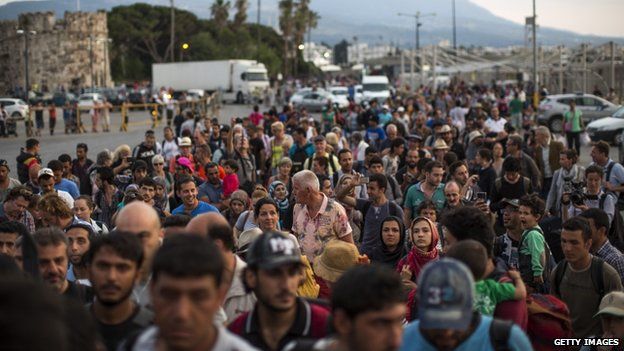
From BBC article: “What can Europe Achieve?” (see here)

You may wonder whether those two rules actually apply beyond thrillers and mysteries.

Of course they do!

In my view, applying those two rules to any genre novel will lift it to the level of
(a) a bestseller; and
(b) literature with a capital “L”.

You may make a lot of money with strictly genre books, selling by the millions like 50 Shades of Grey did, but you won’t reach the top. To achieve that, as Menkell shows, you need to go beyond mere thrills and open the doors of the real world for your readers, you need to make them think.

And you may ask, what is the benefit for you, the writer? Not much beyond some splendid obituaries like the one Henning Mankell got in the Atlantic Monthly or the New York Times and of course, why should you care?

But if you’re an activist who would like to see the world become a better place, then you do care. I know I do. How about you?

Comments Off on What Turns a Police Thriller into a Bestseller? Lessons from Faceless Killers

Filed under Literature, politics