Women Make the Difference Everywhere

Here’s another article just published on Impakter under my real name, Claude Forthomme – memories of the days when I worked at the United Nations, traveling to developing countries, to inspect and evaluate aid projects, trying to sort out problems:

https://i0.wp.com/impakter.com/wp-content/uploads/2014/10/2014-10-27-10.40.05-1-1050x695.jpg

Diary of a UN Official #3: When Women Make the Difference

on 27 October, 2014 at 10:31

Guinea-Bissau, October 1990, I don’t remember which day. But I remember how it was that morning when I woke up. Hot, very hot, the way it is in the tropics, damp and cloying, with a low sky of dark clouds, like a lid. I got out of my room, with just a bathrobe on, and ran to the nearest mango tree – the hotel I was staying at was very simple, just a handful of bungalows of two rooms each, set in a large, unkempt garden, no flowers, a lot of mud. But so many mangoes, greenish yellow, with a juicy, golden flesh, the perfect breakfast. I went into the bathroom to carve out my mango with a multi-bladed Swiss knife I always carried with me (back then you could taken them aboard planes). The sweet juice dripped all over the sink. I reflected how in Bissau, there are mango trees everywhere, heavy with fruit; all one has to do is look up and grab one, they’re free – a little like living in paradise.

medium_9291067039

But Guinea-Bissau back then (and even today) is no paradise. It is one of the poorest countries on earth, more than two thirds of the population lives below the poverty line on less than two dollars a day. If Guinea-Bissau threatens these days to become a narco-state, this is no surprise.  Guess what, even when I was there, most people, some 80 percent, earned whatever living they could scrape from agriculture, mostly rice (to feed their families) and cashew and ground nuts (for export).

large_5774107610

I knew all about this, before coming, I had done my “due diligence” to prepare myself for my evaluation mission. Little did I know that in a few hours I would live through the most extraordinary and unforgettable experience in my life as FAO Evaluation Officer.  The project was ending, the question I had to answer was, should it continue, a standard question at the end of a project cycle. I had read about the country’s problems after it became independent from Portugal, how the Portuguese Colonial War had led to a  rapid exodus of the Portuguese civilian and military authorities, and like any war, had wrought considerable damage to the country’s economic and social infrastructure. With continuing political instability, the standard of living had collapsed and while Guinea Bissau had been a net exporter of rice in colonial times, now it was a net importer. And for years there had been no vegetables or fruit (except for mangoes) in the capital – a small town of some 150,000 people (more than double that number today). That had changed with the project I was meant to evaluate. A horticulture project, started a couple of years before, it was meant to provide the town with vegetables. It was a very small project, less than one hundred thousand dollars of expenses in two years. Peanuts. Compared to the big problems the country faced, what was the point of it? How could it help? Was another extension really needed? But I was beginning to revise my opinion.

For the rest, link to Impakter. Expect a very surprising end to that story!

Comments Off on Women Make the Difference Everywhere

Filed under Literature, memoirs

Startup for the Brave New Age of Digital Publishing

Here’s another one of my articles published on Impakter – under my real name, Claude Forthomme. Find out about a neat new publishing services website where you can find all you need (if you’re a self-published writer). I interviewed one of the two founders, Richard Fayet:

https://i0.wp.com/impakter.com/wp-content/uploads/2014/10/2014-07-06-14.23.38-1050x787.jpg

Reedsy is a startup aimed at the publishing industry. At the Women’s Fiction Festival, a writers’ conference held in Matera, Italy, I met Ricardo Fayet, Reedsy’s Chief Operating Officer and had a chance to chat with him. The website is still in beta version, here is the landing page: www.reedsy.com.

Blog Post Image

Note the lovely design with soft colors, attractive and friendly. You can open an account as a writer or as a “freelancer” or both. A freelancer is someone providing services as copy or development editor, book cover designer, illustrator etc. Even though this is still in beta version, the list is already quite long, over 100 names, and most are obviously affirmed, experienced professionals. One can filter by genre, which is very useful for a writer looking for help to finalize a particular book in a particular genre. Considering Reedsy is still in a beta phase, this is a remarkable achievement. Of course there are still some bugs and that’s normal, it’s early day. For example, the feature to enable writers to look for more specific professional help is not yet activated, but it soon will be.

Question: Richard, I just joined your site and navigated it a bit. In a few words, can you tell us what Reedsy is about, what is its role in publishing?

Answer: Reedsy is the future’s publishing house. We support independent authors in publishing their own work. We want those authors to earn a living wage from their books. We want to help them publish their best work by connecting them with the best freelancers in the publishing industry, and by giving them the best tools to work with. And, one day, we want to do this all over the world.

Q: So you are aiming directly at supporting self-publishing that, according to some professionals in the industry, will soon become a larger market than traditional publishing. One famous UK literary agent even foresaw that in five years 75% of all books would be self-published. Why is something like Reedsy needed?

You wouldn’t have needed a service like Reedsy ten years ago when there were just a handful of publishers – editors and designers looking for work knew where to go. Now, in a post-Kindle world, we want to make sure the best freelancers are aware of all the independent authors who want to work with them, and that those authors know which freelancers they want to work with and which ones they want to avoid.

The rest on Impakter, click here

Comments Off on Startup for the Brave New Age of Digital Publishing

Filed under interviews

Self-Publishing and Women’s Fiction, Hot Topics in International Writer’s Conference in Italy

As my friends in Rome know, I left town on September 24 to attend a very special writer’s conference held in the South of Italy, in beautiful Matera – now just nominated European Culture Capital for 2019. Self-publishing was amply discussed and we had several self-published stars, including Bella André and Tina Folsom, major editors from big US and Italian publishing houses, publishing gurus like Jane Friedman and David Gaughran, and literary agents from the US, UK and Italy. Here’s the article I wrote about it for Publishing Perspectives, just published today:

Italian Writing Festival Takes Women, Self-Publishing Seriously


Women's Fiction Festival
By Claude Nougat

After eleven years of uninterrupted success, the Women’s Fiction Festival in Matera – four days at the end of September, it closed on the 28th – has proven once again that it is unique in Europe.  It combines the best of American writers’ conferences and Italian literary events, drawing together the business side of publishing —literary agents, editors, translators and publishing gurus — with the creative side, both established writers and newbies, coming from Europe and America. And it manages to do this without turning into a mega, unmanageable event.
This year it was sold out. But it meant that only about one hundred lucky few made it, and for aspiring writers, it was a perfect occasion to pitch their work at agents and editors coming from the US, the UK and of course Italy.Small size is just one of the keys of the Festival’s success. The other is Matera itself, a UNESCO World Heritage site in Southern Italy, famous for its “sassi,” hundreds of cave dwellings. Some have even been turned into charming hotels though the “modern” town with its baroque churches and palaces may prove more comfortable to the less adventurous. The Festival is held in a highly suggestive environment, “Le Monacelle”, an ex-convent dating to the 16th century and restored in 2000. And that is surely yet another reason for success. The convent’s numerous reception rooms are all open to Festival participants, including a cloistered patio and a vast terrace with a fantastic view over the old town. A magic place! So much so that it has just been named by the European Commission to be “Europe’s Cultural Capital” in 2019, beating all sorts of other rival Italian towns, including Lecce and Perugia.

From left, David Gaughran, Ann Colette, Jane Friedman, Monique Patterson of St Martin's Press, Elizabeth Jennings

From left, David Gaughran, Ann Colette, Jane Friedman, Monique Patterson of St Martin’s Press, Elizabeth Jennings

A Festival Born out of Friendship

What however makes the difference is the original “business model” followed by the Festival. First conceived as a writers’ retreat, it quickly morphed into a sui generis conference. It all began with a “telephonic friendship” between author Elizabeth Jennings who lived in Matera and Maria Paola Romeo who was then editorial director at Harlequin Mondadori in Milan. As Elizabeth Jennings explains it, they were “chatting and talking about establishing a writer’s retreat in Matera, which is quite beautiful and quite conducive to writing.” But in so doing, they both brought their experience and contacts to bear with the result that Matera turned into a special meeting place for the literati on both sides of the Atlantic, something truly unique.

Elizabeth Jennings is a successful romantic suspense author who constantly travels to the US, attending major writers’ conferences. Maria Paola Romeo has moved on from Mondadori and has become one of the most successful literary agents in Italy and now founder of a fast-growing digital publishing house Emma Books focused on women’s literature in both English and Italian.

The rest on Publishing Perspectives, click here.

Comments Off on Self-Publishing and Women’s Fiction, Hot Topics in International Writer’s Conference in Italy

Filed under Uncategorized

How Good is Patrick Modiano, the New Nobel in Literature?

The Nobel jury seems to be able to discover new writers you’ve never heard of, coming from countries that have a literature you have never read, like China, Egypt or Turkey and everytime, it’s a real pleasure to discover something totally new. So when the Nobel this year went to a Frenchman I had never read – and I do read regularly French literature –  I was totally floored and rushed to buy one of his books. In French, of course.

I got “Rue des Boutiques Obscures” because I thought it was a take on the Rome address of the old Italian Communist Party (now PD, Partito Democratico). As everyone in Italy knows, it’s “via delle botteghe scure”. But no, this book has nothing to do with the Communist Party or any party for that matter.

Patrick Modiano is not interested in politics, he’s into the past, and a particular past at that, all the dark years around and during World War II, and most of his stories are set in Paris. In short, a very local, circumscribed author.

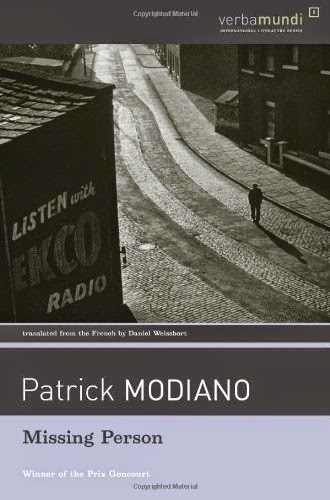
Yet, in spite of that, the themes he predilects are universal, they focus on the question of identity and self. This book, which came out in 1978, the year he won the prestigious Prix Goncourt, was quickly translated into English by Daniel Weissbort, under the title “Missing Person” – actually one of the few books he wrote that got translated. It is published in the United States by a small indie press owned by David R. Godine and of course it is available on Amazon (see here). That’s where I got it – but I was able to find the Kindle version of the French original, to pass onto my 100 year-old mother who still reads a novel per week on her Kindle; incidentally, she was very happy to get it, she likes to keep abreast of the latest literary news…This said, I’m a little surprised that Amazon, ever so efficient, hasn’t got a digital version of the English translation all ready for the American public. Quite clearly, both Mr. Godine and Amazon were taken by surprise by the Nobel jury!

He wrote some 20 books in a career that spanned  nearly 45 years (he was born in 1945). As I am now writing this blog post, I just learned from an article in the Washington Post (here), that “Missing Person” is the book Peter Englund, a historian and the permanent secretary of the Swedish Academy, recommends to readers unfamiliar with Patrick Modiano.  “It’s a fun book,” Englund said. “He’s playing with the genre.”

And the genre he is playing with is mysteries. A detective, suffering from amnesia, sets out to recover his identity, following a variety of strange leads. As described on the Godine site:

In this strange, elegant novel, winner of France’s premier literary prize, Patrick Modiano portrays a man in pursuit of the identity he lost in the murky days of the Paris Occupation, the black hole of French memory.

For ten years Guy Roland has lived without a past. His current life and name were given to him by his recently retired boss, Hutte, who welcomed him, a onetime client, into his detective agency. Guy makes full use of Hutte’s files – directories, yearbooks, and papers of all kinds going back half a century – but his leads are few. Could he really be the person in that photograph, a young man remembered by some as a South American attaché? Or was he someone else, perhaps the disappeared scion of a prominent local family? He interviews strangers and is tantalized by half-clues until, at last, he grasps a thread that leads him through the maze of his own repressed experience.

On one level Missing Person is a detective thriller, a 1950s film noir mix of smoky cafés, illegal passports, and insubstantial figures crossing bridges in the fog. On another level, it is also a haunting meditation on the nature of the self. Modiano’s sparce, hypnotic prose, superbly translated by Daniel Weissbort, draws his readers into the intoxication of a rare literary experience. 

I’d like to recall here a very astute comment made sometime back by Anne Korkokeakivi, writing for THE MILLIONS, where she noted that French novels tend to be “… dark, searching, philosophical, autobiographical, self-reflective, and/or poetic (without being overwritten).” Patrick Modiano’s “Missing Person” precisely fits this description. It is all these things, dark, searching, self-reflective and yes, poetic.

Consider the first lines:  “I am nothing. Nothing but a pale shape, silhouetted that evening against the café terrace, waiting for the rain to stop; the shower had started when Hutte left me.”

Amazing, isn’t it? The opening sentence is just three words, but how they resound. I am nothing. That is of course the whole theme of the book. What comes next is a poetic evocation of someone barely there, uncertainly watching the rain. And the last part of the sentence immediately makes you want to know who is this Hutte – someone with a strange name if there ever was one.

Yes, that is how a master storyteller starts a novel, and I guarantee that you will be turning the pages as fast as you can. And you will be wondering as the main character follows clues that turn out to be non-clues, and you will find yourself perplexed as he attempts to start conversations with people who take him for…who? Really him or someone else? This is done very subtly, especially at the level of dialogues, the kind one carries on with people one barely knows. But can one ever really know the other and oneself? So yes, the book is presented as a mystery, but the mystery is the main character…

And to answer my own question: How good is Patrick Modiano? Very good, five stars, I highly recommend it. And I think you’ll be happily surprised what a short read it is too, featherweight, a little over 200 pages.  A small perfection…

Patrick Modiano

Comments Off on How Good is Patrick Modiano, the New Nobel in Literature?

Filed under Literature

Brand new #poetry #audiobook – get it #free with Audible 30 day trial

Happiness comes in many forms, including an Audible version of one’s poetry – warmest thanks to the publisher Gallo Romano and the editor, Oscar Sparrow, incomparable poet from the UK!

Gallo-Romano Media's avatarGALLO-ROMANO MEDIA

FreezeFrameAudioMP3Well it’s finally here – the FREEZE FRAME international poetry anthology has been re-mastered and is now on sale on Amazon, iTunes and Audible.

The brainchild of the poet Oscar Sparrow, he invited 5 other poets from around the world to write a collection of poems that would ‘freeze the frame’ on our bustling lives.  In addition to their written words, each poet recorded a performance of each poem.  To complete the project, a talented young pianist composed a theme for the anthology with individual motifs for each poet.

It’s a fantastic opportunity to hear works read aloud by these poets, in their own inimitable styles that really bring the poetry to life.

If you would like to get this audio book for FREE here are two suggestions ( you could do both of course!):

1. Sign up for a FREE 30 day trial membership on Audible and get FREEZE…

View original post 92 more words

Comments Off on Brand new #poetry #audiobook – get it #free with Audible 30 day trial

Filed under Uncategorized

What Makes for an Expert Book Review

What Makes for an Expert Book Review.

Comments Off on What Makes for an Expert Book Review

Filed under Uncategorized

What Makes for an Expert Book Review

The joy when a reviewer “gets” your book!

This morning it happened to me and I wanted to share this joy with you. It concerns my latest book, Forever Young, my climate fiction set in the near-future – well, not so near, 200 years from now because that’s the time I figure it will take for mankind to face extinction on Earth. Contrary to most science fiction and climate fiction that set environmental and societal catastrophe at some 40 to 50 years ahead, I wanted to give my novel a chance to be plausible: I really believe this final disaster will require about 200 years to mature…

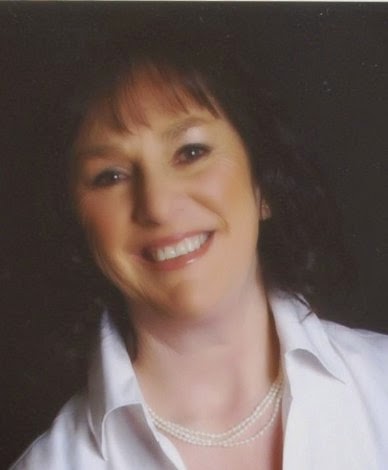
So here is what Australian author Alana Woods wrote (that’s her picture – not me!):

“Some time ago I read Nougat’s short story compilation Death on Facebook, Short Stories for the Digital Age and was impressed with the range of stories and the skill with which they were presented. One that caught my imagination was I will not leave you behind, the futuristic story of a 122 year old woman who is part of an elite program that keeps you young until you die. In FOREVER YOUNG Nougat has taken that short story and woven its premise into a four-part series of short novels I enjoyed reading very much.
     The over-arching theme is the approaching doom of Earth from climate change. The story is set 200 years into the future and what becomes apparent very quickly is that humankind never did learn the lessons of what it would take to save the planet. Everyone, including big business, is still only concerned with the present and what they can get out of it for themselves. People are still divided into the have’s and have not’s, only now the have’s—called the OnePercenters—can afford to have old-age and illness permanently eliminated right up until death, whereas the have not’s—the 99PerCenters—continue to struggle as we struggle in this day and age.
     The story and struggle is told through three characters who all aspire to be a OnePercenter, highlighting the fact that even in Earth’s extremis we’re still only concerned with what advantages we can garner for ourselves.
You can come away from reading this series feeling a great despair for where we’re heading. The alternatives that the author presents, that of leaving Earth to inhabit a new planet and starting again, or remaining and hoping Earth regenerates itself, are stark contrasts.
     A thought-provoking, confronting read.”
      The review came as a total surprise and most welcome after I had received an awful review sarcastically titled “the future isn’t futuristic”. For this reviewer, my book “didn’t work at all” because “many of the same technologies that we use today are still prevalent. How many things popular 200 years ago, even 30 years ago are still in use today? It was not a forward-thinking, imaginative conception of the future and I just didn’t buy it.”
      Not a “forward-thinking” conception of the future? I was crushed, I felt totally misunderstood. How could this reviewer not see that this was the whole point of my book? The “future” she yearns for does come in Forever Young for the ultra rich but only for them because they are the only ones who can afford the advances of science. Alas, it does not come for the rest of mankind, no one can afford the technological innovations the rich are enjoying!
      Is that so unrealistic? I don’t think so. Consider further the argument she makes that many things “popular 200 years ago” are no longer in use today. Quite frankly, that argument doesn’t hold water. Anyone who has travelled in the Third World knows how the poor live, in conditions that are barely better than those prevailing in medieval times, no electricity, no running water, no public transport and only wood or dung to cook.  And billions of people live that way, nearly half of the world’s population lives on less than $2.50 a day, and according to UNICEF, 22,000 children die each day due to poverty.
Collecting millet in Darfur (this woman has 5 children) UN photo library
     This is why Alana Woods’ review was so welcome, she “got” it, that social difference between the poor majority and the rich minority – a trend that I think will only be exacerbated if we continue on the road of income inequality on which we have embarked (and I’m not the one saying it, Thomas Piketty is, in his Capital in the 21st Century – I highly recommend reading it).
     What fundamentally differentiates Alana Woods’ review from the other one is this: it’s not a customer review that simply states “likes” and “dislikes” (unsubstantiated phrases like “I didn’t buy it”) but a carefully thought-out review that examines the book’s premise and follows how it was developed, critically analyzing it.
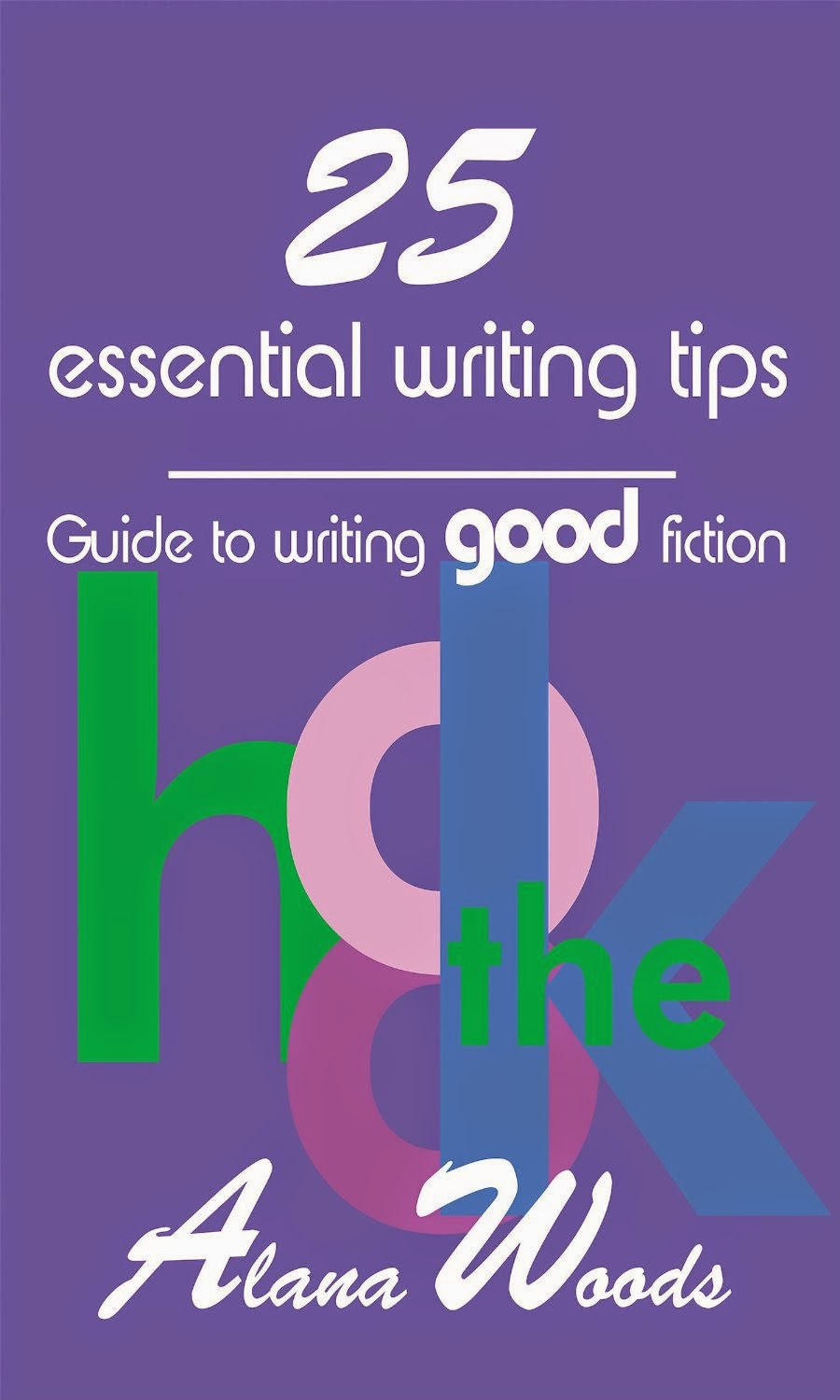
     I also deeply appreciate Alana’s review for another reason: she is a demanding critic and, as she puts it on Amazon, “I like to choose the books I review.” In this case, she certainly chose my book, I was surprised when she told me she was reading it (she’d picked up the first book in the series for 99 cents) – I was surprised and pleased. Because she is truly a professional writer who knows the art of writing. She is the author of a guide to writing good fiction, chock-full of good advice:
     Jason Mathews considers it “the best guide for indies” and hosted her on his site to discuss it with two other authors, Lisa Grace and Samantha Fury:

 
     Alana Woods is not only an excellent literary critic but a remarkable writer in her own right, “the queen of intrigue”. Three of her books are currently available on Amazon, two award-winning literary suspense novels and an intriguing collection of short stories:
 
Visit Alana Woods on Amazon, click here
     If you are wondering why she hasn’t published more books, that’s because she is very demanding of herself. As she puts it: “I’m a storyteller from way back but not a prolific producer like other authors. It can take me years to be satisfied with the quality of a story and my telling of it.”
     Right.
     To take years to be satisfied with one’s manuscript is the mark of  a careful, professional writer but also of one who respects her readers. It think that’s remarkable and I believe more indie authors should take Alana as an example and think twice before publishing. There are times when I wish I hadn’t rushed into self-publishing and waited for my books to “ripen” until they were ready. 
      Good writing takes time, and now (I think) I have learned my lesson and no longer publish too soon. How about you? Has it ever happened to you to publish a book only to discover six months later that it could have been better? Have you ever had the urge to revise it and upload a new, better edition?  I plead guilty to having done that and would love to know whether you’ve done it too! 


2 Comments

Filed under Literature, science fiction

The Future According to Google

Cover of "Zoolander"

The United States has historically been a laboratory of the future for the rest of the world: I remember how I was awed when I arrived in New York in the 1960s and saw what the future looked like, with gigantic highways, sprawling suburbs and televisions everywhere.

Now the US is doing it again, if you know where to look. David Leonhardt, heading The Upshot, a new New York Times venture focused on investigative and analytical journalism (and that means data-crunching), recently reported the results of a study done following a suggestion from Google’s chief economist, Hal Varian.

I bet Google’s chief economist hadn’t expected the kind of results shown in that study…

The piece, titled “Inequality and Web Search Trends – In One America, Guns and Diet. In the Other, Cameras and ‘Zoolander‘”, explains how the research was done. Serious stuff, analyzing a decade of search data county by county across the whole of the US, categorized by an income-education-health index and then comparing the results to web searches on Google to uncover people’s interests and concerns at both ends of the income distribution.

What rich people search for on Google compared to poor people.

Leonhardt summarized the picture in a couple of striking sentences: “In the hardest places to live in the United States, people spend a lot of time thinking about diets and religion. In the easiest places to live, people spend a lot of time thinking about cameras.”

The portrait is suggestive.

Rich people are concerned with acquiring the latest technology and traveling to distant lands. The poor worry about their health and look for weight-loss diets (the new poverty in America is associated with obesity).

The article concludes on a note of pessimism, highlighting the fact that the rich are “intent on passing down their way of life to the next generation, via Baby Bjorns and early access to technology.”

As noted by Leonhardt, “That last point may be the most troubling. The different subjects that occupy people’s thoughts aren’t just a window into American life today. They’re a window onto future inequality, too.”

Yes, that’s what future inequality will look like: access to new technology and round-the-world travel will be reserved to the rich and likely to be denied to the masses. Why?  Too expensive.Another NYT article from The Upshot suggests that we may all be stuck in rut: there is evidence that in climbing the social ladder, geographic location matters. The chances that a child raised in the bottom fifth will rise to the top are lowest in the “old South”, around 4% in places like Atlanta and Charlotte. Conversely, they are much better in the North, for example 33% in Willinston, North Dakota. Clearly, parental and school environment matters.

Does this sound depressing to you? To me, it does. Yet, I believe it’s important to know where we’re headed as a civilization. The 20th century saw the rise of the middle class, and that rise continues around the world, as people in developing countries are climbing out of poverty. But the middle class has stalled in America and the on-going (triple dip?) recession in Europe is not helping. It looks like the happy days of the middle class are over in the developed world…

Personally, I hope I’m wrong about that. Still, I did try to imagine our future on the basis of such trends and the result (as all those following this blog already know) can be found in my latest book “Forever Young”. My goal was simple, I did not want to write fantasy science fiction, I wanted to take a “hard” look at what our future would really be like. I only wish this NYT study had come out sooner, as I was writing my book, but at least I feel vindicated: this is confirmation that my premise is sound…Nevertheless, I still hope the trends towards inequality that we see today – especially in a book like Piketty’s “Capital in the Twenty-First Century” – will ultimately prove wrong.

Can the Millennials get us out of the inequality rut?

1 Comment

Filed under social media

To Publish AND Perish – Will the Tsunami of e-books Destroy our Culture?

This article was published on Impakter (under my real name, Claude Forthomme):

https://i0.wp.com/impakter.com/wp-content/uploads/2014/08/paisaje15-1050x582.jpg

To Publish and Perish

on 20 August, 2014 at 09:00

Amazon and its 3.4 Million E-Books: the End of Culture?

For a long while now, people have debated how many e-books Amazon carried it in its Kindle Store, because Amazon has never divulged the data. Some daringly ventured the figure of 1.5 million. Wrong! The real figure is close to 3.4 million and I found it by chance, as I was navigating Amazon’s website for Amazon Associates which provides links, banners and widgets you can upload to your blog to help advertise Amazon products.
Here it is in a screen shot I took on August 19, 2014:
Look at what the red arrow points to: “Results from Amazon Kindle Store…3,376,174 . Three days later that figure had grown by over 9,000 units and stood at 3,385,243, climbing ever closer to 3.4 million. This means that everyday over 3,000 titles are added, that’s over one million books per year – and probably growing at an exponential rate that I cannot calculate for the moment; I haven’t got the data though Amazon does (I wonder whether they are as scared as I am).

Or to put it another way: It takes one hour to add 12 books, one new title every five minutes.

You can bet that in 10 years time the number of titles in the Kindle Store could be anywhere between 20 and 40 million books.

This is as many books as Google is said to have scanned globally, drawing from all the world’s libraries (the latest reported figure dates to last year and was 33 million books).

Surprised? I’m not, not really. Internet guru Jaron Lanier, in his fascinating book “Who Owns the Future” suggests that we should eventually expect as many writers online as there are readers. If he’s right (and there’s not reason to believe him wrong), we still have some way to go. But it will surely happen, and probably sooner than you think.

When that happens, what will the e-book market look like? Lanier reminds us that this is what happened to music already.

Are books like music? Not quite, books are a more complete codification of ideas, they can play on emotions the way music does (for example, a romance novel or lines of poetry) but they also encapsulate ideas and ideology (from Hegel to Marx to contemporary thought gurus, like Lanier himself).

So can we expect our culture to get crushed under the numbers?

Again, Lanier tells us how he sees the future. Books will be increasingly linked to devices – think of how the rise of e-books was linked to the Kindle. When that happens, says Lanier: “some good books from otherwise obscure authors will come into being. These will usually come to light as part of the rapid-growth phase, or “free rise” of a new channel or device for delivering the book experience.” He doesn’t say it, but of course Amanda Hocking and John Locke‘s sudden rise to fame immediately comes to mind. They enjoyed a “heightened visibility” on the Kindle, as they were “uniquely available early on on that device.” And Lanier to conclude: “In this way, an interesting author with just the right timing will occasionally get a big boost from a tech transition”.

Is that good for authors? No, says Lanier, “the total money flowing to authors in the system will decline to a fraction of what it was before digital networks.” The future reserved to authors is exactly the same as what musicians are facing today: “Most authors will make most of their book-related money in real time, from traveling, live appearances or consulting instead of book sales.”

Authors in future will be a vastly different lot from what they are today, no more hiding in the ivory tower as “independent scholars”

Read the rest on Impakter, click here.

Comments Off on To Publish AND Perish – Will the Tsunami of e-books Destroy our Culture?

Filed under genre fiction, Literature, social media

To Self-Publish and Perish: Buried Under 3.4 Million E-Books

 I finally found where Amazon reveals a hidden (and juicy) statistic: the number of ebooks available in the Kindle Store. If you’re an Amazon Associate, you can easily find it too but to make it simple I took a screen shot of the page where it shows, this one dated August 16, 2014:

Look at what the red arrow points to: “Results from Amazon Kindle Store…3,376,174 results”. That’s how many ebooks are stocked in the Kindle Store as of now: 3.4 million.

And by the time I had finished writing this blog post (one hour later) that number had climbed to…3,376,186! It took one hour to add 12 books, one new title every five minutes.  In 24 hours, the number had climbed to 3,378,960, that’s 2786 more books – let’s say, 2,800 a day, that’s over one million books per year – and probably growing at an exponential rate that I cannot calculate for the moment; I haven’t got the data though Amazon does (I wonder whether they are as scared as I am).

You can bet that in 10 years time the number of titles in the Kindle Store could be anywhere between 20 and 40 million books.

This is as many books as Google is said to have scanned globally, drawing from all the world’s libraries (the latest reported figure dates to last year and was 33 million books).

Surprised? I’m not, not really. Internet guru Jaron Lanier, in his fascinating book “Who Owns the Future” suggests that we should eventually expect as many writers online as there are readers. If he’s right (and there’s not reason to believe him wrong), we still have some way to go. But it will surely happen, and probably sooner than you think.

It’s also very instructive to look at the list of titles provided using the filter “new and popular” (the one I used – but there are other filters too depending on what you’re looking for) and you’ll see that Daniel Silva‘s “The Heist” (the 14th book in the Allon series) comes on top: it was published on 15 July 2014 and already got over 1,200 customer reviews. Not unsuprisingly it is is ranked #51 in “paid Kindle” and #1 in several subcategories including mystery and suspense.

By the way, “The Heist” is published by one of the Big Five (Harper) and priced at an average $14 which is standard for traditionally published books. That price, high in relation to the average price for self-published books (which according to Smashwords is around $3.99), does not seem to have impeded its sales or ranking. This is not to say that traditional publishers can get away with any level of high prices – I would argue that a level beyond $14 is damaging and ensures that some excellent writers, like William T. Volmann, perhaps our times’ major “fabulist”, is not as widely read as he could be. His latest book, Last Stories and Other Stories, is priced at over $22, a price equivalent to the hardcover.   That places him well beyond the reach of the average e-book reader, in practice excluding him from any exposure in the Kindle Store. Don’t be surprised if his book is sitting at #42,967 Paid in Kindle Store in spite of the boost it has received in the mainstream media, most recently the New York Times (see here).
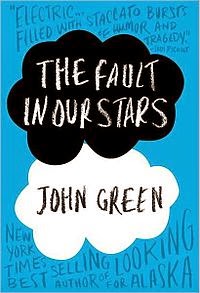
Indeed, if anything, books that are priced high and traditionally published seem to occupy the first ranks everywhere on Amazon. And I’m not referring to special cases like John Green’s best-selling “The Fault in our Stars” with over 29,000 customer reviews and a ranking in paid Kindle at #8 for books, although it is noteworthy that its ranking is not the same in the ebook market (it sits at # 3,810). Here I am looking at the Kindle Store only and what pops up in the ranks is often quite different from what emerges in printed books, and why it is so, is a story for another blog post.

In any case, whether looking at the printed or ebook markets, you have to look hard for self-published authors though, undeniably, they are there…Hugh Howey with over 2,000 reviews for his Dust (book 3 of the WOOL trilogy) is sitting at #815 in “paid in Kindle Store”; Bella Andre’s Kiss Me Like This at #642 (it came out in June 2014 and has over 170 reviews); J.A. Konrath’s Whiskey Sour at #1615 (it came out in February 2013 and has nearly 1,200 reviews); Barry Eisler‘s Graveyard of Memories at #5,136 (it came out in February 2014 and already has over 600 reviews) – but Eisler’s book is published by an Amazon imprint, Thomas and Mercer, and he cannot be thought of as a self-published author stricto sensu, though he often sides with indies and famously walked away from a big publisher’s contract a few years ago.

The conclusion? Self-published authors, even the most successful ones, aren’t doing badly of course, but they are certainly not doing as well in terms of exposure as traditionally published authors. Sometimes, a traditionally published author who finds herself retrograded to the “midlist”, with the publisher giving no signs of wishing to renew the contract, may have no choice but to self-publish to survive. This is what Eileen Goudge did and so elegantly explained in a blog post here on Jane Friedman‘s blog, enticingly titled “Self-publish or Perish” (hence the title for my own blog post here).

However, we should remember that if the midlist author’s economic “survival” is ensured, it is largely thanks to the 70% royalty Amazon pays, because it is certainly not remarkable in terms of exposure – I won’t go further in the details and give you yet another ranking, you can check for yourself if you’re curious (here).

Moreover, one must remember that all rankings are ephemeral, they change constantly, and one needs to be Amazon itself (or set up a 24 hour watch for months on end) to figure out which authors have “staying power” and which don’t. So all the rankings I’m quoting here are merely indicative.

Still, some insights can be gleaned. It is particularly interesting to check on the more successful self-published authors and see how they fare today. I checked at random the more famous ones such as Amanda Hocking or John Locke whose amazing success stories (selling “a million copies” in a matter of months) have been instrumental in launching the self-publishing craze.

Well, they are not doing as well today as you might expect. Amanda Hocking has two books going currently for free and her best selling book, My Blood Approves (now traditionally published by St Martin’s) is ranked #34,251 Paid in Kindle Store. John Locke’s Promise You Won’t Tell, with close to 1,200 reviews was going free the last time I checked and his best selling non-free book Casting Call (actually also the most recent, published in February 2014) is priced at $2.99 and ranked #11,195 in paid in Kindle Store. In other words, it’s doing reasonably well but breaking no records.

Why are such famous self-published authors with millions of copies sold – I would say even “iconic” writers – following the free promotion strategy exactly as propounded by self-published author David Gaughran in his excellent guidebook Let’s Get Visible?

I’m sure you can come up with still more striking success stories, and please be sure to highlight them out in the comments, but my point is that the success doesn’t stay on…it waxes and wanes (which is natural) and then falls off a cliff, to use David Gaughran’s striking metaphor. Hence, the authors efforts to revive their books with free promotions. A tough life!

Now if life is tough for the more successful self-published authors, try and imagine what it’s like for the rest of us?

The reason why? Basically the tsunami of books that buries every single newcomer!

No doubt this is another compelling reason why you should follow David Gaughran’s advice. And don’t get discouraged, Amazon has just handed out a candy to self-published authors, making it possible for them for the first time ever to access to the “pre-order” functionality on its website (is this a side-effect of the Hachette-Amazon spat? Who knows…) Regardless of Amazon’s reasons for doing this, it is a big gift, because it means that,  just like a traditional publisher could do till now, you are able to promote your book on all the sites you navigate for 90 days prior to launching, while pre-orders accumulate on Amazon’s site: on the day of release, all these orders are filled at a single go, ensuring a boost to your book, launching it up Amazon’s rankings!

Because, as David Gaughran points out, in this environment awash with books, you cannot ever stop marketing your titles – and now you have another tool at your disposal to launch your next book…use it!

Comments Off on To Self-Publish and Perish: Buried Under 3.4 Million E-Books

Filed under Digital Revolution, Literature