Couples engaged in the same occupation are rare and don’t always have a happy life together. It may be harder for writers than for other artists to achieve serenity in their life as a couple – perhaps because writers are more given to analyzing their feelings and expressing them into words. That can easily turn into a source of friction as famously happened with Simone de Beauvoir and Jean-Paul Sartre, when she wrote The Mandarins, a barely concealed critique of Sartre and his group of existentialists whom she felt had cut her out.
…Bob Rector! His recently published book, Unthinkable Consequences, is steadily climbing the ranks of romantic suspense novels, are definitely an exception: I know from reading “Confessions” that they are very close to each other and have always been, including now that they are suddenly finding themselves in the situation of writers married to each other.
Yet, before they met, they had pursued completely different career paths. Bob had been into musical video production, documentaries and script writing. Marsha started as an operating room nurse but quickly became restless for adventure. She began to travel, using part time nursing to support her habit, and met Bob at the end of one of her journeys. He was directing the feature film, “Don’t Change My World” at the time. She immediately became fascinated by the filmmaking process and became Bob’s right-hand-gal for years. She worked herself up to the position of Producer which culminated in the production of Letters from the Front, a most unusual and arresting play written and directed by Bob, which toured the world with great success for 15 years.
Today, I am honored to interview them: Rome calls Chattanooga, choo-choo!
Yes, I live in Rome and they live in America and we have never met anywhere else but on the Net. I see this as a unique opportunity to find out how Marsha and Bob have moved from a situation where he was the artist and she was the business manager to the present one where they are both writers.
Claude: Marsha and Bob, this is a question for both of you: for the first time in your life, you find yourself in the same line of work, writing books. And pardon my curiosity, how do you get along? Do you help each other? Do you avoid each other?
Marsha: I can’t help but laugh when I read this question, Claude! We get along (as Forest Gump said) “Like two peas in a pod.” We are always there for each other and it would never occur to me to avoid Bob. He’s too delightful to avoid!
Bob: We’ve always enjoyed working together. I think we bring out the best in each other. Traditionally, I’ve always been the writer, but Marsha has developed, through our mutual work, keen storytelling skills that I learned to respect. Marsha neglected to point out that for years she was an accomplished film editor and, as one of my blog posts points out, nothing develops story telling abilities like hours spent at the editing table.
Claude: Marsha, you told me that you are producing an audio version of your book. From your own life as a theater producer, you knew actors and I’m sure Bob, with his long experience in video production, could also help. How did that work out?
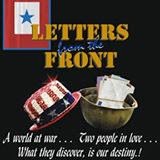
Marsha: First off, it was a delight to have Della Cole read my book. She starred in Letters from the Front for years and is also a dear friend. She is a top voice talent and she knew many of my stories from first hand experience. She also runs one of the top acting schools in the southeast, YourAct. The tricky part was in post production and, frankly, Bob saved my… well, he saved the project! He is a fantastic editor and finished the audiobook in style. It will be available through Amazon soon and I’m really excited about it!Claude: I’m looking forward to hearing it! Bob, your book came out a couple of years later than Marsha’s and you had ample opportunity to observe her working at book promotion. Were you able to profit from her experience?
Bob: Unthinkable Consequences was a project that simmered on the back burner for a couple of decades. Marsha’s success with publishing and promoting her book was what convinced me to finally finish mine and publish it. By that time Marsha was already plugged into social media and I benefited from her experience.
Claude: I’d like to know how you organize your working life and whether you have advice for other writers: how much time do you devote to creative writing, how much to book promotion?
Marsha: I wish I could say I’ve found all of the answers in how to time manage promotion and writing, but I haven’t. I’m still trying to wrangle the beast of marketing my book without it taking up every minute of every day.
Bob: We have both tried various approaches with e-marketing our books, some with success, and some without. It’s a tedious and sometimes frustrating process because it’s all new. And most of us at this point are making it up as we go along.
Claude:I am asking because book promotion in my own life is interfering with my writing, sometimes much more heavily than I would like. Do you ever feel any frustration, any desire to shut down the Internet?
Bob: I can answer that with two words: hell yes! But Marsha and I are in this for the long haul and we certainly know about long haul projects. Ultimately we’re going to have to develop our own methods for marketing, just as we have in the past. How much the internet will be a part of that is still a question, but I firmly believe you should use all resources that benefit you in achieving your goals.
Marsha: Well said, Bob. I’d like to add that about a year ago I begin a process of trying to discern which activities on the internet were helpful and which were just time wasters. And I’m speaking here about the bottom line: selling books. Social media can give you the impression you are getting a lot done because you are posting and tweeting and sharing and it’s all so busy, busy, busy! At the end of the day, does it sell books? If so, I continue to do it. If not, I move on. But, do I have time for writing? Not much.
Claude: Same here! I’d like to probe a little deeper into your working life as a couple, if I may. Do you discuss book ideas together? Do you read each other’s drafts and critique them? Do you even listen to each other’s advice and act on it (grin)?
Marsha: As Bob mentioned earlier, we enjoy working together and collaborate very well. Yes, we read each other’s drafts and critique them. I can say without hesitation that my Mutinous Boomer book would not have taken the shape and form it did without Bob’s input. We always listen to each other’s advice and usually take that advice because we are working on such a level of trust. However, occasionally one of us will feel passionately about what we’ve written and the author always has the choice to keep it as is.
Bob: From the beginning of our relationship we had to learn to work together as pros first and a couple second. I did not want Marsha branded as ‘the director’s girlfriend’ as the reason she was in the business. So I was very tough on her, tougher than I would have been on an employee, but she understood why and simply upped her game until she became well-respected within the business and us being a couple was no longer an issue. We still work that way and never allow personalities to get in the way. Our goal is to produce the best work we can. And neither of us has much tolerance for people who don’t operate on this professional level.
Claude: I don’t either! And it is natural of course for the two of you to collaborate. But are there things you would neverdo together?
Bob: I won’t eat tofu with her. Marsha won’t join me in spitting, belching and farting, but other than that, we both enjoy football and baseball, the great outdoors, time with our kids (grown!) and consuming adult beverages, preferably in exotic locations.
Marsha: Ha! True that! I’d say the only professional area that we operate separately is that Bob is a whiz with the computer and manages all our tech “stuff” and graphics. But, when it comes to making a call on a potential client or sponsor, it’s me who walks through the door. Bob would hate it just as much as I hate dealing with computers!
Bob: That’s because Marsha is like Sara Lee, nobody doesn’t like her!
Claude: I’d like to knowwhat writers have influenced you the most and why. Marsha, you wrote what is basically a memoir yet with a totally new twist – giving us an extraordinary sense of life seen from an unshakeable optimistic standpoint. Did you believe you were into something entirely different from anything you’d ever read or did you have a model in mind?
Marsha: Thank you, Claude, for those kind words about my book. Besides novels, I’ve always read books that teach about how to grow spiritually, everyone from Dr. Wayne Dyer to Deepak Chopra to the great Granddaddy of them all, Norman Vincent Peale. The Power of Positive Thinking is real and is a real force in my life. However, I had a different and more personal story to tell than a how-to type of book. Mine is very conversational in approach (quite female!) and, no I didn’t really think about doing something entirely different. I was just telling my story as honestly as I could.
Claude: How did the word “parable” end up in the title? Was that your thought from the beginning or was “Confessions” the main idea? And I’m curious, will there be a follow-up to your “Confessions” or something totally different? I expect you still have a lot of confessions up your sleeve!
Marsha: My book started as The Parable of the Tomato Plant and as it grew into something bigger, it just didn’t seem right to remove it from the title. My original idea was a series of vignettes that illustrated how spiritual lessons are part of our daily lives, if we take a moment to see them. When Bob read my first draft, he loved the stories, but he said he thought it would leave the reader frustrated because I had introduced so many interesting characters, but had not completed their stories as I moved on to the next vignette. It was then that the organization of my book took shape and “Confessions” AND “Mutinous” seemed appropriate! And, yes, I do believe I have another Mutinous Boomer book in me, but not just yet…
Claude: Any plans other than writing yourself, like reviving Letters from the Front? I’ve only read it but I’ve enjoyed it immensely, it’s a great play and I’d love to see it produced again. In our world tired of wars, that’s exactly the kind of play that needs to be seen.
Marsha: The reason I said I wasn’t concentrating on writing another book just yet is that we have decided that it is time for Letters from the Front to be out touring military bases again and we intend to make that happen. Our audiences always described it as “from the heart” and “healing” as well as “incredibly entertaining!” With so many of our troops returning home after multiple deployments, they need something as positive and encouraging as Letters from the Front and we intend to be there for them and their families. We miss them and we miss the show.
Claude: Bob, you’re an incredibly versatile artist, from music videos to cartoons that you have drawn yourself – yes , I’ve seen your remarkable and very funny cartoon. I can’t resist inserting it here:
And of course, you’ve done film scripts and theater plays, and now a romance that is also a fantastic page-turner, it’s so fast-paced. The dialogues are superb which is of course what one would expect coming from a talented playwright like you. What writers, or should I say artists, do you consider as models to follow in your widely diverse endeavors?
Bob: The storyteller who has without a doubt had the greatest influence on me is Walt Disney. He understood character and plot construction and the workings of the human heart better than anybody. And of course he was a master showman. As for writing, from books with great scope and adventure I think Hammond Innes is probably the best and certainly influenced writers like Clive Cussler and Ken Follett. In the genre I’ve written in, Dashiell Hammett is the acknowledged master, followed by Earle Stanley Gardner and later by John D. MacDonald, who is my personal favorite.
Claude:I know that you feel like playwriting is not “fully appreciated” in the writing world – though I beg to disagree, I love playwrights and consider some of them as the greatest writers ever, from Shakespeare to Arthur Miller. I’ve been wondering why you feel that way. Have you had a particularly disappointing experience in the theater world and is that why you’re into novel-writing now?
Bob: That’s a complicated question and definitely hits a nerve. As you know, most of my background was in the world of films. So when I stumbled into the world of theatre, I was surprised at how ego driven it was and the amount of snobbery that was prevalent. Particularly towards someone who had not “played by the rules.” But since Marsha and I produced this play ourselves, we could basically tell everybody to go to hell, and did. The fact that our show was so successful only ostracized us further from the theatre establishment. So I was a little put off when I first joined ASMSG that playwrights were not included. As for writing Unthinkable Consequences, it was a project I’d tinkered with for years and finally decided to complete, but not because of my experiences in theatre. I just wanted to finally get it done.
Marsha: I’d like to interject something here, Claude. It would be difficult to describe to someone who hasn’t experienced it the incredible impact that Letters from the Front has on its audiences. Why? Bob Rector. How he walks the audience into the lives and hearts of the characters is no less than genius, and I’m not exaggerating when I use that word. I’ve never been more proud of Bob than when the curtain went up hundreds of times to audiences that could only respond with standing ovations.
Bob: Okay, lets all sing together now: We belong to a mutual admiration society, my baby and me. Before we move on, Claude, I’d like to say something about playwriting that the painter side of you will appreciate. You are familiar with the challenge of painting with a limited palette. Playwriting is very similar in that you virtually have nothing more to work with than dialogue to develop characters and advance the story. I encourage all writers to try writing a play at some point because it will hone their storytelling skills in ways that will only benefit their novel writing.
Claude: I agree, good dialogue is key and writing a play is the way to hone that skill.Do you plan on a sequel to Unthinkable Consequences or are you ready to write something entirely new?
Bob: I have no plans for a sequel and very little interest. I’ve told the story, it’s finished, and so am I. As for other projects spinning around in my mind, I’d have to live to be 500 years old to do them all.
Claude: I know what you mean, but I hope we’ll soon see another one of your projects! Bob and Marsha,there is one thing that brings you together now, the world of indies and self-publishing: you’re both self-published authors. How do you feel about the world of indies, would you do it again or would you seek a traditional publisher for your next book?
Marsha: No question about it, I would self publish again and I will. Why? The big publishers are primarily interested in putting their money and time into established authors. I have seen quite a few indie author friends I’ve grown to know on the internet to get publishing deals. They end up working just as hard as the rest of us, marketing their books and trying to sell them, but splitting the sales with an agent and a publisher who are doing virtually nothing to promote them. This isn’t an easy path. We are on the forefront here – the beginning of the way it will be done from here on. I’m glad to be in on the ground floor.
Bob: Marsha’s right. This is a ground floor opportunity and that makes it both exciting and frustrating. There’s lots of very talented and energetic people involved and I am inspired by them, and have made lots of friends. Who knows how the world of indie publishing will eventually shake out, but I know I want to be a part of it and maybe in some small way, help make the baby grow.
Claude:I’m sure you can help “make the baby grow” but like any parenthood, it is frustrating at times! Thanks so much for responding to all my questions. Just a last one before we close, and I take the inspiration for it from one of the author interviews you did, Bob: if money was no object, what would you do with your life beside write?
Marsha: Money no object? I love that question! I would have a home on Lake Como, be able to travel to wherever I wanted, make sure my sons had what they needed to pursue their dreams and insure that Letters from the Front was entertaining the troops and their families (and veterans!) for a long, long time. Besides that? I’d have clothes designed just for me, I’d have…. I guess you get the picture. I’m ALL about enjoying life!
Bob: We have known so many people who look at life as a contest that must be won. Marsha and I look at life as an adventure that must be lived. So if money was no object, I’d spend as much time as possible with Marsha at Lake Como and we’d make ourselves real nuisances dropping in on you and Giuseppe and drinking up as much of your wine as possible. Other than that, as Marsha said, just enjoy life and spend as much time with our family as possible.
And many thanks to you Claude for your valuable help as a beta reader on Unthinkable Consequences. You definitely helped me shape it into a much better book. We enjoyed doing this interview with you and wish you every success with the launch of your Forever Young series.
Claude: Many thanks to you both, and Giuseppe and I are looking forward to drinking our Lake Trasimeno wine with you next time you come to Europe!
Bob and Marsha in Pompei, looking happy…not yet Lake Como!
Conventional wisdom has it that blogging helps to sell books, and the more successful your blog, the more books you will sell.
Not so. Yet, marketing gurus and hugely successful bloggers like Adrienne Smith maintain that with blogging you can “make a living” (see here). Perhaps you can if you sell something else than books. And here is why (in my humble opinion). There are two factors at work: (1) market saturation and (2) TV competition for your free time. No question, of late, the ebook market has become saturated. If you have an e-reader, I bet it’s full of books you haven’t read, books you uploaded when they went free.
Over the past three years, there has been a frenzy of giveaways to “gain new readers”, and I confess that I joined the crowd and made my books free several times, with decreasing success each time. Gone are the days of 10,000 downloads (at least for me)! Of course, now 99 cents (the launch price of an ebook) is the “new free” – I plead guilty, I’ve done it too, all the first book of my series are priced like that.
The end result is the same: way too many books around. Because the truth is, you’re never going to read all those books you’ve stored up in your Kindle (or elsewhere). Another major reason is that people don’t feel like reading novels the way they used to.
Don’t get me wrong, the desire to be entertained is as strong as ever – who doesn’t like to unwind at the end of a hard day’s work in front of the TV with a drink in hand? So TV series like House of Cards or Game of Thrones replace long evenings of reading novels. People read fiction only when there’s a blockbuster around, 50 Shades of Grey and the like.
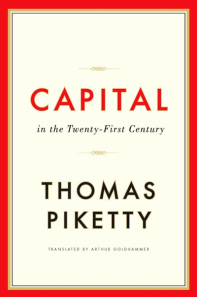
Otherwise people prefer to readnon-fiction (if they read at all). This is why Thomas Piketty‘s book, Capital in the 21st Century, is immensely successful, in spite of forbidding reams of statistics and a title reminiscent of Karl Marx.
Ditto for the worldwide success achieved by Karl Ove Knausgaard, an unknown Norwegian writer. His novel, bizarrely called My Struggle which translates to “Mein Kampf” in German, reminiscent of Hitler’s famous book, is less a novel than a huge memoir thousands of pages-long that traces his “growing up”, his “struggle” to understand the world around him. Book 1 starts off with a witty observation: people love to watch death on TV – war reports from the Middle East, volcanic eruptions, fires, floods etc – but turn their eyes away whenever someone dies around them. The corpse is immediately covered with a blanket and whisked away in an ambulance, bodies are stacked in cold storage rooms etc Why, he asks, are we afraid to see a corpse in reality when we spend our time doing so on TV? Good question.
In general, books that express a personal point of view are big successes – much more so than novels that are often seen as fantasy and therefore a “waste of time”. How else do you explain the global success of Eat, Pray and Love, the story of a woman wounded by love who goes in search of herself across the world, from Italy to Indonesia? Elizabeth Gilbert has since written other novels, like, for example, “The Signature of All Things“, that in spite of its intriguing title and subject matter, hasn’t met with the same success – probably because it didn’t give off the same whiff of personal intimacy. And herein lies the cause of the success of such memoir-like books: they don’t read like fiction, they are one man or one woman’s exploration of their own lives. Mind you, these are people who haven’t done anything remarkable; they have just lived their lives as someone’s child, lover, parent.
In short they are like you and me and that’s why people are curious. Such books are “literary selfies“. So if your fondest hope is to be the author of a break-through novel, write a “selfie”…and don’t bother with blogging! I’ll tell you a secret. Contrary to what you might think, I’m not blogging in order to sell you my books (if you’re curious, you can see them displayed in the sidebars, if not, just ignore them). I only blog because I enjoy it, I simply like to share my ideas with you and hear what you think.
So tell me, how about you, why do you blog? Have you seen a connection between your book sales and your blog traffic?
Monarch butterflies invade a small corner of the Appalachian mountains causing a scary “flight behavior”:
Climate fiction also includes climate change deniers: in this book climate activists are described as “eco-terrorists”:
If you think cli fi is recent and strictly linked to climate change, think again! This is the first cli fi book published and it came out in 1962!
But what is really going to change life on earth over the next few centuries can be traced back to (1) globalization and (2) industrialization and both are the result of a new, growing divide between the rich and poor, the One Percent vs. the 99 Percent, and now the data is in – the divide is not the result of someone’s sick imagination:
Ok, I plead guilty: the original 6-word short story, a.k.a. the six word novel, an extreme form of flash fiction, is Hemingway’s and it’s not about a failed relationship but a dead baby or perhaps an unborn child, precisely this:
For Sale: Baby Shoes, Never Worn.
He dreamt it up in the 1920s in response to a bet with friends. He won the bet and he considered it his best story ever.
The 6-word flash fiction has fascinated people so much over time that today there’s a website entirely dedicated to it, with hundreds of examples, see here.
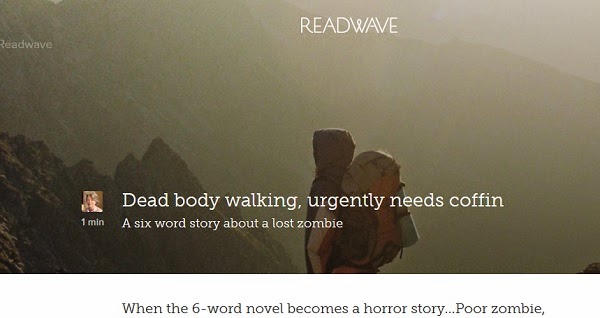
And now ReadWave, the cool website that draws together readers and writers with short stories (including non-fiction), has come up with a competition inspired by Hemingway’s 6 word story:
Readwave will award $100 to the 6-word story that gets the most “likes” on their site, there are still 12 days to go, but hurry! To submit your story click here.
I submitted a horror story (it was an idea my husband had, surprisingly so, he’s usually not that morbid!) and this is how it looks on the Readwave website:
…hum. If you like it, please go over to the website here, and click the “like” button, thanks!
BIG NEWS (in case you missed it)! All 4 parts of FOREVER YOUNG are now OUT, Part 4, The Longevity Gene ishere
You can start reading Part One for free on Wattpad where I release a new chapter every day – 6 chapters published so far, click here to start reading. And if you like it, please “vote” (that’s how “likes” are expressed on Wattpad) Many thanks!
Who’d ever guess that painting black on black would get you a million dollars and more? The miracle – because it is another Contemporary Art miracle – is called Soulages, a 94 year-old, 6 foot tall Frenchman who still paints everyday, spreading his favorite color, black, searching for the perfect point of black. His earlier paintings, dating back to the 1950s-60s, can fetch up to $4 million.
He’s probably the most famous living artist in France, he’s in the greatest museums, the Guggenheim, the Tate, he’s exhibited in the Pompidou Centre in Paris and the Hermitage in St. Petersburg. His work has even inspired fashion collections (see article below). And now he’s coming to New York, in two galleries, Emmanuel Perrotin and Dominique Levy (in the same building, 909 Madison Avenue and 73rd Street).
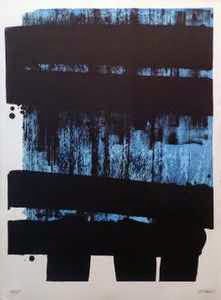
Personally, I am not fond of abstract art but I can see the point (and the pleasure) you can derive from his works. They are solidly structured, and the restrained use of a bright color here and there brings out the mysterious darkness of the black that permeates all his paintings. A perfect black that leaves no doubt about the color – or, if you prefer, the non-color. Look at that blue in the lithograph shown here. It makes the black bars all the more striking, even threatening.
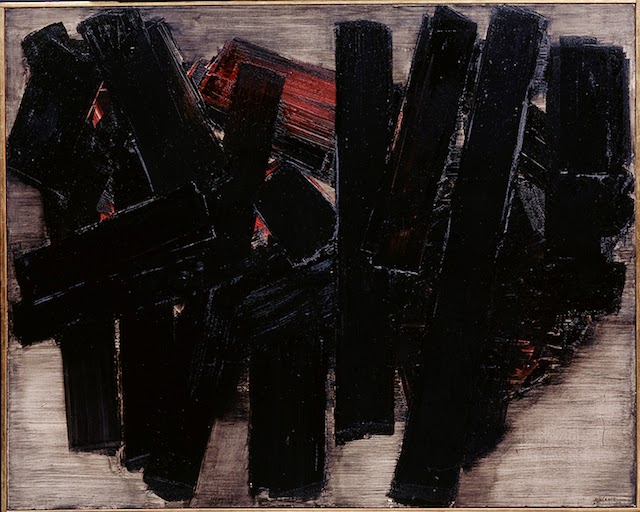
If you’re lucky enough to be in New York and can make it to the show, you’ll see a lot of his work dating back to the 1950s and 60s. For example, this one:
This is a very large painting (ca. 130cm x 162 cm ), so what you see on your digital device doesn’t really do justice to it. In the more recent works, Soulages has wholly gone black on black, with variations only in the texture, allowing for reflections of light that play off differently depending on where you look at them, like in this painting dated 2013:
People have read into this symbolism and memories of World War II and all sorts of other interpretations that the painter himself does not subscribe to. My personal opinion is that the best way to enjoy this kind of art is to stick to what you see and let your eyes play with the light, full stop. But that’s just my opinion, what’s yours?
BIG NEWS! Part 4 of FOREVER YOUNG is OUT, see here – now all 4 parts are published on Amazon and all major e-platforms, the full book is out!
You can start reading Part One for free on Wattpad where I release a new chapter every day – 5 chapters published so far, click here to start reading. And if you like it, please “vote” (that’s how “likes” are expressed on Wattpad) Many thanks!
We can all agree that we are bombarded with information and that most of it is useless. It’s coming at us from all directions: Twitter, Facebook, Google+, LinkedIn, Goodreads, StumbleUpon, Pinterest, Tumblr, online magazines, blogs, the list is endless.
We’re deafened with “noise” on the Net.
And in all that “noise”, do you find what you want to read? Not often, and when you do, you may try to save or bookmark that gem on your computer but most of the time you just lose it. That’s where milq comes in. Or would like to try to come in.
Instead of a timeline or feed or wall, the way you have it on Facebook, or picture boards like you have on Pinterest, you get “beads”, i.e. topics where you can upload your find, whether a video, an article, a song. Their landing page looks like this (my screen shot):
A very minimal design, and easy to navigate. It’s also very easy to join, just let the app access your Twitter or Facebook data and you’re done.
Is it of any use?
Three weeks ago, the New York Times took note, (see here) and remarked, without really reaching any conclusion, that milq is intended to “separate wheat from social media chaff”. That’s a nice way to put it, but does it do it? I tried it from my own standpoint and interests: remember, I’m into books, I like to keep abreast of social trends (how else could I write a book set in the future like Forever Young?).
Well, I was thoroughly disappointed.
Basically, the “beads” are a series of virtual shelves showcasing stuff about the same topic or theme, or to use their exquisite terminology, they are “collectively curated channels of culture”. And the stuff uploaded by someone with a big Internet presence gets precedence over the little guy. Also, their business model foresees that they “sell” beads to businesses – for example they’ve already got Condé Nast interested in topics, sorry, I mean “beads” linked to their magazines. I tried to find the bead about books and that’s where things started to unravel. I stumbled upon a vast series of beads on bizarre topics, all phrased as questions (this apparently is meant to attract people’s attention) – here’s an example:
“Movies that made me want to become a filmmaker” or “genre stew”? To be honest, I have never seen a film that made me want to become a filmmaker, as to “genre stew”…I’m not sure what that means anyway nor whether I want to waste time to find out (even if some people feel enthusiastic about it). Finally I found the books bead:
You’re told that Pamela Talese created this bead in February of last year and the picture of books surmounted by chocolate candies suggests the bead is going to be yummy.
Wrong, the bead is meant to be…musical! Yes, it is about books but only if expressed in songs: the introductory blurb says it’s “about books, their characters, authors, poets, and playwrights. Also-librarians, bookworms, comic-book collectors, folks hooked on the phonics but SONGS ONLY please. There are many fabulous interviews on this topic-but words to music keep the story moving.“
This songs-only approach is highly restrictive. Result? Very few posts over a year – maybe a dozen or two dozens, I didn’t count them.
Another restriction is that you can only share or comment on the posts, with no hope of response. NO real discussion. This is not a give-and-take forum-like website. Just a place where you collect stuff, the way you collect pictures on PINTEREST – with the possibility of starting your own bead, provided it is highly visual or musical or both – authors addicted to the written word are warned!
Did you try it? If you did, please share your experience!
BIG NEWS! Part 4 of FOREVER YOUNG is OUT, see here – now all 4 parts are published on Amazon and all major e-platforms, the full book is out!
You can start reading Part One for free on Wattpad where I release a new chapter every day – 5 chapters published so far, click here to start reading. And if you like it, please “vote” (that’s how “likes” are expressed on Wattpad) Many thanks!
Sophie Calle is a French contemporary artist with the reputation of a “stalker”, a term used by Stuart Jeffries on the UK Guardian (see here)
Source: From UK Guardian’s article “Stalker,stripper, sleeper and spy”
Whatever the right term, she is famous for being extremely intrusive in other people’s lives – for example, introducing herself in a hotel room and photographing the mess left by the guests, turning the set of photos into a work of art. In 2006, she trained a video camera on a dying woman, filming her for days and nights, throughout her agony (she was dying from cancer). She extracted from this film footage a video lasting some 11 minutes – the video isn’t about anyone. It was her mother dying.
Why did she do it? Because, she says, she was afraid she wouldn’t be there at the exact moment her mother passed away. Eventually, she created a multi-media installation (with photos, text, memorabilia etc) where the edited video remained the central piece.
Here is an excerpt of the video:
You can hear the noise of conversations and see people touching her, yet there is no sense of the precise moment when her mother died. The face in profile never moves, as if it were a still photograph.
Starting in 2007, the installation-cum-video toured across Europe and now, seven years later, it has reached America and is shown at the Episcopal Church of the Heavenly Rest in upper Manhattan while the Frieze New York art fair is ongoing on Randall Island (for info, see here). Why would anyone film the dying? Professor Emma Wilson (University of Cambridge) who has published a book on the matter, titled “Love, Mortality and the Moving Image“, notes in an article (here) that such filmmaking can be “palliative” – a way to “organize” death, “giving a sense of control in the face of brute, annihilating emotions”.
No doubt, that was Sophie Calle’s objective. I remain however with an uncomfortable sense that, while this may well have considerable therapeutic value for the persons directly concerned by the death, it cannot be considered art – just because an artist sets up a camera trained on a deathbed and gets it running. I know that in contemporary art it is enough for a piece to be declared “art” if the artist says so. But it seems to me that art is about communication, sharing something together as humans, and therefore the audience should also have a say in the matter, before a “piece” can become “art”. The video here, as I’m sure you’ve noticed yourself, is extremely “rough and raw”. No efforts were made to change the viewpoint or do any manipulation. The video fails in one major aspect: it doesn’t catch the “decisive moment” (the moment of death) as Henri Cartier-Bresson would have it.
The video floats indecisively on the screen, it comes out in cold colors that could suggest either serenity or melancholy. The dying woman is so still that, if it weren’t for someone taking her pulse, you’d wonder whether she’s alive at all. The only movements and noise come from the people around her. The woman’s total immobility has been interpreted by some as a striking symbol of Death (for example, see Anneleen Masschelein’s paper, here).
That the exact moment of death couldn’t be “captured” on tape – hence the title of the installation – is viewed as a deep philosophical comment on Death and on the fact that we cannot “understand” it.
Overall, the effect can be eerie, I don’t doubt it, but is it art?
Climate fiction has gone viral for a very simple reason: it deals with climate change and global warming, issues that are getting worse every year. We’ve been used to dire reports from the United Nations Intergovernmental Panel on Climate Change for years but now we are getting one, equally somber report from the United States, long the homeland of climate change deniers: the National Climate Assessment, done with 300 experts. It’s full of information and has some amazing photos (like the one above illustrating the collapse of ice sheets – now on-going in Greenland and Antarctica and adding to sea level rise – photo source: Paul Souders/Corbis). Things have never looked so bad, and it’s not happening in some distant, unlikely future but right now. The New York Times reported on it (see here) and got some 1300 comments in just a few hours. One of the commentators (who also happened to be a climate scientist living in Seattle) noted: “We are well on our way to the 6th mass extinction. Shelled animals in the waters off the coast of the Pacific Northwest are showing damage from the ocean’s acidity. Unfortunately, people don’t get into gear when they hear doomsday pronouncements.” (highlighting added) They don’t.
It’s hard to imagine, hard to go beyond the raw numbers and the (cold) data (or should I say hot?). And that’s precisely why we need climate fiction – because it works on the emotions.
And when you realize the problem is here and now and concerns you, well, it’s normal, it makes you sit up!
That’s why Nathaniel Rich cli-fi novel Odds Against Tomorrow was eerily spot on. He had imagined New York under water. When his editor at Farrar, Straus and Giroux was finalizing his draft for publication, hurricane Sandy hit New York and all of a sudden, Rich’s book didn’t at all look like fiction, it looked like social realism!
Take a close look at the book cover (I’ve added a circle and an arrow) and see what New York could look like in a not-so-distant future after yet another hurricane – because now we know without any shadow of a doubt that extreme weather events will hit us more and more often…
We have certainly covered ground in 10 years!
Think of it, one book by a best-selling 20th century author that was in fact a disruptive and much talked-about climate fiction novel (though it came out in 2004, fully four years before the term cli-fi was coined by Dan Bloom) depicted climate activists as…”eco-terrorists”! Yet it was undoubtedly climate fiction: climate change was its central theme. I am speaking of course of Michael Crichton’s State of Fear
This illustrates well how broad a genre climate fiction really is, if it can include a book that is music to the ears of climate deniers. Because that is my point: climate fiction, whether you are denying climate change or believe in it, is here to stay – a constant source of inspiration for writers.
I would also like to add that climate fiction inevitably will include books that go beyond climate change.
Why? Because climate change is but one of the negative trends that will affect our future. The others are well-known and nobody disputes them: an unstoppable population explosion, rapid industrialization especially in developing countries, a world-wide rush to urbanization, increasing income inequality causing social tensions, the multiplication of local wars as weak states struggle to politically emerge and mature in working democracies.
The main point here is that all these trends are inter-linked and interact on each other, reinforcing each one. For example, industrialization of itself wouldn’t be so devastating if it wasn’t accompanied by rapid urbanization and rising population, etc etc.
So if you try to look at the future and figure out what awaits humanity in the long run, you have to take into account not only climate change but all the other trends as well – which is what I tried to do with my new serial novel Forever Young (Part One and Two are out, Part Three will be released next week.)
How well I’ve explored the future, how realistic it is, I leave it to you to judge! But do let me know what you think – the future of humanity is one of the most important issues facing us all. Your views? Do you think writers have a role to play?
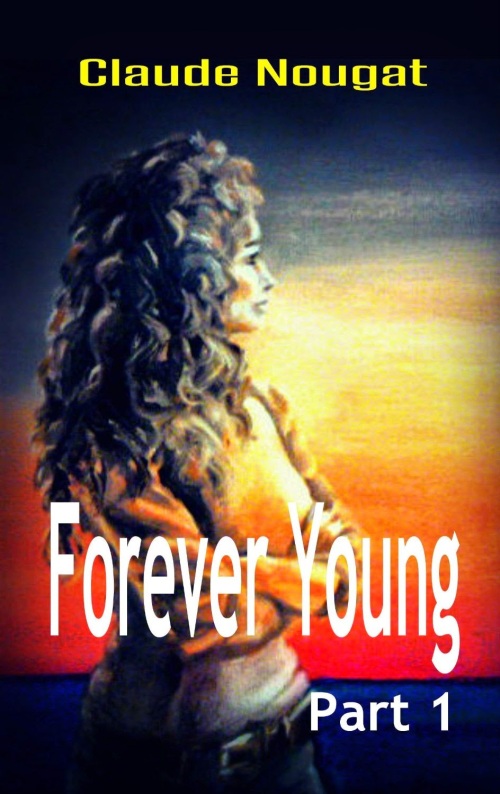
Hugely talented writer Bob Rector, author of Unthinkable Consequences (I highly recommend it, great romantic thriller) and of the acclaimed play Letters from the Front that successfully toured the world for 15 years, has just put my new climate fiction book, FOREVER YOUNG, Part 1, on his list of “hot new reads”. This is a serialized novel exploring the future that I believe awaits us all, and three more parts are soon coming up, the next one, Part 2, The Immortality Trip, to be released tomorrow on Amazon (and later on all other e-platforms). Look for it!
I’m deeply honored that Bob singled my work out and his review makes me particularly happy. Here it is:
5-STAR REVIEW OF FOREVER YOUNG PART ONE by Claude Nougat
If you’re a boomer and this book doesn’t send a chill up your spine, you’d better check your pulse. I don’t want to give too much away but it’s no spoiler to say that Claude Nougat’s Forever Young series takes place about 200 years from now. Unlike so many stories set in the future, Ms. Nougat creates a very plausible future. Too plausible. Scarily plausible.
The changes that have taken place on the globe sound eerily prophetic. It’s hard to single out a protagonist. Forever Young is comprised of an ensemble cast, each with conflicting interests. They are all faced with the choice of whether to remain forever young for a hundred or more years or receive a billion dollars.
Thrown into the mix is a quest for true love, family bonds, greed, sculduggery, duplicity, and humans basically behaving at their worst. In other words, some things never change despite all the glittering marvels science can bestow upon us.
Ms. Nougat creates characters that jump off the page at you. Her dialogue is so razor sharp you find yourself sometimes saying “Ouch!” The climax is as hair raising as an old west shoot out. Is there humor? Oh yes, and it’s dark as molasses and just as tasty. You’ll be tempted to lick it right off the page.
As a reader, when I pick up a new book, I want to feel like a mail sack on a railway platform waiting for a speeding train to snatch me away to a new destination. That’s just what Claude Nougat does with this first book in her Forever Young series, Gateway To Forever.
It’s always comforting to be in the hands of a real pro. Ms. Nougat certainly is that. Highly recommended read.
Update: this morning, another 5-star review was posted on Amazon by author Marsha Roberts, see here I’m wowed!
And here’s the cover of my book:
Available on all e-platforms; click here for Amazon
BIG NEWS: Drum roll please! Part 2, The Immortality Trip is out! Find out what happens to Alice, Lizzie and Jamie as they are given the chance to fly off to a pristine planet one thousand light years away where humanity can start again…Click here to see it on Amazon and here on Smashwords in the Premium Catalogue, which means it’s available on all e-platforms, for the Nook, Kobo and iPad as well as mobile devices.
This morning Amazon reminded me of what matters in Science Fiction and why it is not useless fantasy but a very serious literary genre that is able to raise deep existential issues and make us think.
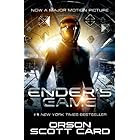
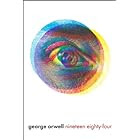
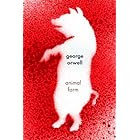
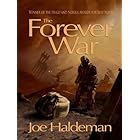
Just four book, two historical “classics”, Orwell’s Animal Farm and 1984, and two “moderns”, both winners of numerous awards, Joe Haldeman’s The Forever War and Orson Scott Card’s Ender’s Game.
It so happens that two of those books are my all-time favorites (Orwell’s) and the other two are on my TBR list – I just had samples downloaded to my Kindle…which goes to show how effective Amazon’s marketing is. Just to show you why these four books raise fundamental issues, here are excerpts of the book descriptions. Please note I’ve just retained the phrases that refer to the issues raised and italicized the high points: Ender’s Game: “In order to develop a secure defense against a hostile alien race’s next attack, government agencies breed child geniuses and train them as soldiers. A brilliant young boy, Andrew “Ender” Wiggin lives with his kind but distant parents, his sadistic brother Peter, and the person he loves more than anyone else, his sister Valentine…Ender’s skills make him a leader in school and respected in the Battle Room, where children play at mock battles in zero gravity…Yet growing up in an artificial community of young soldiers Ender suffers greatly from isolation, rivalry from his peers, pressure from the adult teachers, and an unsettling fear of the alien invaders.” As the Amazon.com review put it: “Yet the reason it rings true for so many is that it is first and foremost a tale of humanity; a tale of a boy struggling to grow up into someone he can respect while living in an environment stripped of choices.” (italics added)
The Forever War: “… a science fiction classic that chronicles the life of William Mandella. Due to the time distortion associated with deep space travel, he is present during both the first and the last battle of a thousand year old conflict with the alien Taurans. A masterpiece of not just science fiction, The Forever War illustrates the futility of all wars and their effect on the human soul.” (Italics added) As Iain Banks put it, this is a war novel that happens to be science fiction. Animal Farm: “…classic satire of the Russian Revolution is an intimate part of our contemporary culture. It is the account of the bold struggle, initiated by the animals, that transforms Mr. Jones’s Manor Farm into Animal Farm–a wholly democratic society built on the credo that All Animals Are Created Equal…The climax is the brutal betrayal of the faithful horse Boxer, when totalitarian rule is reestablished with the bloodstained postscript to the founding slogan: But some Animals Are More Equal Than Others.” (Italics added)
1984: “… a rare work that grows more haunting as its futuristic purgatory becomes more real. Published in 1949, the book offers political satirist George Orwell’s nightmare vision of a totalitarian, bureaucratic world and one poor stiff’s attempt to find individuality. The brilliance of the novel is Orwell’s prescience of modern life–the ubiquity of television, the distortion of the language–and his ability to construct such a thorough version of hell.”
It may come as a surprise that Animal Farm was included in this short-list of popular classic science fiction – it is more fantasy and satire than anything else, but it certainly uses the same Orwellian approach to novel-writing: logically extending to its extreme, violent version an observable current trend in human society, which is exactly what he did for 1984. And that is what makes Orwell’s writing so effective and frightening. You recognize the world he describes, and he forces you to think through all the implications of what is happening. The underlying message is this: if you don’t stop the trend, that is what will happen. Hell on earth.
That strong warning is at the heart of the other two books as well: the perennial futility and pointlessness of war (The Forever War), the challenge of growing up, of becoming a just person in a world ridden with small-minded jealousy and pettiness (Ender’s Game). Yes, in my view, good science fiction, like good climate fiction, is all about alerting the readers to basic issues that threaten our continued existence on this planet. The debate is around political issues but also around bigger issues, like what is the meaning of civilization? What is at the heart of humanity? These are very big questions normally associated with literary fiction. Yet science fiction addresses them too and does so with the additional dimension of unbridled imagination – no holds barred, everything is possible! And that makes good science fiction particularly suspenseful and fun to read… Do you agree? Do you read science fiction and if so, why? What do you get out of it?