Is There a Book Cover Style for Climate Fiction?

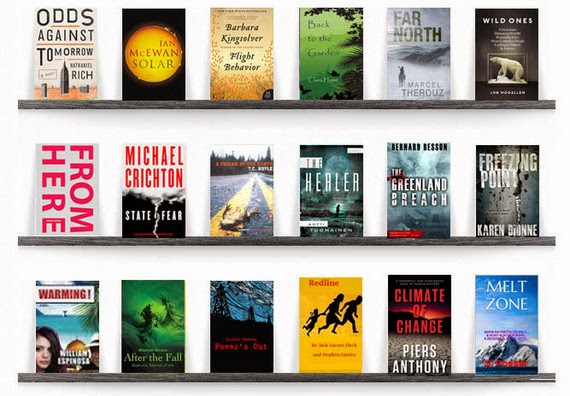
Climate Fiction or cli-fi has evoked a surprisingly wide range of book covers. Look here at what the Cli-Fi Books.com website has put together:


This is very different from standard science fiction fare and should put to rest the argument that cli-fi is a sub-genre of sci-fi.


What is striking about these covers is the unifying focus on humanity and Earth as we know it – but with a menacing twist, usually transmitted with a frightening color filter, often red or green.

Five days ago, I presented to you two covers for my upcoming cli-fi novel Forever Young, asking you to vote for your favorite one and I used both this blog and my mirror blog on Blogger (see here) to try and get as many votes as possible. Although the sample is small (relatively few votes), the trend was crystal clear, the “full woman” – Alice’s portrait – won by a wide margin, two to one. Here she is, watching a fiery sunset on a dying world:

Part 1 is already available on Amazon here at 99 cents

I’ve already put it up on Amazon (here at 99 cents – it’s Part One of a serialized novel in 4 parts – the other episodes will be coming soon, one a week). And in a few days it should be up on all the other e-platforms for your Nook, Kobo or iPad (or any mobile device).

Other news: today Crimson Clouds is exceptionally up for sale at 99 cents. Grab your copy quick here, because tomorrow it will go back to it’s original price of $3.99.

Again, many thanks for the support,  I’m very grateful to all those who have voted!

Enhanced by Zemanta

Comments Off on Is There a Book Cover Style for Climate Fiction?

Filed under book marketing, Cli Fi

Masterpiece, Italy’s Reality TV Show for Writers: Last Act and a Small Miracle

 Publishing Perspectives just published my most recent article about the Italian Reality TV show for writers (see here) and I’m happy to share it with you:


Italy’s TV Reality Show Ignored Psychology of Authors

Italy’s “Masterpiece” TV reality show for writers failed to attract viewers, in part, because it didn’t account for the way writers empathize with others.

By Claude Nougat

On March 30, the RAI 3 reality TV show Masterpiece promoted by the publisher Bompiani to find the “Next Big Italian Writer” ended with an unlikely winner, a Serb who lives in Venice: 36 year-old Nikola Savic.

Last week, on April 16, his winning book, Vita Migliore, was published in 100,000 copies and distributed to the libraries across Italy.

Two weeks to produce and distribute a printed book must be something of a Guinness record for a traditional publisher – as we all know, publishers usually require a minimum of six months to properly edit and produce a printed book.

A veritable miracle? Perhaps.

I reported on Masterpiece when the show started in the fall. By December 2013, it was suspended (presumably due to low ratings), but by then Nikola Savic, a tall, hefty Serb with a quick smile, was already very much in the public eye. He must have been in Bompiani’s eye as well.

The show resumed for four weekly sessions in March, and churned through some 12 candidates at a fast clip – a rate twice as fast as in the fall. For the final episode, on March 30, five candidates were still in competition.

That evening, the winner was selected by a deciding vote from Ms. Elisabetta Sgarbi, the Bompiani Senior Editor. In explaining her vote, she noted that Mr. Savic’s book needed some additional editing, that this was “important” because of grammatical errors and awkwardness in the language (she delicately called it “aritmie”). This is probably to be expected from someone for whom Italian is not the mother tongue.  “It was an uphill choice,” she said, discarding the other candidate, a woman, Raffaella Silvestri, whose book still sounded quite attractive.

Certainly an uphill choice and possibly a brave one.

On the other hand, we may have been given a preview of how Bompiani worked its minor miracle of such a quick turn around on Savic’s book publication, for when Ms. Sgarbi walked up to Savic on the podium to congratulate him, she brought to him… a printed copy of his book:
Nikola Savic, the winner of Masterpiece, with Elisabetta Sgarbi, Bompiani's Senior Editor

Yes, that’s his book. It seems it was already in print on March 30th. Or maybe not? Perhaps that was just the cover and the inside pages were blank…An alternative (and more probable) explanation is that the whole show was probably shot in a few weeks back in the fall (this is normally done for Reality TV shows to save money) and that Bompiani knew by November who the winner was. So they had in fact some five months to produce the book. Minor miracle explained!

With respect to the show’s declared objectives—to raise public awareness of writing and writers—one can only regret the way it went. As reported in the local press, it attracted few viewers and fell well below the average for Italian reality TV talent shows.

It certainly once again raises the question of whether writers can be fodder for TV shows. Aren’t they better off left in their ivory towers?

Looking back on this show, several mistakes were made at the outset, chief among them not allowing the winner of one session to carry over to the next, thus losing a chance to get viewers more involved in the fate of contenders. Efforts were made to get contenders to “fight” among themselves, for example, in the last session, a couple of contenders were asked to give the most negative opinion they could think up about each other’s book. It was not a pretty sight. Such efforts however seemed to have backfired and whenever one lost, the other rushed to embrace and console the loser. As was done here:
The loser Vargas is consoled by the contenders Nikola Savic and Raffaela Silvestri.

The savagery of classical talent shows didn’t appear to carry over to the writers. It would seem that the kind of uncivilized behavior exhibited in other reality show was difficult, if not impossible, to extract from the writers. Writers are by trade intellectuals who tend to empathize with others, itself an asset in dreaming up their characters and constructing their plots. There is no question that a reality show for writers should take into account the particular mental predisposition of writers who are, when all is said and done, very different people…or they wouldn’t write at all.

In short, no one has yet come up with a successful TV show featuring writers and Masterpiece certainly failed in this respect. If such a show is ever to succeed, more attention will need to be given in future to the way writers think and react.

On the other hand, if the objective of the show was to unearth the Next Big Writer, then more importance should have been given to the opinion of the audience. In the last session, an interesting effort was made to put together an audience in the studio and inform them in advance of the books competing as finalists (through synopsis and excerpts) and get the finalists to pitch their books directly to them, as was done here, with each contender supported by a well-known Italian author:
Last challenge in front of the jury and a crowd of invited onlookers; the contenders are supported by major writers, on the right, Savic by Susanna Tamaro and Raffaella Silvestri by Donato Carrisi.

After the performance, the audience was asked to vote and they favored Raffaella Silvestri over Nikola Savic. Nevertheless, the Masterpiece judges (Andrea De Carlo, Giancarlo De Cataldo and Taiye Selasi) voted for Savic and so did Bompiani’s editor, thus disregarding the opinion of the public. This was a lost opportunity  to take into account what  people think and like.

No doubt, Bompiani and the TV producers will carefully review the results of this show and draw some lessons. We can only hope for a better show the next time around.

A closing comment: I’d like to add that, overall, I feel this is a promising formula for attracting the general public’s attention to books and I’m sure that in future we’ll see smashing shows that will generate interest in writers and the world of publishing.

Your opinion? 

Enhanced by Zemanta

2 Comments

Filed under book marketing, Reality TV Shows

Book Cover for a Cli Fi Novel: Which is Best?

Cli Fi, or Climate Fiction, is rapidly becoming a widely accepted term to designate a new genre of books dealing with Climate Change but not only: many elements taken together – like the demographic explosion, growing income inequality, urbanization and the rapid industrialization of the Third World – contribute to threaten our survival on Earth.

Personally, I am convinced that things will get from bad to worse in about 200 years and go kaput in 600 years, if we don’t do anything about it.

And that’s the worst of it: because it is a relatively slow process, a lot of us don’t feel the urgency and even deny that the process is going on. Result: on a political level things are moving at a snail’s pace and the end of the world could really sneak upon us in 600 years!

The involvement of literature in the Climate Change debate is growing, and one UK academic, Dr. Adeline Johns-Putra recently noted that in the past eight years, at least 150 novels dealing in one way or another with the likely future collapse of humanity have been published, fifty of them pure “cli-fi” (I blogged about it here).

In this regard, I had an interesting email exchange with Dan Bloom, the man who coined the term back in 2008, and he quoted to me something  Adeline Johns-Putra, Reader in English Literature at the University of Surrey in the UK told him:
”I think climate change fiction (or ‘cli-fi’) has, in just a few years, moved beyond simplistic apocalypse scenarios to engage intelligently with questions of science and policy (Kim Stanley Robinson‘s Science in the Capital trilogy) and environmental justice (for example, Barbara Kingsolver and Paolo Bacigalupi, in very different ways). By making us ‘live’ both the devastating impacts of climate change and ways of dealing with these, these novels can’t help but intervene in the ongoing debate on climate change policies.”

I love that: “these novels can’t help but intervene in the ongoing debate on climate change policies”…Makes me happy, I certainly hope my Forever Young will be viewed that way, I conceive of it as a contribution to the debate though my main objective always remains one of a story teller at heart!

Now I am working on the cover of my cli-fi/sci-fi book Forever Young that will soon be published and I need your help. 

Dear reader, this is a difficult challenge, there are no established norms for the covers of Cli-Fi novels…Consider the variety, from New York submerged in water (like on the cover of Nathaniel Rich’s novel Odds against Tomorrow) to the bucolic charm of Barbara Kingsolver’s novel (about a monarch butterfly invasion).

What do you think of my two book covers? I’ve set up a poll below where you can answer, voting for your favorite.

Version 1, through a porthole:


Version 2, the full woman:

Why a woman instead of space ships and distant planets as is the norm for science fiction? 
Because space travel is not the point of the book. One particular woman is – she’s a major character, her name is Alice. She’s young and beautiful, warm-hearted and very, very independent. One of my beta readers, Bob Rector, who also happens to be a hugely talented writer (he just published Unthinkable Consequences that is fast becoming a best seller), quite literally fell in love with her and asked me to put her on the cover.

So I did a portrait of her, here it is:


To help you decide which cover is best, here’s a quick word about the book:

Forever Young, a serialized novel in 4 episodes, is set 200 years from now, in a world divided between the ultra rich, the One Percent, who live in gated communities and the others who don’t and suffer the full onslaught of pollution and Climate Change. The One Percent  are the only ones who can afford all the advances of technology, in particular the exclusive Age Prevention Program (APP), whose members wear special Life Watches that enable them to expand their life span to the genetic maximum of some 140 years and look young till the day they die.

The novel interweaves several plot lines; the first is a love triangle between Alice, a young Swiss nurse, beautiful and independent, Lizzie, a talented golf player, the descendant of the mythical Tiger Woods, and Jamie, an ambitious reporter who works for the World and US Post, an amalgam of the Huffington Post and the New York Times.

The second covers the rising threat to life on earth, as humanity is headed for extinction; there are only two options, both reserved to One Percenters: one, escape to another world, a pristine exoplanet a thousand light years away; the other, retreat to Antarctica, the last virgin continent.


The third follows the murderous attempts of one determined 99 Percenter, a retired Blue Beret who has served all his life in the United Nations Peace-keeping Forces and is hell-bent on carving a place for himself in the Age Prevention Program.

And here’s the poll:

Please vote, let me know what you think in the comments below (not on the poll site, I may miss it there). To show my gratitude for your help, I’ll send an advance copy of the book (digital – pdf) to the three best and most useful comments (lottery drawn if there are too many!).

Again, many thanks for the help!

Post scriptum. Just as I closed this post, I came across an article in the New York Times Magazine, about the amazing “Uncivilization” festival organized in the UK by the Dark Mountain Project led by British author Paul Kingsnorth (see here). 

His vision of a future “global collapse” is exactly the one I envision in Forever Young – a future that will come slowly but inexorably and that you have to live with…like Alice and her friends. Yes, there is a good reason why the sky above Alice is blood red, or alternatively, why she is plunged in a frightening sick-greenish world…

Enhanced by Zemanta

3 Comments

Filed under book marketing, Cli Fi

Interview with the Father of Cli Fi: How this New Genre Was Born is Revealed

American climate activist Dan Bloom 
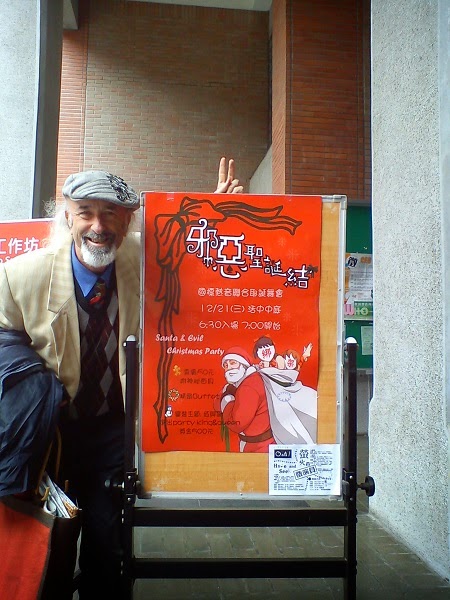
visiting a local university in Taiwan  to
do some research on climate change issues

My blog post about Climate Fiction, a “hot new genre” (here) led me to “virtually” meet  Dan Bloom, the journalist and “green” activist who coined the term “Cli Fi”. I was very happy to meet him, he’s a fascinating and somewhat explosive person, a Tufts graduate who’s worked in Alaska, Japan and Taiwan (where he now lives). And he’s agreed to answer a few of my questions here.

Claude: Dan, you coined the term Climate Fiction, cli-fi for short, back in 2008. When did the term start to catch on?
Dan: The term was modelled after sci-fi, of course, and at first it didn’t really catch on, not until 2013 when NPR did the first big media story on the cli-fi genre (see here ).
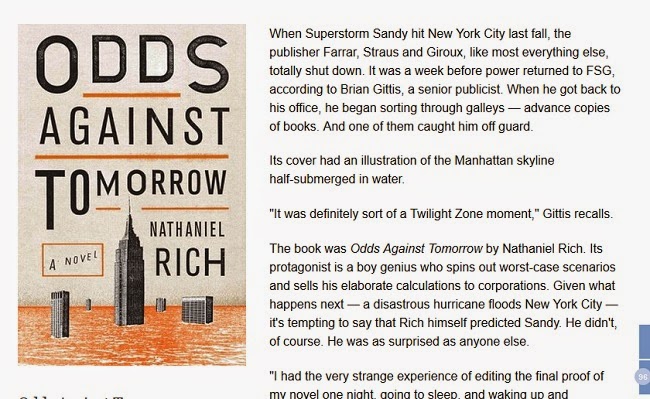
Claude: I took a look at that article, it has a great title “So Hot Right Now: Has Climate Change Created a New Literary genre?” and a striking introduction mentioning a best-selling cli-fi novel, as you can see on this screen shot:


Dan: Yes, and now the term is fast becoming a buzzword in the media, culminating in the recent article in the New York Times about using cli-fi in the classrooms to teach American students how to handle the challenge of global warming (see here ).
Claude: Yes, that’s how my attention was drawn to it, from reading it in the New York Times. I noticed the story was picked up by others as well, including Sadie Mason-Smith on the Melville House website (here). And now, according to the UN’s IPCC latest report on Climate Change, climate warming is fast getting worse because too many countries have dragged their feet for too many years (see here ) So there’s a definite need for Climate Change activism! I’d like to find out how the idea of “cli fi” ever occurred to you. Why did you coin the term?
Dan: I have been an independent deep-green climate activist since 2006 when the big earth-shaking IPCC report on climate came out and it was that IPCC report and the accompanying news media articles about the report that woke me up.
Claude: So your concern for global warming and its consequences is relatively new?
Dan: Yes. Before then, I was not thinking very much about climate issues. But I woke up in 2006. Not being a scientist, there was not much I could do to join the debate about climate change and global warming.
Claude: What was your “wake-up” moment?
Dan:  A 2008 blog post by New York Times science reporter Andrew C. Revkin on his “Dot Earth” sustainability blog. That’s what did it. He mentioned how artists and novelists can use “the arts” to communicate climate issues to a broad public. That made me think what I could do, if anything, to add to that concept of art and literature as tools of communication.
Claude: So, concretely, what was your next step?

Dan: One day while I was doing some PR for a climate-themed book by Jim Laughter, a Tulsa, Oklahoma author, for his novel titled Polar City Red set in Alaska in 2075 (the book came out in 2012, see here ) I hit on the cli fi term I had coined in 2008 to describe Hollywood movies focused on major environmental change like The Day After Tomorrow. I decided to inject the cli fi term as part of my press release about Jim Laughter’s Alaska novel. So I sent out some press releases to book reviewers and I called his novel a ”cli fi thriller” and slowly the term took on a life of its own. A few newspapers and blogs used the term in talking about Jim’s novel, but nothing more, although one newspaper in North America reviewed it.
Claude: Yes, a major newspaper too! I noticed that the New York Times has described his book as “a thought experiment that might prod people out of their comfort zone on climate.”
Dan: Right. And, in spite of relatively slow sales for that book, I didn’t give up and tried to keep the cli fi term alive with many blog posts and by leaving a large digital footprint on the internet, so that if any reporter googled the cli fi term, hundreds of items would show up in the Google search list.
Claude: And on Wikipedia. You can read about it here. But what was the turning point?
Dan: It came in late 2012, when a climate scientist in Atlanta, Georgia named Judith Curry got interested. She is not only a dedicated scientist with a keen interest in the science of climate change but also a woman with a deep appreciation of the humanities and the arts. So she did a big post on her ”CLIMATE  ETC” blog; it’s a very popular blog and she gets 300 to 500 comments on each post – the post about cli-fi novels she titled simply “Cli fi” (see here)

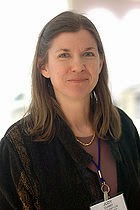
Dr. Judith Curry

Claude: She opens her post by noting that cli-fi is a “fledgling new genre in literature”. Then she immediately mentions Michael Crichton’s blockbuster State of Fear, a 2004 techno thriller against the backdrop of global warming. However it got panned  apparently because of gross scientific errors. She argues that a climate scientist could however pen such a techno thriller without losing his reputation and she cites Rex Fleming .
Dan:  Cli fi as a genre was certainly ‘fledgling’ back in December 2012. But Dr Curry herself changed that. She makes a list of about 20 or so cli fi novels, including big names like Clive Cussler, Ian McEwan and Barbara Kingsolver. And she included Jim Laughter’s Polar City Red and used my press release term of calling it a “cli fi thriller”. That led four months later to NPR interviewing Dr Curry for its CLI FI radio program announcing that a new literary genre had arrived. I had sent dozens of press releases to the NPR book department email address about the cli fi concept, but the station never replied to any of my appeals for an interview or a radio show about the new genre.
Claude: Par for the course, I suppose that was rather discouraging…Of course, Dr. Curry is a big shot at the Georgia Institute of Technology.
Dan: She heads the School of Earth and Atmospheric Sciences since 2002.
Claude: Isn’t she also a rather controversial figure? There is this interesting article in the Scientific American that calls her a “climate heretic” who has “turned on her colleagues”. But that article was written in 2010 and is now probably reflecting an outdated position in the American scientific community. I rather like her position on the latest Climate Change report from the UN: she welcomes the idea of putting the Climate Change discussion behind us and focusing on the needed survival strategies rather than pursue mitigation or curbing measures… What is your take on this?
Dan: I read Dr Curry’s blog posts regularly and keep in touch with her by email from time to time, too. I deeply respect and admire the kind of scientist (and humanist) she is. She’s one of my teachers now, too.The world needs more scientists like her, who are not afraid to speak their minds and even join the debate from different sides of the table. And I am so glad she blogged about cli fi novels back in December 2012. Her post led to all this today.
Claude: You mean the interest shown by NPR?
Dan: Yes. So imagine my surprise one day in April 2013 when I see via my daily Google search for cli fi news that NPR did the story! I immediately set about doing all I could as a PR operative and a climate activist and a literary theorist to push the cli fi meme uphill, using the NPR link as the wake-up alarm. I wrote to the Guardian and asked if they could do a cli fi story for British readers. They did. I wrote to the Financial Times in the UK and asked my contacts there if they could do a cli fi story, and they did. Alison Flood, the Guardian’s book critic, did a blog post on “why cli-fi is here to stay”.
Claude: Wow, I’m impressed!
Dan: At first most media never responded to me, or even answered my email pitches. But they did line up, one by one, to add to the ”cli fi genre is rising” chorus, from Britain to Australia. I kept up the PR blitz, contacting every media outlet I could.  The New Yorker magazine followed the Brits, as did Dissent magazine last summer. There was something in the air I think, but my PR campaign was crucial. I then spent time lobbying the New York Times to report the cli fi news, and I contacted 12 reporters and met up with 6 months of rejections and emails that read “sorry not interested.” But in January 2014 I found one Times reporter I knew from earlier contacts ten years ago and I emailed him. And three months later his New York Times article came out worldwide not just in the U.S print edition and on the newspaper’s popular website, but also via the New York Times News Service which syndicated the article to over 400 newspapers worldwide, from Italy to France to Japan to Sweden.
Claude: So the New York Times article, the one I noticed, was a major turning point.
Dan: It was. Now I am focusing my media contacts on the Associated Press and Reuters News Service for wire stories about the cli-fi genre. And Nicholas Kristof, the New York Times columnist who has a keen interest in climate change issues, told me he will write a Sunday column soon about his take on the power of cli-fi literature to serve as a wake-up call. So things are happening.

Nicholas Kristof

Claude: They sure are! I’m looking forward to Kristof’s piece, I think he’s a remarkable columnist and I totally agree with the concept that climate fiction can serve as a much needed wake-up call. We need to go beyond sterile discussions about who or what is responsible for global warming and do something about it because one thing’s certain: it’s happening! Is that why the idea of cli-fi occurred to you?
Dan: Yes, as a climate activist but also as a literary activist…My major at Tufts University in the 1960s was French literature and I spent a year in Paris in 1969 absorbing the culture and drinking the coffee — I felt that a new literary term for climate-themed novels might help serve as a wake-up call for the future humankind faces now. Besides, I’ve always loved words and word games and crossword puzzles and sci-fi. I grew up with sci-fi novels in the 1950s and 1960s. I am a big sci-fi fan. So one day, my imagination just jumped over the fence and told to make a new word and call it cli-fi and see what happens. I like to see what happens. So I did it.
Claude: So are you a writer in pectore?
Dan: No, I am not a novelist or a short story writer or a screenplay scriptwriter. I don’t have those kind of writerly skills. I am just a climate activist, first, and a lifelong reader of novels, second.
Claude: I gather that Margaret Atwood was an early supporter, though she calls her own novels “speculative fiction” rather than cli-fi — while at the same time fully supporting your creation of the cli fi genre for whoever wants to work in it.

Margaret Atwood (Author page on Amazon)

Dan:  Exactly. Margaret Atwood has written three op-eds applauding the creation of the new genre that has been dubbed cli fi, one was published in the Canada Living magazine, one was published in the Huffington Post and another was published in the Financial Times recently in London. And she has often tweeted and retweeted cli fi news links to her 450,000 followers!
Claude: That’s a lot of followers on Twitter!
Dan: So yes, Ms Atwood has been instrumental in helping to popularize the cli-fi genre, come what may. I consider her my teacher, although we have never met. My other two teachers in the cli fi project are James Lovelock, whose ideas about the Earth being a kind of Gaia goddess that needs to be respected and protected or it’s curtains for the human race, and Andrew Revkin who runs the Dot Earth blog at the New York Times and which I have followed since its inception.
Claude: Okay, now let’s get down to the nitty-gritty. What is your definition of Climate Fiction?
Dan: First of all, I want to make it clear: the term I created is “cli-fi” which stands for climate fiction, of course, CLImate FIction with caps and lowercase letters, and I never use the term “climate fiction.” My PR work is not about “climate fiction” but about “cli-fi.”
Claude: I hyphenate the term by analogy with sci-fi, but I notice you don’t…
Dan:  So I want to use the term “cli fi” only in this interview and I also only use cli fi in my press releases. Why? As a lifelong journalist and PR guy, I know the power of headline buzzwords to serve as signposts along the road. So cli fi is a signpost and a wake-up call. The term “climate fiction” has been used for a long time, and I never coined that term. I just took it and tried to transform the longer version into a kind of code word and I thought of calling it “cli fi.” So let’s just talk about cli fi and leave “climate fiction” for scholars and professors to discuss. The New York Times article about cli fi just mentioned the term once in the entire 1000-word story, and not in the headline at all. 
Claude: I put it in the title of my blog!
Dan: Good! I was hoping for a headline mention of cli fi in the NYT, but in the PR business one cannot control how headlines are written or even how news articles are written. But the Times article was very important and for one special reason: cli fi has now been mentioned in the newspaper of record, The New York Times. That’s a first. This is the beginning. There is no stopping the rise of cli fi novels now.
Claude: What hopes do you have for the genre? What do you expect to achieve through it?
Dan: My hope is that cli fi will serve to bring together novelists and editors and literary agents and publishers — and readers! — as we explore the role of novelists in the ongoing debates over climate change and global warming. My hope is that the news media will start reviewing cli fi novels as cli fi novels, and stop calling them science fiction novels.
Claude: You don’t consider cli-fi as a subgenre of science fiction?
Dan: As I see things now, after several years of working on this project and getting a lot of feedback from readers and writers in both the sci-fi community and the growing cli fi community, cli fi is not a subgenre of sci-fi but a genre of its own. And sci-fi novels can also focus on climate change and still be classified as sci-fi novels, if that is how the novelists themselves want it and how literary critics see it. But at the same time, I now see cli fi as a separate genre that has attracted its own community of writers and readers worldwide. And sci-fi and cli fi are not competing genres at all; they complement each other, and they are, in a way, sister genres. I love sci-fi, and always have. 
Claude: Me too. I consider Aldous Huxley and Orwell among the greatest writers of the 20th century…
Dan: Now I am trying to popularize cli fi, too. I believe we are on the same page, sci-fi writers and cli fi writers. But one thing needs to be pointed out: While cli fi is usually filled with the moral implications of climate change issues, sci-fi is usually filled with the intention of exploring the possibilities of science and its relationship to humankind. So that is where cli fi and sci-fi go in different directions, and both genres are valid and useful.
Claude: Yes, both are useful and I love both! But what sort of future do you see for cli fi?

Dan: My hope is that a modern Nevil Shute will arise, male or female, in any country in any language, to write and publish a climate-themed cli fi novel with the same power as Shute’s 1957 novel On The Beach which served as a wake-up call about nuclear war and nuclear winter. And the movie was important, too.
Claude: The Next Big Novel that will shake society should be in “cli fi”!
Dan: Right! So I am looking for the Nevil Shute of cli fi. And to do this, I am quietly setting up what I call the international Nevil Shute Climate-Themed Novel Award to be first awarded in 2020 for the best cli fi novel in the previous ten years and to repeat the award every ten years internationally and awarding a prize of $1 million to the winner.
Claude: Hey, I’m going to candidate my soon-to-be published Forever Young! Though I must admit that cli fi is only one element, there are other things in it like the demographic explosion and growing income inequality…
Dan: Why not? You and many more writers, that’s what I’d like to see. I am now in the fundraising process of this new project, an offshoot of my cli fi PR work. I am looking for sponsors and a committee of judges to honor these kinds of cli fi novels. And I hope to see the “Nevils” — as I am dubbing the awards — keep going for 100 years, awarded every ten years for a total of ten times. And if the awards committee in 2120 wants to keep the awards going for another 100 years, I will nod yes from the grave. Literature matters. Words matter. Novels and movies made from novels can wake people up. The world is still asleep. We are facing the potential end of the human race. Wake up, world!
Claude: An impressive project! What else have you got up your sleeve?
Dan: Another thing I am working on is this: I am trying to find a reporter in New York or London who covers the book industry to find out if they can do a print newspaper or online story about how literary agents and everyone in the publishing industry view the rise of cli fi as a new genre and if they plan to use the term in future book titles or book covers. Raising the media profile worldwide of the cli fi genre is now my life’s work. And then I die. This is my way of giving back to a world that has given me so much. I go out every day to my PR office not to make money but to make a difference. I was educated to think of life this way, and now in my mid-60s, I have found a way to express myself on my own terms. I am not doing this cli fi work for myself or to benefit from it in any way. I do not want money or fame. I like to work quietly in the background and I find the internet a very pleasant place to hang my sign: “Dan Bloom, climate activist – no fees charged.”
Claude: Dan, that’s wonderful and I wish you every possible success in this most worthwhile cause. Thank you so much for joining me here and telling us about your dreams and your plans. 

I look forward to comments from my blog readers: has anyone read a cli fi novel recently? If you have, or know something about the genre that has not been covered here, please share!


Dan Bloom BIO:

Dan Bloom grew up in the Boston area, attended Tufts University where he majored in modern literature and minored in French, and has spent his adult life working as a newspaper reporter, editor and blogger in Alaska, Japan and Taiwan. He is now dedicating his life to promoting the new
literary genre of cli fi and working on it 24/7 from his “office” in a small internet cafe in southern Taiwan (as Dan does not own a computer and never has, describing himself as a Neo-Luddite.)

For readers or media people worldwide who want to contact him, his email at the internet cafe is danbloom@gmail.com and he welcomes all inquiries and in all languages. For more information, visit Dan Bloom’s bog, CLI FI CENTRAL, click here

Enhanced by Zemanta

Comments Off on Interview with the Father of Cli Fi: How this New Genre Was Born is Revealed

Filed under book marketing, Cli Fi, genre fiction, interviews, Literature

Climate Fiction: A Hot New Genre?

Is climate fiction really a hot new genre (no pun intended)? Something remarkable has happened when American colleges start to use climate fiction to teach how to prepare for the coming climate crisis. Expect writers to sit up and listen – especially science fiction writers.
The New York Times recently reported on it (see here) saying classes focus on a “heavy dose of the mushrooming subgenre of speculative fiction known as climate fiction, or cli-fi, novels like Odds Against Tomorrow, by Nathaniel Rich, and Solar, by Ian McEwan.”

Further down in the article, more cli-fi books are mentioned, among them Barbara Kingsolver‘s Flight Behavior, Daniel Kramb’s From Here, Hamish MacDonald‘s Finitude, Paolo Bacigalupi‘s The Windup Girl, Saci Lloyd’s The Carbon Diaries 2015 and more recently The Carbon Diaries 2017 (a British YA book).

Wow! I sat up and listened since my soon to be released Forever Young looked like it might fit the genre. 

Checking around on the Net, I visited Wikipedia’s definition (see here) and discovered that the earliest climate fiction book was The Drowned World published back in 1962 by J.G. Ballard (though it wasn’t Climate Change in this case but solar warming). Here’s the first edition (nice cover!):


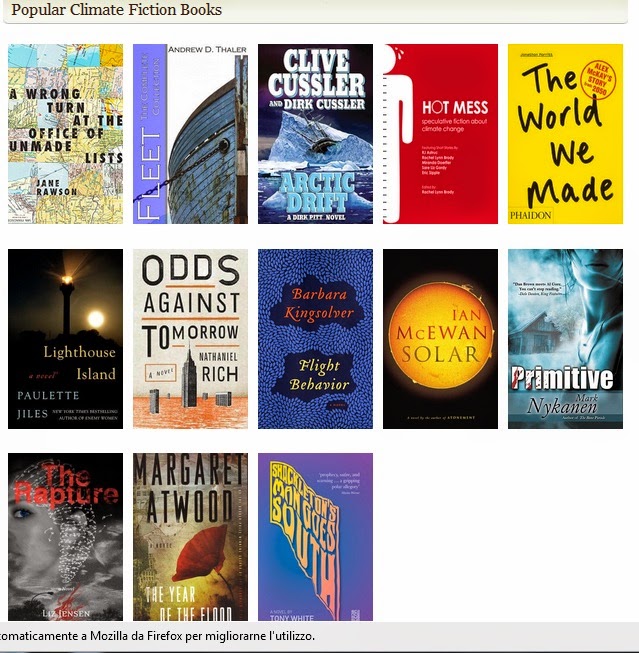
I gathered  a slew of interesting articles (see below) and checked Goodreads. I found a whole page there dedicated to so-called “popular climate fiction books” (39 titles so far):

Take note: climate fiction has attracted big best-selling writers like Ian McEwan, Margaret Atwood (who famously tweeted about it), Clive Cussler and Barbara Kingsolver. They have all jumped into the subgenre and some as early as 2009 (in Atwood’s case).

The blogosphere is awash with posts (see below) and there’s one book selling website set up by a British Columbia  “micropress”, the Moon Willow Press, with a green conscience; take a look at their home page:

This site gives an interesting definition of climate fiction: 
“a genre of literature, film and other media that involves climate change fiction, which may be speculative, literary or science fiction”. 

So here we are moving away from the idea that it may be a “subgenre” of science fiction. It is also described as “bendable…not necessarily set in the future nor always apocalyptic”, and Barbara Kinsolver’s Flight Behavior is given as an example (the setting for this present-day story is the explosive invasion of Monarch butterflies into the Appalachian Mountains). 

There is at least one blog fully dedicated to climate fiction  set up by Dan Bloom, a journalist and writer who invented the term back in 2007 (on his blog and in an article in Vice Magazine) – the term was picked up again by reporter Scott Thill in 2010 in Wired.  

Here’s the homepage of Dan Bloom’s Cli Fi Central blog (to visit, click here):

The news reported on that page is of some 6,000 “cli fi” fans meeting in…2058 to discuss climate change! Yes, a little bit of irony doesn’t hurt (but only 6,000? That’s a depressingly small number…) 

Climate fiction is still very new and evolving. Dan Bloom acknowledges this and last summer summed it up neatly in this article about the origins of cli-fi and where it’s going, see here. He notes that cli-fi has recently drawn two stars who met and talked about it at the 2013 Kingston WritersFest: Margaret Atwood on her way to a likely Nobel Prize in Literature and Nathaniel Rich, “a freshman Manhattan newcomer” who’s fast spreading the word about “climapocalypse” to his (30’s) generation.

The news about climate fiction took off when the National Public Radio (NPR) and the Christian Science Monitor used the term – the story then rebounded on the UK Guardian in May 2013 (see Rodge Glass’ article here), and it was picked up by newspaper columnists in Turkey, Sweden, Lithuania, Spain and Italy. Yes, going global! 

The Guardian article got 139 comments, with most approving the birth of a new genre and some objecting that a new term was not needed. The best comment in my view comes from someone calling himself “Keyserling”:

“It’s apparent that “cli-fi” is nothing new, we just have a new buzz-word to describe it. I don’t like the term (my mind associates it with “clitoris fiction”, of the appalling Fifty Shades type). But we do need a new genre.

As the world knowingly embraces climate destruction, and we reap the whirlwind, islands will be lost, coastlines, then streets and cities flooded. Continents may perhaps become lethal or altogether uninhabitable, and eventually, a much reduced mankind may be reduced to living in polar colonies, or on space platforms orbiting our once abundant planet.

As that happens – like a global, inevitable, unstoppable, slow motion car crash – authors will more fully focus on the actual decay and destruction around them, and their observational fiction may not neatly slot into the overcrowded dystopian / apocalyptic / post-apocalyptic genres, alongside Planet of the Apes, Level 7, or The Day of the Triffids, et al.

So yeah, a new genre, to reflect new times. O brave new world!”

And another writer, Joe Follansbee, has come up with “6 rules” for writing climate fiction on his blog; briefly put, climate change has to be the “driving narrative” and it’s not to be confused with a weather event (say a tornado) which is short-term. We are speaking here of long-term climate trends that affect humanity’s future.

But the latest United Nations report on climate change has put a new twist on it: it’s no longer an “exceptional event” that would demand it be stopped but something that humanity has to learn to live with. See this illuminating article in The Atlantic. The idea is that all is not lost, we can adapt to a warming world. 

That seems to put paid to Climate Change as a primary source of high suspense for climate fiction!

I would argue that the demographic explosion, the overwhelming trend towards urbanization and growing socioeconomic inequality are beginning to look like better candidates for suspense – or at least they look like very credible sources of social tension and recurring human-created disasters (e.g. displacement and extinction of species, recurring local wars, smog-caused health emergencies, refugee crises and population displacements, spikes in food prices leading to famines etc etc). 

Add to the mix natural disasters like floods, earthquakes or tsunamis, and an already fragilized socio-political situation could easily get out of hand. 

That is a much more likely future than the one posited by Climate Change alone. That is the future I see in my upcoming book, Forever Young – set 200 years from now. Why 200 years? Because I don’t believe things will come to a head all that soon. People always cry foul and use biblical language to warn humanity of impending doom – a doom that never comes on schedule. Which is why 200 years seemed like a reasonable lapse of time…

And Climate Fiction as a subgenre? I’m not sure it’s headed anywhere…What is very striking is that as a subgenre, it hasn’t developed a recognizable style of book covers. Take a look above at the Goodreads bookshelf. Or take a look at the book covers you find on the Cli-Fi Books site, here are a couple, chosen at random:


Clara Hume’s novel takes the reader “through apocalytpic American after climate change and other ecological disasters have greatly altered the planet”:

But you wouldn’t guess that from the cover, would you?

Do you see any pattern in the design of these covers? Personally, I don’t. They’re nice covers, often with a retro charm (like Clara Hume’s), but there is surprisingly little or no reference to a doomed or threatening future, which is the least you would expect.

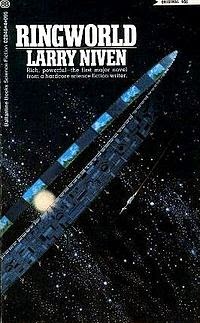
What do you think? I tend to believe that climate fiction might possibly merge into the “hard science fiction” genre (see here) which is based on scientific accuracy, i.e. on the best informed guess about where we are headed…At least “hard” sci fi covers have a distinct sci-fi flavor, see here for an early book in the genre:

First edition (published in 1970)

But the latest best-seller in the genre, Hugh Howey’s WOOL, certainly sports a rather bizarre cover that is a radical departure of the “classic” science fiction genre:

 
So it looks like the reverse might be happening: “hard” science fiction is merging into climate fiction… 

Perhaps this is not as far-fetched as it sounds. Some people are convinced that climate change is “the hottest thing in science fiction”, as Dave Burdick put it (see here, on Grist) and he reports the interesting observation made by Csicery-Ronay, an English professor at DePauw University in Indiana and co-editor of the journal Science Fiction Studies: “Cli-fi is getting some interest from folks who are not necessarily interested in science fiction.”

I’m very happy to hear that. Because climate fiction is not a silly fantasy. Because the whole point of it is to make us think seriously about the future of humanity and where we’re going…

One thing’s for sure: climate fiction sells as it attracts more and more people beyond strict science fiction fans. An example? Knopf’s recent acquisition of Paolo Bacigalupi’s new novel The Water Knife, to be released next year, see here (before that he was with a small press). Following on his success with the Windup Girl (200,000 copies sold), the editor at Knopf is convince his new novel is set to attract a “cross over audience” beyond Bacigalupi’s “core readers”.

Hey, are you ready for climate fiction? I know I am!

Related articles:

Enhanced by Zemanta

3 Comments

Filed under book marketing, genre fiction, Literature

Author Bob Rector’s Interview of C.N.

Reblogged from author Bob Rector’s blog, see here. He’s just launching a round of interviews of authors – so keep an eye open on his blog, more interesting interviews are sure to come!

I’m very honored to have drawn his interest. He is a remarkably talented writer himself, the author of Letters from the Front, a show that became known as the World’s Most Decorated Play and that entertained America’s troops around the world for fifteen years. Most recently, he has released a smashing novel of romance and suspense, Unthinkable Consequences (see here) that is climbing the Amazon ranks at a fast pace and has already garnered 19 reviews, all of them 5 stars and well-deserved too!

For more about Bob Rector, click here. And here’s the interview, with lots of arresting questions:

April 6, 2014

MY INTERVIEW WITH MULTI-TALENTED CLAUDE NOUGAT

It is with great pleasure that I introduce to you the very talented author/artist Claude Nougat. Not only is she a gifted storyteller, she also provided invaluable editing advice to me while I was in final preparation of my manuscript for Unthinkable Consequences.

Claude you are an accomplished author with several books in release, but before we start discussing your word-craft, tell us a little about your background.
I guess you could say I’m a world citizen, I really don’t have roots anywhere. Born in Belgium, raised in Sweden, Egypt, Russia, France, Colombia and finally reaching the US when I was 17 – picking up on the way many languages and forgetting them in turn. What’s left is French, Italian, Spanish and of course English that I learned attending classes at the American Embassy in Moscow. My formative years as an intellectual took place in America, at Columbia U. I graduated in economics not because I particularly liked the subject but because my father felt that studying anything else would be a “waste of time” (what I really wanted to study was paleontology, I love old bones…) Once out of school, I travelled the world over for the United Nations, giving management advice to aid projects in difficulty, a fantastic job. It put me in touch with so many different people – a very enriching and full experience that lasted 25 years till I retired in 2003.

I happen to know that you are also a very talented painter. Do you find that it compliments your skills as a writer? If so, how?
Painting and writing seem to call on diametrically opposed segments of the brain: the mode of concentration is totally different – painting is more intuitive, it sort of “happens” on the blank canvas. You could argue that a book also happens on a blank page, but it is a long haul, not like a painting that can be done in a few hours. A book can take years in the making – my first one (now out as “Luna Rising”, a Sicilian family saga) took 30 years in the making, from the first moment I thought of it (when I walked into a dusty men’s club in Sicily full of old men playing backgammon – they all looked like ghosts) to its most recent incarnation (now out in a brand new edition). A painting only takes a few days, in that sense, a painting is more like a short story or a poem…

Two of your works that I truly enjoyed are Crimson Clouds and Forever Young. Give us a brief description of each.

So happy you enjoyed them! “Crimson Clouds” is about the anxieties of restarting one’s life after retirement. Robert, the protagonist, in his early 60’s, a brilliant manager, he’s still young and attractive and has a lovely and much younger wife who’s carved out her own success as a dealer of contemporary art. But when he decides to renew with a childhood dream of being an artist and produces paintings that are dreadfully academic (a little like my own!), his wife is horrified. They fight over art but what is at stake is their marriage and they separate. He goes to Italy, has some love affairs but his wife wants to save their marriage and comes back to him…

“Forever Young” is set 200 years from now, when the Earth is dying and only the ultra rich, who can afford the costly and exclusive Age Prevention Program (APP), enjoy a perfect life in their gated communities, looking young till the day they drop dead. The book has three major characters, forming a love triangle: Jamie, a young investigative journalist from the World and US Post (the New York Times and Huffington Post rolled into one), his partner Lizzie, a professional golf player (she’s a descendent of the mythical Tiger Woods), and Alice, a beautiful Swiss nurse and an outsider: she yearns to join the APP and is in love with Jamie. There are two options to survive the extinction of life on Earth, both opened only to APP members: fly to another pristine planet similar to Earth or take refuge in Antarctica, the last virgin continent, and wait for the end to come, getting ready to re-settle the Earth afterwards. What will our threesome do?

Why do you write?
Tough question. I wouldn’t be me if I didn’t write!

What appeals to you most about crafting a story?
The suspense. Digging into another person’s head. Figuring what happens next. If I know ahead what’s going to happen in my story, I don’t feel like writing it at all. I’m my own first reader!

What writers have inspired or influenced you most and why?
All the classics, especially the Russians – I consider Gorki’s Dead Souls an absolute masterpiece, it’s got everything I love, the characters, the social comments, the way a light is thrown on society – much more effective than any sociological critical essay. The same can be said of Bulgakov’s The Master and Marguerite: literally insane fantasy and the most effective and devastating comment ever made about Communism and men’s tendency to fall into dictatorship. But I also like the French, Voltaire’s Candide and Camus’ novels for the same reason I like Gorki. Also the English, in particular the sci-fi masters, Aldous Huxley and Orwell though this is an area where there are lots of remarkable American writers too, from Frederik Pohl to Philip K. Dick and most recently, Hugh Howey. Actually, there are lots of amazing writers alive today from Penelope Lively to William Boyd, David Lodge, Louis Begley, Deborah Moggach, Tracy Chevalier, Siri Hustvedt…

If your writing was music, what would it sound like?
Good God, I have no idea! I guess, cool jazz…

What comes first for you, plot or character, and why?
Character, no question about it. The plot comes next, it develops out of a character’s strengths and weaknesses, yearnings and fears. The setting is often what challenges the characters and pushes them to their (internal) extremes but the challenges also come from relationships between characters.

Tell us a little about how you formulate your plots.
I don’t formulate them at all. I have a general idea and jump in. As I write, it all unfolds in front of my eyes like a film.

Talk a little about themes. At what point in your writing process do you address them?
Never. I don’t believe in writing with a theory in mind that you want to develop. The themes come naturally as a side-effect of the plot and characters. Forever Young really deals with major issues threatening life on earth but I hope that doesn’t show. The intention is to entertain, not teach or preach.

Tell us a little about how you create your characters.
Observation. People around me are warned! But most of all, I draw characters from my own inner self. Whatever looks logical for the character, given who he/she is, gets written down. The characters dictate the creation, not the other way around. I’m sure you know what I mean, because I can see that’s how you create your characters too.

Which characters have you created that are most vivid to you, or continue to reside in your heart?
The young man in Luna Rising, he is stuck in his life, he hates it and he’s trying to get out of it. Obstacles on his way, coming from the ghosts in his family, are so numerous that he is forced to become a hero or…die! Contrary to a lot of my readers who disliked Kay, the wife in Crimson Clouds, I actually love her. That’s why I rewrote Crimson Clouds (now the second edition of what was originally called A Hook in the Sky). I wanted to make it clear that for her, winning back her husband is a huge undertaking and he’s constantly cutting her down. So I added whole sections to the book giving her side of the story. And I also love Alice in Forever Young: she’s the outsider who should be in, but is constantly left out. But that doesn’t discourage her, she’s a brave, determined woman – at any rate, that’s how I think of her and painted her (at your behest!) and I’m thinking of using that portrait as a book cover…

ALICE
Portrait of Alice at dawn – oil on canvas by Claude (2014)

You definitely should! Talk to us a little about writing good dialogue.
Bob, I think that’s where you’re the master! In any case, I follow your system: see the people talk, hear them talk (go in a trance if necessary!), take time to speak the dialogue out loud, and you’ll hear it when it’s too long or repetitive or useless. Then, there’s only one solution for it: cut, cut, cut!

I agree. For every line of dialogue that makes it on the page, I probably toss a dozen more. Do you have personal, social, or political convictions that worm their way into your writing? If so, give an example.
I suppose I do though I try very hard to not let them “worm” their way in. Yes, because they can be truly worms that punch holes in the plot. I am convinced that much of contemporary art is not good and I guess that worked its way into Crimson Clouds (mainly in the form of fights between Robert and the women in his life who are all contemporary art fans). Likewise, I’m convinced that income inequality is a major evil of our time and it’s become one of the premises of the brave new world you find in Forever Young.

What do you find most difficult about the craft of storytelling?
Avoid repetition. Not talk down to the reader. Realize that they’re bright and don’t need to be either lectured to or have to be told anything twice. So again, I cut!

Amen! Talk to us about your greatest “Ah-ha!” moment when you read over a passage or chapter and said, “Wow, that’s really good!”
Are you speaking of my own work? I don’t have such moments, ever, when it comes to my own writing! Other people’s writing, yes. Right now I’m into Siri Hustvedt The Blazing World and there are a fantastic succession of such awe-inspiring moments! Just to quote one (out of a dozen or more) when she describes the protagonist’s father: “Harriet’s father was physically awkward, prone to self-conscious pats of his daughter’s arm or quick, hard hugs that were more like speeding collisions than expressions of affection…He liked to expound to us on philosophy…He believed in tolerance and academic freedom…But it is not what is said that makes us who we are. More often it is what remains unspoken.” That last sentence is fantastic!

Many writers create different working environments or conditions that help them focus on the job at hand. Tell us about yours.
Nope, sorry to disappoint. No special environment. I work wherever and whenever I can, in between womanly tasks like cooking or making beds. I leave the gardening to my husband!

We’re in agreement, although I don’t make beds. Don’t see the point. What frustrates you most about being a writer?
The marketing. I hate book promotion but it’s a necessity – especially in today’s environment, with millions of books available on Amazon with just a computer click.

Yes, I think most writers would agree with you on this. Do you think male and female writers approach storytelling differently? If so, how?
I never thought it was a gender thing. For me, it’s not and I don’t believe there’s any gender determined difference. Character-wise, sure. I should think we’re all different in the way we approach work, whether it’s writing, painting, music or economic analysis.

If a young person just starting their working life said to you they wanted to be a writer, knowing what you know now, what would you say to them?
Hey, that’s a tricky question! I don’t think of myself as a guru… On the basis of my own experience, I would say, be ready for the long haul, chances are that your first book won’t make a ripple. So don’t get bitter about it, it happens to all of us. Be ready to befriend your competition. Actually, a lot of writers see other writers as rivals and that’s totally wrong. Writers are terribly different from one another, there’s space for everybody, and we can help each other!

Great advice, Claude. As always, I enjoy your stimulating views on writing. Thank you for participating.

Comments Off on Author Bob Rector’s Interview of C.N.

Filed under Blogging, interviews, Literature

Why Climate Change is Only a Side Show: the Sixth Extinction is Upon Us!

In the United States, Climate Change is viewed with suspicion: many Americans don’t believe in it, at best they’ll agree that climate warming may have natural causes but they strongly refute the idea that it could be due to human action. And in any case, they reject any causal linkage with extinction of life on earth. Life has survived long periods of colder and warmer climate, they argue, and there’s no reason to believe that this time will be any different, regardless of who’s responsible for the warming – and supposing the warming actually occurs. 

For a strong statement expressing this viewpoint, see here, “global warming debunked” by Gary Ellis, who describes himself as an electrical engineer “with 40-plus years of work experience in electrical generation from methane gas to coal, natural gas and nuclear.” Incidentally, not a climate specialist but a person whose life has been invested in energy extraction.

Right. You can always argue as he does that the science behind Climate Change is not strong enough or persuasive, that there’s a political agenda behind it. Whose agenda is never spelled out though the agenda of people debunking climate warming is pretty clear: they want to defend their kind of economy based on energy extraction that spews out tons of carbon in the air. Just ask the Chinese authorities and watch what they do to control the smog in Beijing.  They’re the ones (along with India) who constantly defeat United Nations discussions on Climate Change and how to control it.

But this discussion is sterile when confronted with the actual numbers out there:  the numbers describe an alarming increase in the rate of extinction of species that often have been around for millions of years (like amphibians) and yet are headed for extinction – in some cases, right now. The rate in extinction is so massive that scientists have taken to calling it the Sixth Extinction – there were five before, notably the one that killed off the dinosaurs (that one was caused by an asteroid impacting the earth and causing the equivalent of a “nuclear winter”). But this one, the Sixth, is shaping up to be bigger than any other, the biggest ever, and it is caused by…yes, us, humans.

Think of it. We’ve covered the earth, all 7 billions of us soon to become 8, 9, 10 billions – there seems to be no end to the population explosion. We use up every available natural resource, we cover the earth with our buildings, we shape the landscape, we travel everywhere, bringing seeds and species along in our baggage, thoughtlessly putting local biodiversity at risk. Big changes are in the offing: the disappearance of amphibians caused by the spread of a fungus, the fast acidification of the oceans that threaten the survival of reefs and all life in them, the extinction of bats in the United States – even our outdoor cats can be a cause of extinction as they relentlessly kill birds. 

I read about the cats (some 80 million of them in the US) yesterday in the International New York Times (see here: “That Cuddly Kitty is Deadlier Than You Think”): yes, a recent study has shown that sweet cats, some of the best companions we have, are among the most feral predators and given the facts of rapidly rising urbanization and modern agriculture reducing forest space, birds have few places left to breed and live. Add cats to the mix, and there you go: a silent spring!

This is a horror story and it is excellently described by New Yorker journalist Elizabeth Kolbert in her book The Sixth Extinction, an Unnnatural History –  now a #1 bestseller on Amazon in biology and a must read for anyone remotely interested in what the future holds for us. She expertly takes us along for the ride as she herself travels around and interviews scientists, often following them in their investigations. All this makes for a very human and effective read, in my view, Pulizer Prize stuff! 

What I like best about it, is that she cleverly avoids the confrontation with Climate Change: it is obvious that it enters the equation, it is a fallout of our activities but if you believe it is not, in fact, it doesn’t matter. It doesn’t change the thrust of the arguments about the Sixth Extinction or the results of observation. The data showing the on-going extinction is not anybody’s invention, it is solid science and cannot be debated or refuted like climate warming. As Kolbert says, even if you find a totally clean energy (say fusion), what would matter is whether you continue to cut down the rain forest. Some of those biologists interviewed by Kolbert have no doubts: human life is headed for extinction and what will follow are…giant rats!

The rate of the current extinction? Scientists believe that up to 50 percent of existing species will have disappeared by the end of the century. Fast! And inevitable, it is already on-going. Nothing in our political set-up (especially at the United Nations where everyone is allowed to speak, including those who don’t understand the issues: see the failure in Copenhagen, here) permits us to think that we can escape the ultimate outcome. We might have the science to do it but we won’t do it for political reasons.

For me, the book was an eye-opener and I highly recommend it. This is of course why I have set my upcoming book “Forever Young” some 200 years from now  (btw, it’s nearly finished, I’m going through the last edits – expect it soon!). Kolbert’s book came out just in time to confirm my timing and give me extra confidence in the world I envision in “Forever Young” – a world that is not only sharply divided between the haves and have-nots, with every costly technological advance going to the ultra rich who can afford it. It is also a world threatened with extinction – and again, only the ultra rich have escape options. Some decide to fly to another pristine planet, others to take refuge on the last virgin continent, Antarctica, and wait there, in a protected environment, for the end of life – with the intention of resettling the earth once the Sixth Extinction is over. But this is a novel, not a scholarly treatise of futurology. So I’ve thrown in that future world people like you and me who have to figure out what to do – and still try to live a full life and know happiness in love. But is it possible when everything collapses around you? The answer in “Forever Young”…

In a way, I see this book “Forever Young” as my own contribution to the debate, or, if you will, “duty of care”.  As Kolbert reports, paraphrasing Sherwood Rowland, one of the scientists who discovered ozone depleting chemicals, “What’s the use of having predictive science if you don’t listen to the predictions?

My hope is that people who read “Forever Young” will start to listen to the predictions and do something about it… And here’s a fun (?) video – anyway worth watching:

Enhanced by Zemanta

Comments Off on Why Climate Change is Only a Side Show: the Sixth Extinction is Upon Us!

Filed under Uncategorized

Readers vs. Watchers: The Digital Revolution is Not Over

Lately a huge controversy has developed around the theme “Indies are Beating Traditional Publishers”, and one publishing guru, Mark Coker,  the father of Smashwords, has loudly predicted that self-published authors will outrun traditional publishers by 2020, see here. Indie authors, carried forward by the digital revolution that has lowered production costs and leveled the field, are in a feisty revolt led by Hugh Howey; find all the rebels on his Author Earnings website here.

This race between indies and publishers, no matter how exciting, obscures something much bigger: the sea change that is investing the entertainment industry as readers lose out to watchers.

We’re into a brave new digital world where the written word is losing out to the image.

Evidence of this vast change is still anecdotal, but putting all of it together, it adds up.

Take ebook sales. After years of exuberant growth, ebook sales started to flatten out in 2013. I’ve blogged about this before (see here). At first, I thought it was nothing to worry about: a physiological slowdown that indicated the market had reached maturity, that it was better balanced between printed and digital books (good news for the publishing industry!). But now I’m convinced the situation is actually much more serious than that.

It’s the book market’s very survival that is threatened.

Why? Look at what’s happening to the entertainment industry and more generally to our cultural life. Particularly noteworthy:

  • people are about evenly divided between readers and watchers: those were the results of a recent survey carried out in the UK and reported by the BBC (see here) and it’s obvious that the divide is very likely to be the same in the US or any other Western country;
  • the performance of the tv and videogame industry suggests that more and more people watch films and play videogames and less and less people read books.

The videogame industry is huge and has become as big as Hollywood. It is projected to grow from $67 billion in 2013 to $82 billion in 2017, a change happening largely at the expense of the movie and music industries (see this interesting article here explaining why this is happening).

TV is no longer an ‘idiot box’. The ponderous New York Times itself in a recent article signed David Carr (see here) came out with that arresting statement. Look at what David Carr has to say about TV’s “New Golden Age”, here’s a screen shot of a high point in the article:

What a feast indeed! There’s no doubt that TV series, like House of Cards, Breaking Bad, Game of Thrones etc are entertaining and well worth watching.

What is worrisome is that more and more intellectuals who were once upon a time big readers now binge on TV series. I know I have – I recently enjoyed for several weeks the Danish political TV series called “Borgen” centered on a fascinating female politician. My consolation is that it is considered “the hottest show in Europe” (see here). And here’s the trailer, you can get it no matter where you live:

In our brave new digital world, the image is displacing the written word, it’s as simple as that.

The ebook has proved to be a neat way to make the written word more accessible to people – on your mobile devices the written word can now follow you anywhere, in the waiting room at the dentist’s, on the plane, in the bathroom, in your bed.  

But the written word has to fight against films and music and videogames, a tough fight!

As to the suggestion that Smashwords is a big success and therefore we shouldn’t have to worry (see article below), there’s no secret: the number of writers who decide to self-publish is increasing exponentially and Smashwords is the platform of choice for them – user-friendly and able to upload  ebooks everywhere, from Apple‘s ibook store to Kobo to Barnes and Noble (though you still have to upload yourself on Amazon’s KDP).

But please note: Smashwords’ success does not translate into increased sales for ebooks worldwide. The two aren’t related.

Don’t get me wrong. The flattening of ebook sales is not for tomorrow morning, there are still big markets to conquer, in particular India, the country that reads the most in the world, see the reading data here.

I’m talking about a long-term trend, that is affecting the written word in all its forms, including blogging. It is now well known that blogs based on the written word alone have much less traffic than those lavishly using videos and photos (see tips #9 and #25 in this comprehensive how-to article for bloggers, click here).

Images win out every time!

The handwriting is on the (digital) wall. This is the end of an era that opened with Cervantes’ Don Quixotte in 1605, the first great novel of modern times, and was propelled by Shakespeare, Molière, Voltaire, Dickens, Goethe, Tolstoy, Tolkien and so many fabulous writers over the next four centuries.

How this new video trend can ever be reversed, I have no idea.

Any suggestions?

Personally, I do see a silver lining: writers will always have a lot of work on their hands, even in this new image-obsessed world: because the images must tell a story, and writers are the story-tellers par excellence

++++++++++
Win a book in our Scavenger Hunt. 8 books, more than 30 copies total. I’m one of the authors sponsoring the hunt with “Crimson Clouds”.  Come and play, click here
++++++++++
Related articles
Enhanced by Zemanta

2 Comments

Filed under Blogging, Digital Revolution, Literature

Amazon’s Latest Gimmick, the Book Countdown Deal: Does it Work?

SalesThe idea of a book countdown is fun: set the price at the lowest level allowed on Amazon, 99 cents, and watch it rise each day by one dollar – until it’s back to the original price. There is an element of game betting: you, as the customer, have to beat the clock in order to win.
I recently tried it for my book “Luna Rising, the Full Saga“, as those of you who receive my newsletter know. I thought that no matter what happened, it wouldn’t hurt. This was a book that I had just published at the beginning of the year, a re-edition of an earlier novel (totally re-written and with a new cover), and it was sitting dead in digital dust. It obviously needed some kind of boost.

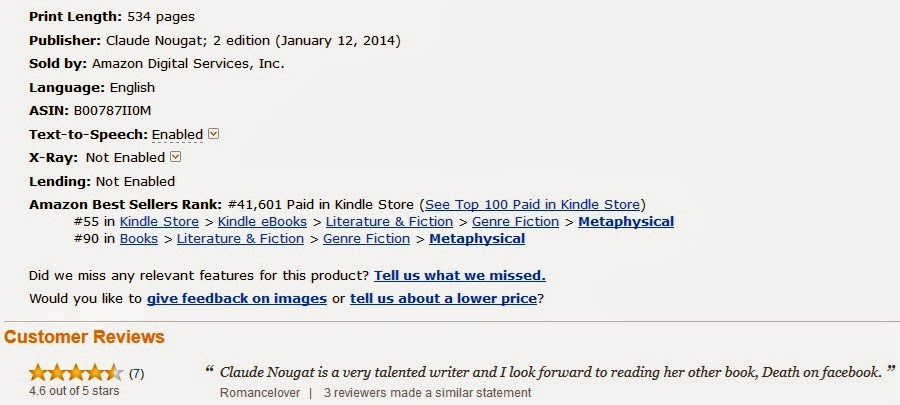
Starting Thursday 27 February, the countdown was launched and by Saturday morning March 1st, this is what my book detail page looked like:

Wow, it ranked number 55 in the top 100 fiction ebooks in the category…”Metaphysical”! But wait a minute, what on earth is “metaphysical fiction” and who would ever want to read it??

I thought I had used the term “visionary” when I had uploaded my book on Amazon but it seems it goes together with “metaphysical”…I controlled what it was, searching the Kindle Store for “metaphysical fiction” and found over 5,000 titles (see here), ranging from science fiction to black magic, but also world masterpieces, like Kafka’s “The Metamorphosis”. So I shouldn’t complain, I’m in good company! A pity I didn’t stay long in the hallowed top 100: just a couple of days…

In a way, “metaphysical” made sense, and I learned right there something about what might sell my book. That’s useful, considering it is undoubtedly a hard sell even though it is perhaps one of my best books, mainly because it is “cross genre”. It starts out as a paranormal romance and ends as a techno-thriller (!).

In the process, I learned a few interesting things:

  • Make sure you plan your marketing around it ahead of time. I didn’t do a very good job of it, I only put my book up on three sites paying for the ad and as far as I can see, those ads didn’t drive any sales. The sales I got seemed to have been triggered by my newsletter; however, this was the first time I used it (if you’re interested in receiving it, the sign-up form is on this page, upper right corner – no spam, only information about upcoming deals and events like a new book release). In spite of this, 46.4% almost half the subscribers opened the letter and 3.6% clicked through to the title. Compared to an industry average of a 17.7 % and 2.5% respectively, I suppose I should feel satisfied (though I suspect that writers, once they’ve got a properly running newsletter, manage to get much higher click rates from their fans than I did, I’m still too new at this).
  • Schedule your Countdown Deal in the middle of the week. Just like the number of views on a blog, your sales inevitably slow down on the week-end as people go out and enjoy life rather than the Internet (I scheduled to finish on a Sunday and that was probably a mistake);
  • Don’t forget to tick the UK box otherwise it will run only in the United States. This is very annoying, I didn’t see that box, and all my efforts went to nought in the UK. I thought I could start again the following week with another promotion just for my British friends but that is not the case: only one promotion is allowed every three months and I’ve used up my chance for this 3-month period!
  • Be aware that you won’t see what it looks like on your book detail page if you live outside the US or the UK (like I do). You can only follow what happens from your KDP dashboard and of course the (hourly) change in ranking on your book detail page. I contacted Amazon and they told me how I could look at it, by logging out of my account, and re-entering from “outside”, scrolling down to the very bottom of the page to find the Amazon US market box and click on it. Sounds easy but…At the bottom of the page you see all the Amazon markets across the world except the US!

The biggest unknown in the Countdown Deal is the fallout: what effect it has on follow-up sales and on your other titles once it’s over. I suspect the fallout may be quite large for established writers with lots of fans online; in my case it was limited. Especially if you compare it to the free promotions I did two year ago that triggered thousands of downloads.

This was very different.The sales were disappointing and didn’t continue beyond a few days. Also there was no effect on my other titles.  One unexpected result: it stimulated the sales of the printed version (no doubt why it turns up as #99 in books, see screen shot). What’s interesting about that is that the printed version of the book was not under promotion.

This suggests that:

  • we’re in a very different digital world from two years ago when free promotions drove sales; ebooks no longer sell like hot cakes;
  • the advantage of a Countdown Deal is that it draws attention to the book, regardless of price. It’s probably not so much the limited discount that works as the novelty of the formula and the “game” aspect.

There is little doubt that promotions centered on giving out free books (or low priced books) no longer work: we’ve all got our e-readers overflowing with free books. Clearly something else is needed to give a boost to sales. In that respect the Countdown Deal helps.

Pity it is restricted to the US and UK markets! This is a serious limitation. When will Amazon extend it to other markets where it is present? I have readers in Australia (and other places) who contacted me because they were really annoyed at being cut out.

What is your experience with this new marketing instrument? Did you try it? Please share, I’d love to know how it went for you.

(Photo credit: smartsigns, click here.)

++++++++++++++++++++++++++++++++++++++++++++++++++++++++++++++++++++++++++++++++++++
Cover Wars: Be my friend, show a little love! Vote for your favorite book cover but don’t forget to vote mine, it’s “Crimson Clouds”.  Check it out here. I know, they all look great but I rather like mine, hope you do too (grin!)
+++++++++++++++++++++++++++++++++++++++++++++++++++++++++++++++++++++++++++++++++++

Enhanced by Zemanta

Comments Off on Amazon’s Latest Gimmick, the Book Countdown Deal: Does it Work?

Filed under book marketing

How to promote your book and win reviews at the same time

Reviews sell books, right? But the problem is to get them. Ads are easy, you pay for them but they tend to be ignored unless you tie them to a promotion, making your book free or at 99 cents for a short period. The grand-daddy of book promoters is of course BookBub, recently joined by EBookBargainUK and EbookSoda, all excellent sites if you want that kind of promotion.

But how about tying your efforts to garner reviews with free book promotions? 

Story Cartel has the answer, to check it out, see here. I thought I’d test it out. I recently joined and here’s how my book looks on the Story Cartel site: free digital copies are distributed in exchange for honest reviews, though no one is required to post a review.

Looks nice, doesn’t it? It’s sitting there together with related books and a notice clearly indicating how long the offer lasts (at the time of this writing, 17 more days). To see it on the Story Cartel site, click the image.

Actually offers on Story Cartel are meant to last 20 days (I already lost 3 days in telling you about it!). And when the promotion is over, Story Cartel organizes a sweepstake among reviewers and the winners get a free printed copy that I have agreed to provide, in total 5 print copies (offer limited to the US).

So if you enter, you can even get a free print copy delivered to your home!

I don’t know how well such a promotion works – I shall let you know asap. If anyone has used it, please leave a comment about your experience! 
And there are already some very positive evaluations of Story Cartel, see here:

Cover Wars: Vote for your favorite book cover and don’t forget to vote mine, (grin) it’s “Crimson Clouds”. Check it out here. They all look great (even if I really like mine)!
Enhanced by Zemanta

2 Comments

Filed under book marketing