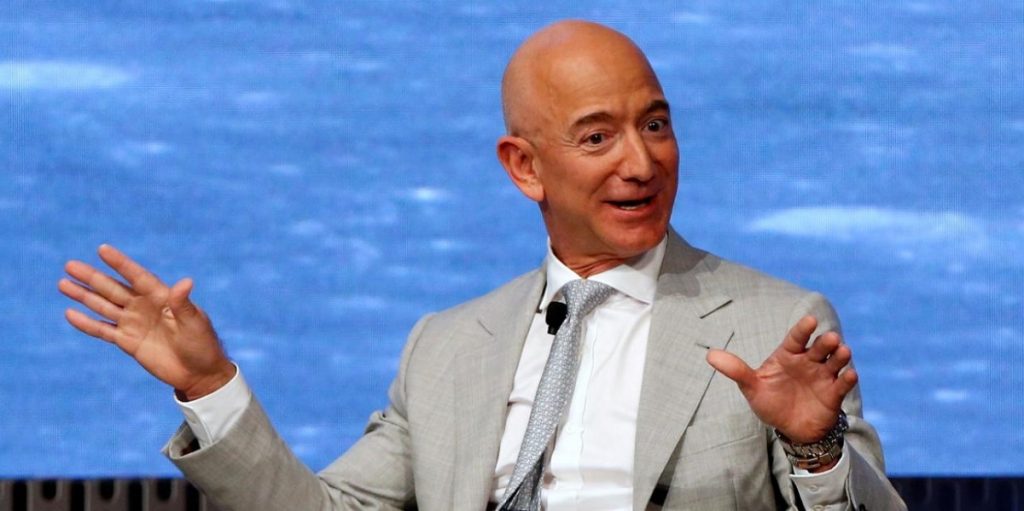
You know, not everything is bad about climate change: It’s forcing the car industry to THINK DIFFERENTLY for the first time in decades and come up with exciting new electric models! I spent last Sunday researching it, and here’s the amazing stuff I found, the stuff of dreams! Check it out, here’s the opening salvo of my article published on Impakter:
Are electric cars just the cherished dream of eco-conscious consumers or a soon-to-become reality? With the coming of Biden’s strong climate policies and the Trump administration’s odious support of the fossil fuel industry finally out of the way, the United States as a whole – and not just Tesla – is back in the electric car race. Three days ago, on 28 January, GM announced that it would go much further than simply selling hybrid cars or a few electric models: By 2035, it would sell only zero-emissionvehicles.
This means that GM will phase out their most successful products: Gaz-guzzling S.U.V.s and pickup trucks. Thus putting another nail in the coffin of the internal combustion engine and heralding the coming of electric cars.
The March of Electric Cars Around the World
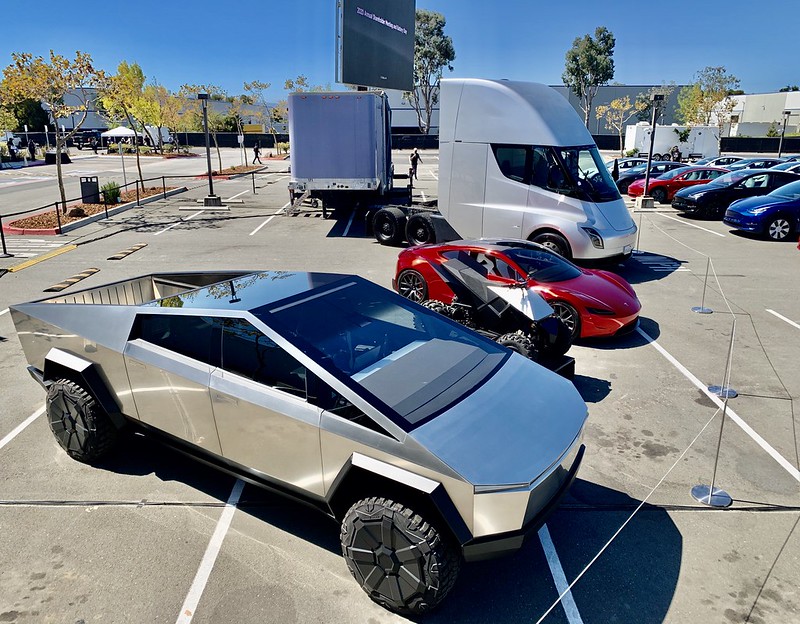
Since GM is America’s car behemoth, employing 1 million people, more than any other carmaker in the U.S., the news made headlines and shook up the American car industry. The expectation is that much of the American car industry has no choice but to follow GM’s example. And catch up with Tesla that in the meantime has unveiled last year its famous electric trucks, the Tesla Semi and Cybertruck. Not to mention Tesla’s future roadster that should become available in three years, an astonishing machine capable of hitting 0-100km (60 miles) in 1,9 seconds flat, with a 400 km/hour top speed and a 1000 km autonomy: a supercar by any metrics (including the price: over $200,000).
And the American industry is definitely coming up with exciting new products in an “old” established category, pickup trucks, that has long been popular in the United States:
WATCH THE VIDEO, IT’S REALLY COOL! Go to Impakter, click here. I hope you enjoy reading it (and watching the videos) as much as I did writing it!
In the featured image: Tesla Lineup Photo by Steve Jurvetson
Stuck at home because of Covid-induced lockdowns, we all love to shop on Amazon. We love to order online and get our favorite products without having to brave Covid-infested shops. We might also hear negative stories about Amazon mistreating its employees, but we tend to dismiss them. Instead, we listen to Bezos announcing a slew of green policies. And the latest news that Amazon is the biggest corporate buyer of clean energy tends to confirm that good impression. So we ignore the complaints from Amazon workers and feel good about buying from Amazon. But are we right? Is Amazon really as green as it claims to be?
The Impakter Index has just given Amazon a C rating. That means Amazon is “mediocre” on the front of sustainability. Why? How did that happen?
It’s a complicated story and it’s worth telling. Because the “green” claims are strong and yet the gap with reality is a chasm.
First the facts. As a result of the pandemic, Amazon, like all online marketplaces and cloud businesses, has grown exponentially in 2020. For now, Amazon enjoys an extraordinary moment of unalloyed success with the public. As Wired recently noted in an article exploring Amazon, both consumers and employees think of Amazon highly: Forbes rated Amazon the second-best employer in the world and YouGov placed Amazon fifth among the top ten brands according to consumers:
EXIT TRUMP, ENTER BIDEN: CAN AMERICA MAKE A COMEBACK?
Can Biden mop up Trump’s disastrous legacy and enable America to make a comeback? Many see him as a savior, as coming to the rescue of a broken America. Make everything right again. A big task. As we all know, Trump skipped Biden’s inauguration, the first outgoing leader to do so since the 19th century, and in fact, the inauguration was radically different from any recent ones. The New York Times had to dig back into history to wartime stories in order to find similar crowdless, clouded inaugurations. It found three cases: in 1945, at the end of World War II, Franklin D. Roosevelt’s fourth inauguration was “a spartan affair”; in 1861, on the verge of the Civil War when Abraham Lincoln was the target of an assassination plot; in 1865, coming out of the war when smallpox was raging.
This singular attempt of the NYT gives one a sense of how profoundly America feels wounded: Trump’s legacy is similar to a war. It tore apart the country and destroyed America’s image abroad.
Unsurprisingly, Biden in his inaugural speech, noted grimly that the pandemic, notoriously mismanaged by Trump, had already killed 400,000 Americans, as many as World War II.
Read the rest of the article on Impakter, click here.
The World Needs to Wake Up: At Risk the Survival of Humanity
At a time when the world, battered by COVID-19, is watching with dismay the rocky transition from Trump to President-Elect Biden, a group of 17 world scientists reminds us that maybe all our worries are futile. What is at risk is something far more important: The very survival of humanity. The prognosis is dire and it comes in a just-released major perspective paper: “Underestimating the challenges of avoiding a ghastly future” published in Frontiers in Conservation Science.
On the basis of a comprehensive yet concise assessment of the state of our civilization, these scientists – experts from major institutions including Stanford University, UCLA, and Flinders University – are telling us in no uncertain terms that the very survival of all species, ours included, is threatened.
And that the outlook is far more dire and dangerous than is generally understood.
The causes are well known: A loss of biodiversity and accelerating climate change in the coming decades coupled with ignorance regarding the state of our environment and political inaction across the planet.
In the researchers’ view, world leaders need a ‘cold shower’ to come to their senses and plan and act in time to avoid a “ghastly future”. Professor Paul Ehrlich of Stanford University noted that no political or economic system, or leadership, is prepared to handle the predicted disasters, or even capable of such action:
“Stopping biodiversity loss is nowhere close to the top of any country’s priorities, trailing far behind other concerns such as employment, healthcare, economic growth, or currency stability.
While it is positive news that President-elect Biden intends to reengage the US in the Paris Climate accord within his first 100 days of office, it is a minuscule gesture given the scale of the challenge.
Humanity is running an ecological Ponzi scheme in which society robs nature and future generations to pay for short-term economic enhancement today”.
A year ago, Paul Ehrlich was adamant that our civilization is about to collapse
…
Read the rest on Impakter, click here. Share the news, let me know what you think.
Christmas in Bethlehem: The COVID-19 Experience of the Holy Family Hospital
What is Christmas like in Palestine at the time of COVID-19? There is no better place to find out about the challenges brought on by the COVID emergency than in Bethlehem, the birthplace of Jesus Christ. And in a hospital like the Holy Family Hospital run by the Order of Malta where most of the children in Bethlehem are born: It is both a center and a mirror of life in the region.
Until March 2020, life was normal in this sunny city of 25,000 people, six miles south of Jerusalem. Administered by the Palestinian Authority (PNA), people lived off tourism. And at Christmas, there was a peak of presence as pilgrims visited the Church of the Nativity, a UNESCO World Heritage site since 2012. In 2019, the Church was even removed from the UNESCO list of World Heritage Sites in Danger because it had been so well-restored. And people flocked there for Christmas, as always.
Not this year.
When COVID-19 hit, Bethlehem was the first city to go under curfew, closing hotels, tourist shops, and all economic activities. Later on, COVID-19 spread to the surrounding district and also to the other districts in Palestine. As most families in Bethlehem depend on tourism for their income, the pain was immediate and long-lasting.
The movement of people was drastically curtailed, except for medical personnel allowed to reach the medical centers. And I wondered how hospitals in the region addressed the COVID-19 emergency.
Just published a piece about the shameful compromise the EU Council has reached with Hungary and Poland in order to approve the €1.1 billion EU Budget and the Covid Recovery Fund. Here is the story.
To Unblock EU Budget: Hungary and Poland Off the Hook
Updated 11 December 2020: EU Budget effectively unblocked, Veto from Hungary and Poland is lifted, rule of law in the EU is compromised. The first to announce the news was the President of the EU Council, Charles Michel on Twitter.
It is time to consider whether countries like Hungary and Poland that flout the rule of law have any place in the European Union. And the European Council, all the European leaders starting with Merkel and Macron are sending out the wrong signal. Where did “European values” go? Disappeared in the Brexit fog? Indeed, why not have a Hungarexit and Polexit? And renegotiate their status in the Union with a new treaty similar to the one with Norway?
What follows here and was published yesterday explains what happened.
To find out what happened, read the rest on Impakter, click here.
I’ve just had the pleasure (and honor) to co-author a piece on COVID-19 and…religion (!) – yes, a serious matter – with Richard Seifman, former World Bank advisor and health expert. Here’s the opening of the article published on Impakter Magazine:
While bench scientists around the world continue to work on designing a safe and effective vaccine and therapeutics, drug manufacturing companies deal with the production aspects, and public health systems grapple with future distribution constraints, a different factor may await in the wings, one which can either help or hinder the achievement of prevention goals, namely religious tenets. World religions can make a difference in the race to distribute vaccines, for better or for worse, and we are already seeing their impact around the world.
Then, as I looked back on my blog, I realized I’ve abandoned you, my friends, since…August! Way too long!
To remedy (just a bit), here’s the list of my articles published on Impakter since then – and for those of you who are writers (like me – I’m writing a children’s book series of fantasy travel), I draw your attention to the article about the launch of the Publishers SDG Compact. That’s pretty important for us writers!
It happened today, 16 November. Hungary and Poland have managed to block Europe’s €750 billion Recovery Fund. Europeans rarely agree on anything and now the Visegrad group of East European countries led by Hungary and Poland is threatening Europe’s path to
Biden’s victory, as welcome as it is, means very different things for America and for the world. Here I will try to look beyond the coming eleven weeks of recriminations, accusations and lawsuits that Trump appears set to unleash. I
More Americans are beginning to realize what has been evident all along to impartial observers in Europe: If Trump gets another four years at the White House, it will mark the definitive decline of American power. Much to China’s and
Today, 14 October, something special happened at the 2020 Frankfurt Book Fair: The SDG Publishers Compact was launched (SDG stands for Sustainable Development Goals). This is important first of all because of the venue: The Frankfurt Book Fair is the
Once again the European Parliament and the Council are at loggerheads over the EU’s seven-year budget. The “only” difference compared to previous negotiations is that, in this case, the 2021-2027 budget is anchored to a crucial instrument for economic recovery:
The new European Commission president, Ursula von der Leyen, the first woman ever to hold the job in its 63-year history, has set out to change Europe, pushing it into a new direction. In the few months, she has been in
Ok, that’s it for now. If you want to read any of those articles, it’s easy, just click on the article’s title. I hope you enjoy them, Let me know what you think!
I worked on the Index for two years – yes, it all began in early 2018 with a request from the founder of Impakter Magazine to create a new tool for rating “green” products and companies that are engaged in CSR policies. Of course, the Dow Jones Sustainability Index exists, and many others, not to mention sustainability certificates and labels. So many of them that for most consumers and investors, it’s a veritable jungle. You can get lost among all the claims for sustainability! Which one is credible? Reliable? Trustworthy? Who knows…
Well, now, thanks to the Impakter Index, you will know – you’ll know as a consumer when you purchase a so-called “green” product and you’ll know as an investor when you engage in “impact investing” and sustain CSR in businesses. Yes, if we are to contain climate change and arrest environmental degradation, we need to “vote with our wallets” for socially-responsible and eco-friendly companies.
We must stop purchasing from businesses that damage the environment and hurt people. And we can do that thanks to the easy-to-use Impakter Index. Now online with the first 100 companies that we have ranked at Impakter (with a team of 37 experts) using a reliable system (based on meta-analysis techniques) to identify the sustainability certification systems that are credible and discarding those that are not.
More to come by September, until all relevant companies are covered by the Impakter Index. Take a look, click here: https://index.impakter.com/
Here’s the opening of my article:
Few would disagree that we need a more sustainable world, where climate change is finally under control and the degradation of the environment is stopped. But as consumers, we feel helpless, caught in the vortex of endless consumerism. As investors, it is hard to discern the real deal among all the so-called “impact” investment opportunities. We all are unwilling contributors to the general disaster. This is where the just-launched Impakter Index can make a difference: It is the first sustainability index that empowers people, consumers and investors alike, to vote for sustainability.
At the launch (July 31, 2020), the Impakter Index found immediate endorsement in Common Place, a publication of the Knowledge Futures Group (founded as a partnership between the MIT Press and MIT Media Lab). As noted in the foreword by the Common Place editor, Quincy Childs, she “reached out to Impakter earlier this week about the necessity of sustainability badging, not realizing they were in the process of finalizing a sustainability index that has been two years in the making”. And, in just a few words, she summarized why the index is important: it “empowers the public to use their purchasing power for planetary and social benefit.”
The Impakter Index empowers the public because it is intuitively simple and easy to use, with a five-letter system that ranks business sustainability. Companies classified A are “great” in terms of their carbon footprint and social responsibility, those ranked F “fail”. You type in the name of a company – for example, Danone as you stand in front of the yogurt section in a supermarket – and you instantly get a reliable indicator of where this company stands on its way to sustainability:
Likewise, the certification of products in the consumer goods market, with a wide range of catchy labels and badges, is intended to help the consumer to extricate herself from the avalanche of organic products and fair trade that vie for her attention.
But the Impakter Index is different. It builds on the work of other certification systems, picking out the best and weeding out the less reliable systems. In other words, in constructing the Impakter index, no certification system was accepted at face value, no matter how popular: Each certificate and index was independently reviewed and assessed by the Impakter team before it was used. That approach follows the concept of mega-evaluation (evaluation of evaluations), aka meta-analysis, widely used, particularly in medical research, to quantitatively combine and pull together the findings of a wide range of studies that are often at varying levels of quality.
Why was meta-analysis deemed necessary in constructing the Impakter Index?
Just published in Impakter Magazine, this long read for the weekend. I had a great time talking to Aliki Steen, the founder of the project to save this ancient horse from extinction! Here is the beginning:
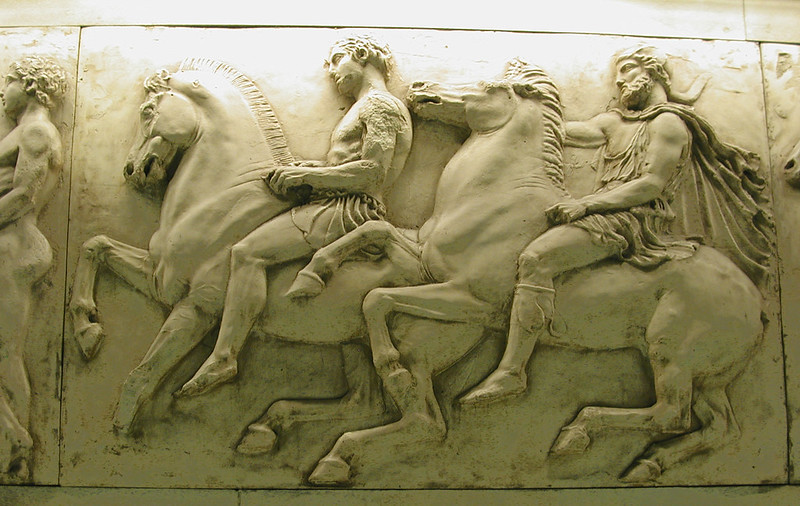
In the past fifty years, humans have managed to destroy 60 percent of animal populations. Among them, one is of historic importance: The ancient Skyros horse, whose ancestors are said to adorn the Parthenon frieze. At the start of the 21st century, some 200 animals were reportedly left, of which only 90 could be considered genetically pure. Such a low number suggested that the horse could be facing a fatal lack in genetic variability leading to its extinction.
But the Skyros horse has found champions ready to save it. Among them, Professor Nikos Kostaras, President of AMALTHEIA, (a non-profit organization for the protection of native Greek farm animals and rare Greek livestock breeds threatened with extinction). He has worked with an American expert on horse genetics, Professor E. Gus Cothran, of the Texas A&M University’s Animal Genetics Lab, when the latter came to Greece to carry out a genetic study of the Skyros horse. Subsequently published in 2011, the study proved that the Skyros pony is “outstanding through having a distinct phenotype” and was found to be “isolated, without any relationship to any horse breed” in Greece or in the region.
I talked to Professor Kostaras about the future of this horse and this is what I learned.
Describing the Skyros horse as “one of the gems of the equine family”, he noted that it was perfectly adapted to its environment, “the result of isolation in an insular environment with poor vegetation and harsh climatic conditions.” The historical data, however, supported the idea that the Skyros horse is part of a large family of horses that lived in most Aegean islands, and for thousands of years, were “serving humans in their day to day activities.”
The problems arrived with the mechanization of agriculture that caused a steep population decline, and, he said, even extinction of some Aegean horse populations. Among the threatened species, we have the Skyros horse, the Rodos small horse (with a total population of 12 horses), and the ‘Mintili’ the small horse from the Island of Lesvos, thought to be extinct from the 1960s and rediscovered in 2017 in a feral state.
However attempts to preserve the Skyros horse were, he said, “short-sighted and had devastating effects.” In particular, there were two “major bottlenecks” resulting in the loss of precious genetic variability. The loss of genetic variability, he pointed out, is “a major threat to the survival of the breed.”
The creation of the “Skyrian Horse Society” in 2006 was a first step in the right direction. The society kept a studbook, recording all the Skyros horses that live on Skyros island, the rest of Greece and abroad, thus setting the breed standard.
He described how the Skyrian Horse Society has set out to overcome the loss of genetic variability problem, focusing its strategy on increasing the population size without risking further loss of variability. For this, he explained, all horses have been DNA tested and each horse’s inbreeding coefficient established. This enables the development of optimum out-crossing plans and thus the long-term survival of the breed.
Today the population of the breed, he reported, has increased to approximately 400, of which 160 exhibit all phenotypic characteristics of the breed. Another study is presently underway to assess the current status of the breed.
Armed with this information and the good news that the Skyros horse population has practically doubled from where it was a couple of decades ago, I set out to interview Aliki Steen who is a founder and working on The Silva Project in Corfu and Athens, one of the two leading conservation programs mentioned by the professor.
I discovered that the SILVA breeding program started in 1996 with four horses, two stallions and two mares. The horses were originally brought to Corfu because they required living and breeding free and in a semi-wild environment which was provided at Villa Silva, an olive grove near Corfu town owned by Aliki Steen’s family.
Over time, the total number reached 45 purebred horses, although there are fewer now in Corfu because The SILVA Project “helped” other breeding centers in Greece and abroad (e.g. in Peebles, Scotland): The horses were “given away”, not sold, in order to create additional breeding centers.
From the start, the program was and is engaged in advocacy to make the public – and also potential breeders – sensitive to its cause.
The program is also engaged in equine therapy, with the special needs of about 30 children attended to every year. In relation to this, a Silvaland Riding Center has been established with both therapeutic and classical riding programs. In addition to the usual riding facilities, there is a café, and the Center organizes a variety of activities, including dog shows and horse riding competitions. It also offers an internship program and runs a 20-acre organic kiwi farm. A rare Greek breeds Educational and Environmental Park based at Silvaland is under development intended for school children and tourists.
I had a long talk with Aliki Steen who joined her family’s project from the start (1996) in parallel with her work in finance. Born in Athens, Greece, from a Greek mother and a Norwegian father, she came to Brussels in 1983 for her studies, then worked for several years in finance, her latest position being director of global internal communication for a large international banking group.
Aliki Steen with one of her Skyros horses
How are your horses today, any recently-born foal or happy event on the way?
Aliki Steen: The Skyros horses on Corfu island are living in a little earthly paradise, called Villa Silva, in Kanoni near Corfu town. Our current “working” horses, that is the small horses used for riding for children and therapeutic riding for people with special needs, are kept on other premises, near the village of Kalafationes, in the center of the island. This riding ranch is called Silvaland and it is better suited for riding during the rainy winter days or during the very hot summer period.
For the moment, we do not have any pregnant mares on the property – ideally, each mare should be pregnant only once every five years. The older Skyros horses are all in great shape and, as some of you may know, they also live much longer than other “modern” horses – 40 years or so if they get good food and appropriate veterinary care.
That is a remarkably long life span! Can you tell us how the island of Corfu was affected by the coronavirus pandemic?
A.S.: Most coronavirus cases in Greece were observed in Athens, Patras, and the Northern part of Greece. All islands, Corfu included, were preserved, mainly because the Greek government took very strict confinement measures from the very beginning. Experts say that both the stringency of those measures and the way Greeks have largely abided by them, have been key to Greece avoiding the worst ravages of the global pandemic.
As of Monday 25 May 2020, the internal borders have finally opened and it is possible to travel anywhere in Greece. As from June-July, tourists will certainly travel to the Greek islands, but everyone hopes that the relevant social-distancing measures will help contain a potential second coronavirus wave.
How did Greece manage to cope so well with the pandemic?
A.S.: The coronavirus outbreak in Greece should have been a disaster. As a popular tourist destination, Greece received 27 million visitors in 2019 alone—presenting a potentially significant risk of COVID-19 from international travelers. The country’s population is the second-oldest in the E.U. (behind only Italy), its health sector has been ravaged by austerity, and its crippled economy is still nearly 40% smaller than it was in 2008, before the last global financial crisis.
Officials said in 2019 that, after three bailouts and drastic cuts to its public healthcare system due to austerity, there were only 560 ICU beds in the entire country of 11 million – that is 5.2 beds per 100,000 people, compared to Germany’s 29.2. The conclusion is clear: Full application and respect for quarantine measures made the difference.
Let me turn now to your project, saving the Skyros horse from extinction. Can you tell us how The SILVA Project was born?
A.S.: In 1995, my Greek family and I discovered that the ‘Skyros small horse’, an ancient Hellenic breed, was endangered and on the verge of extinction. Since this horse doesn’t live in captivity or in stables, it was imperative that a large property was found, adapted, and used for its breeding. With very little knowledge about horses in general, we started breeding in extremis the very last purebred horses that remained in Greece. This is how in 1996 The SILVA Project was born in Corfu, Greece.
What were the challenges you confronted?
Read the rest of the interview on Impakter, click here.
———————————————————————————————————————–
In the featured photo: Parthenon Frieze, detail. Note the size of the riders in relation to the horse – long thought that the enlargement of humans was a way to indicate their elevated status, it is now believed that this is an exact representation and that they were, in fact, riding small horses – i.e. the Skyros horse. Source: Urban Grammar
By the end of last year, as is the custom when a decade ends, I started thinking about the future. Obsessively. Climate change, environmental degradation, the collapse of democracy – if you project those facts into the future, you have to wonder: are we are living at the end of times? But there is an odd fact right under our nose, a small fact that sounds more like a piece of gossip than real news: The battle of billionaires.
Yet this is no fluffy gossip, it’s very real! We tend to discount the political role of billionaires. We shouldn’t. Consider that not all billionaires are bad news. Some fight for social justice and the preservation of the environment. A battle between the two kinds of billionaires is shaping up and could last well into the coming decade. I just wrote about this in an article for Impakter, here’s the opening:
The 2010s are coming to a close. Reviewing the decade, what can we say about the future? A tech person will look at technological progress (stunning). A sociologist will look at cultural diversity (explosive). My take (disclosure: I’m an economist) is that this decade, with growing income inequality, saw an unprecedented number of billionaires taking center stage. “Good” billionaires like Bill Gates concerned about climate change and equity, “bad” ones like Betty De Vos, defunding and dismantling America’s public education system.
This fact alone, the rise of the billionaires, will shape our future, for better (a peaceful, balanced world) or for worse (climate Armageddon).
Much depends on what kind of billionaire takes power. Some of them can be alarmingly aggressive, for example, Trump ordering the summary execution of Iran’s General Qassem Suleimani killed last Friday at Baghdad airport via a drone strike. A strike that could escalate dangerously in the Middle East’s explosive environment.
Unsurprisingly, the 2020 campaign for the US presidency is seeing the rise of left-wing Democrat Bernie Sanders with declarations like this one (in Los Angeles on 21 December):
“Our campaign is not only about defeating Trump, our campaign is about a political revolution. It is about transforming this country, it is about creating a government and an economy that works for all people and not just the 1%.”
I am highlighting this because it is a remarkable statement. It marks the distance we’ve covered in a single decade: This is the language of the Occupy Wall Street movement that opened the decade in 2011. And now the once derided concept of the 1% against the 99% has gone mainstream. So much so that it can buoy a candidate in his bid for the White House (Sanders, as I write, is just behind Biden and ahead of Warren).
You see rants in headlines, like this one from C-Net’ s Jackson Ryan: “We see the effects of climate change and our leaders continue to ignore the science”. A rant coming not just from journalists but scientists too.
Now, in 2019, we can all agree that the “world is on fire” and that the 2010s have been a “lost decade”. Yet back in 2013, K.C. Green, a talented cartoonist could still joke about it in a stunning piece of black humor. This is the closing panel of his 6-panel piece(screenshot):







 Claude Forthomme's Blog about Social Issues and Books