Tag Archives: Amazon

To Publish AND Perish – Will the Tsunami of e-books Destroy our Culture?

This article was published on Impakter (under my real name, Claude Forthomme):

https://i0.wp.com/impakter.com/wp-content/uploads/2014/08/paisaje15-1050x582.jpg

To Publish and Perish

on 20 August, 2014 at 09:00

Amazon and its 3.4 Million E-Books: the End of Culture?

For a long while now, people have debated how many e-books Amazon carried it in its Kindle Store, because Amazon has never divulged the data. Some daringly ventured the figure of 1.5 million. Wrong! The real figure is close to 3.4 million and I found it by chance, as I was navigating Amazon’s website for Amazon Associates which provides links, banners and widgets you can upload to your blog to help advertise Amazon products.
Here it is in a screen shot I took on August 19, 2014:
Look at what the red arrow points to: “Results from Amazon Kindle Store…3,376,174 . Three days later that figure had grown by over 9,000 units and stood at 3,385,243, climbing ever closer to 3.4 million. This means that everyday over 3,000 titles are added, that’s over one million books per year – and probably growing at an exponential rate that I cannot calculate for the moment; I haven’t got the data though Amazon does (I wonder whether they are as scared as I am).

Or to put it another way: It takes one hour to add 12 books, one new title every five minutes.

You can bet that in 10 years time the number of titles in the Kindle Store could be anywhere between 20 and 40 million books.

This is as many books as Google is said to have scanned globally, drawing from all the world’s libraries (the latest reported figure dates to last year and was 33 million books).

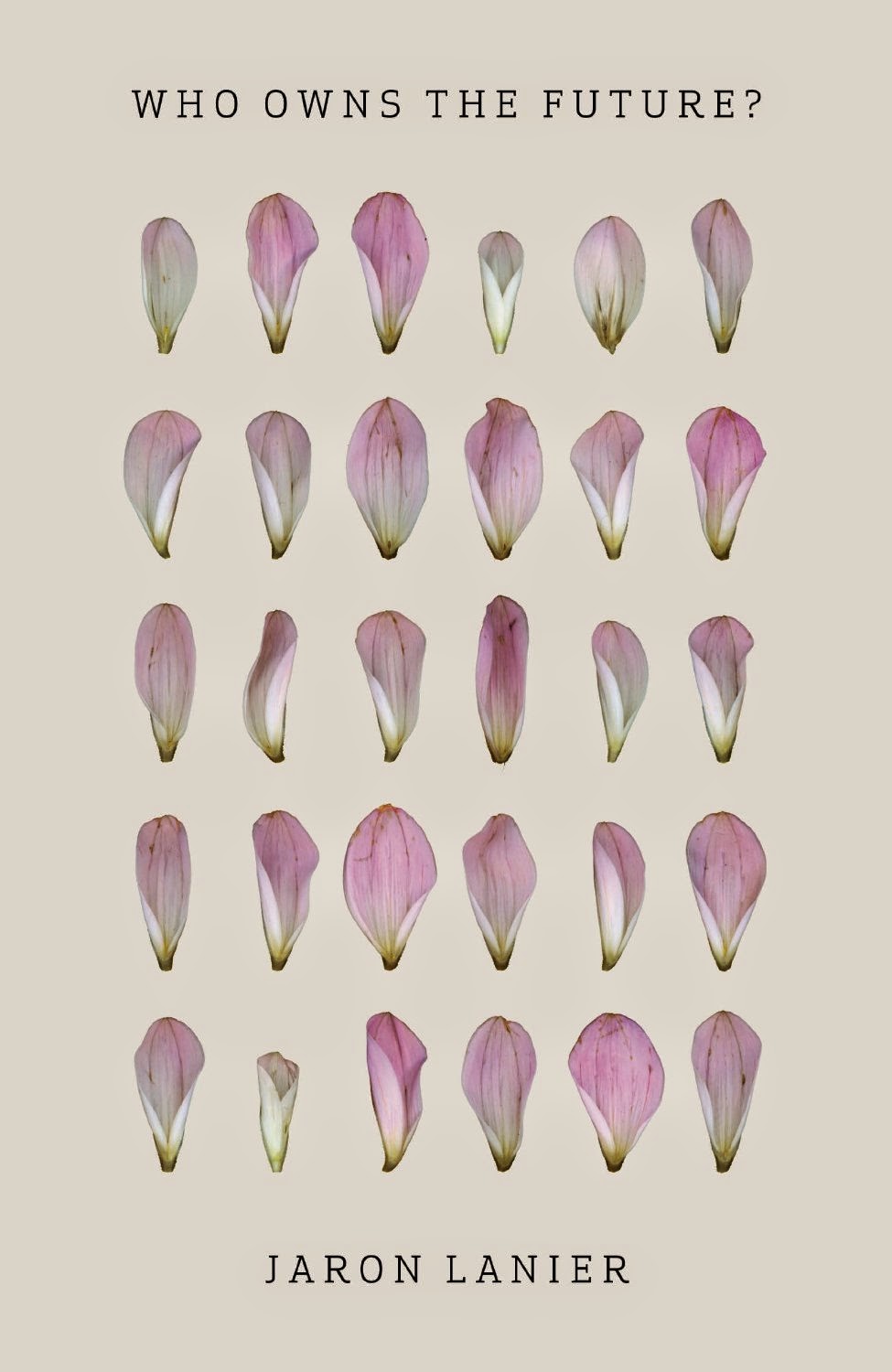
Surprised? I’m not, not really. Internet guru Jaron Lanier, in his fascinating book “Who Owns the Future” suggests that we should eventually expect as many writers online as there are readers. If he’s right (and there’s not reason to believe him wrong), we still have some way to go. But it will surely happen, and probably sooner than you think.

When that happens, what will the e-book market look like? Lanier reminds us that this is what happened to music already.

Are books like music? Not quite, books are a more complete codification of ideas, they can play on emotions the way music does (for example, a romance novel or lines of poetry) but they also encapsulate ideas and ideology (from Hegel to Marx to contemporary thought gurus, like Lanier himself).

So can we expect our culture to get crushed under the numbers?

Again, Lanier tells us how he sees the future. Books will be increasingly linked to devices – think of how the rise of e-books was linked to the Kindle. When that happens, says Lanier: “some good books from otherwise obscure authors will come into being. These will usually come to light as part of the rapid-growth phase, or “free rise” of a new channel or device for delivering the book experience.” He doesn’t say it, but of course Amanda Hocking and John Locke‘s sudden rise to fame immediately comes to mind. They enjoyed a “heightened visibility” on the Kindle, as they were “uniquely available early on on that device.” And Lanier to conclude: “In this way, an interesting author with just the right timing will occasionally get a big boost from a tech transition”.

Is that good for authors? No, says Lanier, “the total money flowing to authors in the system will decline to a fraction of what it was before digital networks.” The future reserved to authors is exactly the same as what musicians are facing today: “Most authors will make most of their book-related money in real time, from traveling, live appearances or consulting instead of book sales.”

Authors in future will be a vastly different lot from what they are today, no more hiding in the ivory tower as “independent scholars”

Read the rest on Impakter, click here.

Comments Off on To Publish AND Perish – Will the Tsunami of e-books Destroy our Culture?

Filed under genre fiction, Literature, social media

To Self-Publish and Perish: Buried Under 3.4 Million E-Books

 I finally found where Amazon reveals a hidden (and juicy) statistic: the number of ebooks available in the Kindle Store. If you’re an Amazon Associate, you can easily find it too but to make it simple I took a screen shot of the page where it shows, this one dated August 16, 2014:

Look at what the red arrow points to: “Results from Amazon Kindle Store…3,376,174 results”. That’s how many ebooks are stocked in the Kindle Store as of now: 3.4 million.

And by the time I had finished writing this blog post (one hour later) that number had climbed to…3,376,186! It took one hour to add 12 books, one new title every five minutes.  In 24 hours, the number had climbed to 3,378,960, that’s 2786 more books – let’s say, 2,800 a day, that’s over one million books per year – and probably growing at an exponential rate that I cannot calculate for the moment; I haven’t got the data though Amazon does (I wonder whether they are as scared as I am).

You can bet that in 10 years time the number of titles in the Kindle Store could be anywhere between 20 and 40 million books.

This is as many books as Google is said to have scanned globally, drawing from all the world’s libraries (the latest reported figure dates to last year and was 33 million books).

Surprised? I’m not, not really. Internet guru Jaron Lanier, in his fascinating book “Who Owns the Future” suggests that we should eventually expect as many writers online as there are readers. If he’s right (and there’s not reason to believe him wrong), we still have some way to go. But it will surely happen, and probably sooner than you think.

It’s also very instructive to look at the list of titles provided using the filter “new and popular” (the one I used – but there are other filters too depending on what you’re looking for) and you’ll see that Daniel Silva‘s “The Heist” (the 14th book in the Allon series) comes on top: it was published on 15 July 2014 and already got over 1,200 customer reviews. Not unsuprisingly it is is ranked #51 in “paid Kindle” and #1 in several subcategories including mystery and suspense.

By the way, “The Heist” is published by one of the Big Five (Harper) and priced at an average $14 which is standard for traditionally published books. That price, high in relation to the average price for self-published books (which according to Smashwords is around $3.99), does not seem to have impeded its sales or ranking. This is not to say that traditional publishers can get away with any level of high prices – I would argue that a level beyond $14 is damaging and ensures that some excellent writers, like William T. Volmann, perhaps our times’ major “fabulist”, is not as widely read as he could be. His latest book, Last Stories and Other Stories, is priced at over $22, a price equivalent to the hardcover.   That places him well beyond the reach of the average e-book reader, in practice excluding him from any exposure in the Kindle Store. Don’t be surprised if his book is sitting at #42,967 Paid in Kindle Store in spite of the boost it has received in the mainstream media, most recently the New York Times (see here).
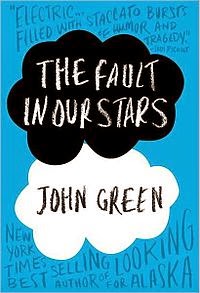
Indeed, if anything, books that are priced high and traditionally published seem to occupy the first ranks everywhere on Amazon. And I’m not referring to special cases like John Green’s best-selling “The Fault in our Stars” with over 29,000 customer reviews and a ranking in paid Kindle at #8 for books, although it is noteworthy that its ranking is not the same in the ebook market (it sits at # 3,810). Here I am looking at the Kindle Store only and what pops up in the ranks is often quite different from what emerges in printed books, and why it is so, is a story for another blog post.

In any case, whether looking at the printed or ebook markets, you have to look hard for self-published authors though, undeniably, they are there…Hugh Howey with over 2,000 reviews for his Dust (book 3 of the WOOL trilogy) is sitting at #815 in “paid in Kindle Store”; Bella Andre’s Kiss Me Like This at #642 (it came out in June 2014 and has over 170 reviews); J.A. Konrath’s Whiskey Sour at #1615 (it came out in February 2013 and has nearly 1,200 reviews); Barry Eisler‘s Graveyard of Memories at #5,136 (it came out in February 2014 and already has over 600 reviews) – but Eisler’s book is published by an Amazon imprint, Thomas and Mercer, and he cannot be thought of as a self-published author stricto sensu, though he often sides with indies and famously walked away from a big publisher’s contract a few years ago.

The conclusion? Self-published authors, even the most successful ones, aren’t doing badly of course, but they are certainly not doing as well in terms of exposure as traditionally published authors. Sometimes, a traditionally published author who finds herself retrograded to the “midlist”, with the publisher giving no signs of wishing to renew the contract, may have no choice but to self-publish to survive. This is what Eileen Goudge did and so elegantly explained in a blog post here on Jane Friedman‘s blog, enticingly titled “Self-publish or Perish” (hence the title for my own blog post here).

However, we should remember that if the midlist author’s economic “survival” is ensured, it is largely thanks to the 70% royalty Amazon pays, because it is certainly not remarkable in terms of exposure – I won’t go further in the details and give you yet another ranking, you can check for yourself if you’re curious (here).

Moreover, one must remember that all rankings are ephemeral, they change constantly, and one needs to be Amazon itself (or set up a 24 hour watch for months on end) to figure out which authors have “staying power” and which don’t. So all the rankings I’m quoting here are merely indicative.

Still, some insights can be gleaned. It is particularly interesting to check on the more successful self-published authors and see how they fare today. I checked at random the more famous ones such as Amanda Hocking or John Locke whose amazing success stories (selling “a million copies” in a matter of months) have been instrumental in launching the self-publishing craze.

Well, they are not doing as well today as you might expect. Amanda Hocking has two books going currently for free and her best selling book, My Blood Approves (now traditionally published by St Martin’s) is ranked #34,251 Paid in Kindle Store. John Locke’s Promise You Won’t Tell, with close to 1,200 reviews was going free the last time I checked and his best selling non-free book Casting Call (actually also the most recent, published in February 2014) is priced at $2.99 and ranked #11,195 in paid in Kindle Store. In other words, it’s doing reasonably well but breaking no records.

Why are such famous self-published authors with millions of copies sold – I would say even “iconic” writers – following the free promotion strategy exactly as propounded by self-published author David Gaughran in his excellent guidebook Let’s Get Visible?

I’m sure you can come up with still more striking success stories, and please be sure to highlight them out in the comments, but my point is that the success doesn’t stay on…it waxes and wanes (which is natural) and then falls off a cliff, to use David Gaughran’s striking metaphor. Hence, the authors efforts to revive their books with free promotions. A tough life!

Now if life is tough for the more successful self-published authors, try and imagine what it’s like for the rest of us?

The reason why? Basically the tsunami of books that buries every single newcomer!

No doubt this is another compelling reason why you should follow David Gaughran’s advice. And don’t get discouraged, Amazon has just handed out a candy to self-published authors, making it possible for them for the first time ever to access to the “pre-order” functionality on its website (is this a side-effect of the Hachette-Amazon spat? Who knows…) Regardless of Amazon’s reasons for doing this, it is a big gift, because it means that,  just like a traditional publisher could do till now, you are able to promote your book on all the sites you navigate for 90 days prior to launching, while pre-orders accumulate on Amazon’s site: on the day of release, all these orders are filled at a single go, ensuring a boost to your book, launching it up Amazon’s rankings!

Because, as David Gaughran points out, in this environment awash with books, you cannot ever stop marketing your titles – and now you have another tool at your disposal to launch your next book…use it!

Comments Off on To Self-Publish and Perish: Buried Under 3.4 Million E-Books

Filed under Digital Revolution, Literature

Digital Revolution Act Two: TheTrue Nature of Amazon Revealed?

Fascinating report from Author Earnings (see here). In the traditional publishing world, the reaction to that report was rather negative (according to the UK Guardian), putting into question the methodology. But even taking into account all the limitations of this report, it still reveals a lot about about Amazon, keeping in mind that 120,000 books included in the report comprise approximately 50% of Amazon e-Book revenue and that Amazon’s own publishing ventures (five imprints) account for only 6% of the total, a surprisingly small share compared to 38% of the “Big Five” (legacy publishers):


OK, Indies account for 31 percent. Fascinating but at the same time frightening: remember, we are dealing here with JUST 120,000 titles (so, out of those, some 40,000 titles are indies) But this is out of a total of how many books in the Kindle Store, 3 million? 4 million? I’d love to know.

Assuming it’s somewhere between 3 and 4 million, that means less than 3% float to the surface and get bought, perhaps even as little as 2%.

The other frightening aspect of this (otherwise brilliant) analysis is the focus on rankings. It really confirms that there are no quality gatekeepers on Amazon, number of sales rule the day! Sales beget sales, historical sales keep a book floating for several weeks, and when sales dip for too long, the book sinks out of sight.

Sales numbers decide whether a book shows up or not in any reader’s searches.

I perfectly understand the logic but I deeply regret it.

It means that numbers trump quality.

Readers navigating Amazon will keep seeing the same books over and over again. If you’ve got a book that doesn’t hit the #100 rank, there’s no hope for you. None whatsoever. Because it means you have no Internet presence, not enough fans to buy your books together at a given point in time so that the ranking is boosted up. Authors with fans acquired in a previous existence as a traditionally published “mid-list author” have an obvious head start in this rankings game, no question about it, and that head start is decisive.

Good for them, but if you’re a newbie, never published before by a trad publisher, beware!

If all this notwithstanding, you do decide to jump into self-publishing, then the two genres that you should write in to have any hope of success, according to this report, are romance and science fiction/fantasy – but especially romance, look at this amazing graph:

Yes, on Amazon, the “Big Five” only seem to do well in thrillers and non-fiction. Thrillers also happens to be the area where Amazon imprints do best. However, for non-fiction, children’s and literary fiction, Amazon imprints are no match to the Big Five, they literally disappear…

Broadly speaking, literary fiction and children’s fiction don’t make the cut on Amazon, it would seem that both kids and persons who like literary reads need printed books from legacy publishers to be happy (I can’t say I’m surprised – that makes sense; ebooks are only good for quick reads when traveling or waiting at the dentist’s).

Of course, all this data needs to be taken with a grain of salt (we know nothing of the rest of what’s on Amazon – from where exactly the other half of Amazon earning stems from, and of course, Amazon won’t tell).

This puts the battle between Hachette and Amazon in perspective, doesn’t it? Some of Hachette authors are surely hurt but it is likely that many are NOT suffering all that much because the majority of their books are not sold in the Kindle Store…

Still, I am shocked that the whole analysis hinges on only 120,000 titles…Your views?

Comments Off on Digital Revolution Act Two: TheTrue Nature of Amazon Revealed?

Filed under Digital Revolution

A Perfect Summer Breakfast

What a way to start a perfect summer day! A foamy cappuccino, a crisp croissant (or cornetto if you are in Italy), fresh fruit and a good book:


 Am I plugging my latest book? Yes, shamelessly, ha ha! I just got it in the mail, brand new, fresh from Create Space’s printing presses (you can see it here on Amazon – for some mysterious reason, the blue in reality is several shades darker than on the website, looks much better in reality. I confess that I love a printed book. It looks more real than the digital version, it’s got pages you can turn, a shiny cover you can slide your fingers on, and you can write in the margin. Call me old-fashioned, but I don’t feel I’ve published a book until I hold it in my hands…

And I’m not afraid to say it’s a damn good book…Though I must also confess that I find it hard to self-promote, it goes against the grain. I’ve been brought up by old-fashioned parents who felt children should be seen and not heard.

…Well, not quite like that (though it pretty much sums up the influence of my mother and father, Mom was always the one who showed affection and Dad the one who discussed ideas). And it’s hard to shake off a lifetime of acting reserved and demure.

So what is this book Forever Young about? A near-future thriller (yes, scary!), it is set 200 years from now. Last week it got a Nevil Award for climate fiction and has already garnered 5-star reviews on Amazon. Actually, last year, when I published the opening, it got a lot of attention on Goodreads (23 ratings) – and more recently on Wattpad (400 reads) and Readwave (1685 reads, 13 likes, my most successful short, a 3 minute read, see here).

Here are some excerpts, and I treasure them, there is nothing that makes a writer happier than a good review that shows the reader enjoyed the book:

  • “Futuristic and yet spot on” (Beate Boeker, here) 
  • “A highly plausible future. Scarily plausible” (Bob Rector, here)
  • “A prophetic view of our future” (Lit Amri) 
  •  “a roller coaster ride” (Marsha Roberts, here
  • “A growing tension among the main characters as the fatal end approaches” (C.E. Rodriguez)
  • A fascinating concept, Nougat provides beautifully-written science fiction, with enough reality to scare the hell out of us” (Vikki Patis, see article here)

So why not make your summer perfect and get Forever Young?

Right now, if you live in the UK, the digital version is under promotion (at a 70% discount) – until 22 July, so hurry! If you don’t live in the UK, don’t despair, the digital price is low and the printed book can be had with a free digital version. I made sure to make the digital version free; in my opinion, this is something  that should be standard: if you buy the printed book, you should always get a free digital version, it makes sense.

Now, as to why Amazon doesn’t run “countdown deals” in markets other than the US and UK, I have no idea. Not fair. I can only presume that in the near future, they will do so.

Wondering about where I took the image with my book and cappuccino? On this terrace:

That’s our house in Umbria, an old stone farm near Lake Trasimeno, one of the main settings of my previous book, Crimson Clouds. Yes, under that umbrella, a perfect place to read a book!
Cheers and have a happy summer!

Comments Off on A Perfect Summer Breakfast

Filed under Cli Fi

Digital Revolution Act Two, Amazon vs. Hachette: What Future for Indies ?

The on-going Amazon-Hachette war that started in April is viewed by many as a paradigm shift. The digital revolution is not over yet and the ground is moving, major actors are re-aligning themselves. Whether Hachette or Amazon wins or loses and with what results for authors, particularly for self-published authors, remains to be seen. 


Bob Rector
In short, Amazon is shaking up the publishing industry and a lot of people don’t like it. I blogged about this last week, (see here), and got a remarkable comment from Bob Rector, who’s not only a talented novelist (if you haven’t read Unthinkable Consequences yet, you should) but also a successful playwright (Letters from the Front, an award-winning play that toured the world for 15 years) and a veteran film director who first became famous with “The Now Explosion“, historically the first experiment in music video.
He has a uniquely upbeat take on the changes happening to the publishing industry, no doubt because of his long experience, and I wanted to share it with you. This is what he wrote (I love his uplifting conclusion and I added the highlights): 
Claude, your blog post “The Author-Reader Amazon Revolution:Mirage or Reality?” is a very informative and sobering article that once again leaves my head spinning about the book market today. But also conjures up some memories along similar lines.
A little less than 40 years ago I jumped through these same kinds of hoops but in a different medium: film. I was part of a small production company that decided to make a low-budget feature film for theatrical distribution. The timing was right because several G-rated low-budget ‘outdoor-adventure’ films had done very well, chief among them was Grizzly Adams. The attraction to this genre for the filmmaker was that Mother Nature provided all the sets and most of the players (wildlife) for free. All you had to do was get the cast and crew to a really spectacular location and tell a reasonably entertaining story about a hero single-handedly fighting man’s abuse of nature.

I was chosen to write, direct, and edit for the simple reason that I had more experience than anyone else involved, plus I was still riding on my fame from The Now Explosion. The film was titled Nature’s Way but before its release was changed to Don’t Change My World.

We made the film for next to nothing, just like today’s indie authors produce a book. In its initial screenings audiences responded very positively but to go into wide release, we ran into the same obstacles that indie writer’s face. We weren’t MGM or Universal or 20th Century Fox and they owned the game.
The major studios had long-established relationships with movie theaters around the world, as well as marketing and distribution operations that ran like the proverbial Swiss watch. On the other hand, we were, in effect, knocking on the door of each individual theater. They didn’t want to deal with someone who only had one film to peddle and no marketing machinery behind them. We eventually did sign with a small independent distributor who managed to get our film released nationally but playing at only one or two markets at a time, so the money generated trickled in and seldom covered expenses. Plus the theaters, since they were dealing with a small fry, slow paid, and sometimes no paid, us – something they didn’t dare do with the majors. When we protested they simply said, “So sue us.”
The sad fact of life was that the audiences who saw the film loved it, but getting it in front of an audience was a constant uphill battle that cost more than we could possibly make, especially since much of the time we never saw the money that came into the box office. By the time the theater took its cut (much more severe than Amazon’s take) and the distributor took his cut (always with extra expenses added) and the advertising agencies took their cut, nothing was left (sound familiar?).
The film finally generated significant revenue when it went into non-theatrical release, primarily on cable channels like CineMax (HBO). It was also broadcast by the BBC and several other operators in Europe. The US Navy purchased a hundred or so 16mm prints for showing onboard their ships. A specialty distributor who provided inflight movies for airlines licensed its use. Same for a distributor who supplied films for college campus theaters. And finally the film was released to the newly emerging home video market. The point being, we had to search out and broker all these deals ourselves.
And the same is true for indie publishers/writers. Anybody who has been in business, whether it’s selling books or selling paper clips, knows that it’s never easy and you have to work at it continuously.
Selling is ALWAYS job one. During the 15 years we toured our play Letters From the Front around the world, selling and marketing was a nonstop daily job – and I mean every single day.
So I guess I come to this issue with a little different and perhaps more cynical (based on experience) but realistic perspective.
If there’s money to be made, then big money is going to control the market. Always. Never been any different since the beginning of commerce. Might makes right.
Will fair play come into play? Don’t count on it.
The question to indie writers/publishers is: what are you going to do about it? Throw up your hands and say the deck is stacked and I don’t stand a chance so to hell with it? Or, I have right on my side but I can’t win so I might as well not play? Are you going to take Amazon and the other major players to court and sue them for what you believe are unfair practices? Good luck. They each have teams of lawyers just waiting to bury you.
Before you jump to the conclusion that I’m being dark or negative, please don’t.
As the old saying goes, there’s more than one way to skin a cat (although why anybody would want to baffles me). Most of my professional life has been spent finding alternate routes around established institutions, with varying degrees of success. My first rule is to never let somebody else define my pathway to success. If I’m going to fail, I want to fail on my own terms. As far as indie publishing is concerned, my wife (a fellow author) and I are still experimenting and searching out alternative paths. It will take time but it always does. I’m confident that we’ll find a way that works for us. We’ve done it many times before.
The threshold we’re shooting for is not just to make money for ourselves, but to make money for somebody else, preferably a large well-funded organization. That’s what we’ve done before. We found a way to make money for major companies with our product, lots of money. Then they started writing checks to us, big checks. I’m not saying this is the only path. We’re all supposed to be creative people — so be creative about this too!
To be exceedingly trite, we don’t look at this as a problem, we look at it as an opportunity. A huge ground-floor opportunity. And we don’t expect anybody or any organization to do the heavy lifting for us. Maybe we’re naive. We’ll see.
Letters From the Front stars Bobbi Kravis and Bob Curren meet with troops at Ft. Lee, VA after a performance and distribute free letter writing kits (source: “Why Letters from the Front is so important today”, click here

Comments Off on Digital Revolution Act Two, Amazon vs. Hachette: What Future for Indies ?

Filed under Digital Revolution

A Five-Star Review by a Major Writer for Just Published FOREVER YOUNG, Part One

Hugely talented writer Bob Rector, author of Unthinkable Consequences (I highly recommend it, great romantic thriller) and of the acclaimed play Letters from the Front that successfully toured the world for 15 years, has just put my new climate fiction book, FOREVER YOUNG, Part 1,  on his list of “hot new reads”. This is a serialized novel exploring the future that I believe awaits us all, and three more parts are soon coming up, the next one, Part 2, The Immortality Trip, to be released tomorrow on Amazon (and later on all other e-platforms). Look for it!

I’m deeply honored that Bob singled my work out and his review makes me particularly happy. Here it is:

5-STAR REVIEW OF FOREVER YOUNG PART ONE by Claude Nougat

If you’re a boomer and this book doesn’t send a chill up your spine, you’d better check your pulse. I don’t want to give too much away but it’s no spoiler to say that Claude Nougat’s Forever Young series takes place about 200 years from now. Unlike so many stories set in the future, Ms. Nougat creates a very plausible future. Too plausible. Scarily plausible.

The changes that have taken place on the globe sound eerily prophetic. It’s hard to single out a protagonist. Forever Young is comprised of an ensemble cast, each with conflicting interests. They are all faced with the choice of whether to remain forever young for a hundred or more years or receive a billion dollars.

Thrown into the mix is a quest for true love, family bonds, greed, sculduggery, duplicity, and humans basically behaving at their worst. In other words, some things never change despite all the glittering marvels science can bestow upon us.

Ms. Nougat creates characters that jump off the page at you. Her dialogue is so razor sharp you find yourself sometimes saying “Ouch!” The climax is as hair raising as an old west shoot out. Is there humor? Oh yes, and it’s dark as molasses and just as tasty. You’ll be tempted to lick it right off the page.

As a reader, when I pick up a new book, I want to feel like a mail sack on a railway platform waiting for a speeding train to snatch me away to a new destination. That’s just what Claude Nougat does with this first book in her Forever Young series, Gateway To Forever.

It’s always comforting to be in the hands of a real pro. Ms. Nougat certainly is that. Highly recommended read.

For the whole post, see here: FOREVER YOUNG by Claude Nougat.

Update: this morning, another 5-star review was posted on Amazon by author Marsha Roberts, see here
I’m wowed!

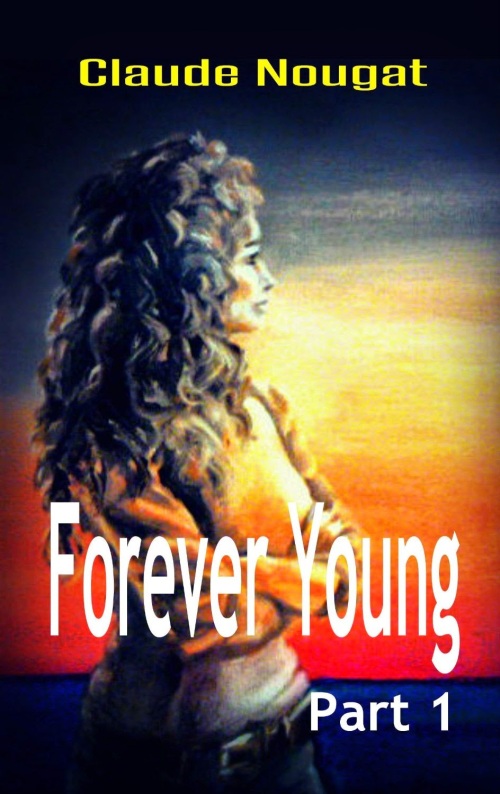
And here’s the cover of my book:

Available on all e-platforms, for Amazon click here: http://www.amazon.com/Forever-Young-Part-One-Gateway-ebook/dp/B00JU99LS4/

Available on all e-platforms; click here for Amazon

BIG NEWS: Drum roll please! Part 2, The Immortality Trip is out! Find out what happens to Alice, Lizzie and Jamie as they are given the chance to fly off to a pristine planet one thousand light years away where humanity can start again…Click here to see it on Amazon and here on Smashwords in the Premium Catalogue, which means it’s available on all e-platforms, for the Nook, Kobo and iPad as well as mobile devices.
Enhanced by Zemanta

Comments Off on A Five-Star Review by a Major Writer for Just Published FOREVER YOUNG, Part One

Filed under Cli Fi, Literature, science fiction

Is the Amazon Ebook Market Model Broken?

English: A Picture of a eBook Español: Foto de...

Is Amazon about to drop self-published writers? Is there any reason why it shouldn’t if self-pubbed titles clog its Kindle Store, making it look like a hastily published slush pile? After all,  the ebook market is reportedly only worth 7% of total Amazon sales and it’s not showing much signs of growing.Yes, that’s not a typo. Ebooks sales are worth only seven percent of total sales to Amazon. Think of Amazon as a virtual WalMart – in fact, I suspect that is the real goal of Amazon, to become the biggest digital department store in the world. The publishing industry is only a side-show for Amazon.

So, if much is wrong with Amazon’s ebook market model, it is not likely that Amazon will care. And perhaps that explains the uneven performance of Amazon in foreign markets where it’s not the only player in town, by a long shot. For example, it is striking to see how Kobo is ubiquitous in Italy, it has its devices on display in most major bookstores but you don’t see Amazon’s Kindle anywhere. According to Ebook Bargains UK, Kobo has made many mistakes in expanding abroad (see first article listed below). Maybe so, but it is still doing pretty well…
Let’s list the challenges facing Amazon:
1. the payment system –  Amazon’s model for expanding abroad has proved to be antiquated; Amazon has followed the old system of expanding abroad with geographically based “offices/virtual store fronts” rather than going global digitally; this means, for example, that New Zealanders are forced to shop in its Amazon Australia beachhead. Why not have a global easy-to-pay system like Google Play (for example, they very successfully use carrier billing in the Far East)?
2. ebook subscription services and digital libraries: Amazon has ignored this new business model, presumably relying on its own Premium system – but how long will they stay out of that particular game? And if they do go in, how will the Big Five react? It’s very likely that they won’t like it and could withdraw their books from Amazon’s shelves. A conundrum for Amazon.
I’ll be honest with you, those subscription services really worry me. I’m speaking of Scribd, and Oyster, the two major subscription services and Overdrive, a digital library. The latter has managed to get one hundred million ebook downloads in 12 years, up to 2012! See here. A huge number.
That (to me) is terrifying, the start of a new trend that could change the shape of the book market forever.
The problem with an ebook is that it is not an object you hold in your hands. It’s nothing, it’s like a bubble of soap. You can’t feel a liking for it the way you might view an old book as an old friend, sitting there on your library shelf in your home. You don’t own it, it’s essentially a digital service, a permanent access to a text available up there in the cloud, somewhere on the Net.
So why own an ebook at all? Why not pay less and get access to the text for the time you need to read it?
Many authors I know are complaining about a slump in sales. This is anecdotal, I can’t prove it. My impression is that the slump which first hit the sales of new, emerging writers in early 2013 has now affected midlist authors (i.e. traditionally published authors that have recovered their rights to their backlist and systematically self-publish those out-of-print titles on Amazon).  These are the very writers who were most successful in the Kindle Store, hitting (at least for a short time) the top 100 rank with every new title they uploaded. They could count on their fans to buy their new titles. Well, it seems they no longer do; 2013 was a stagnant year for many.
Where have all the fans gone? Who knows. But the expansion of subscription services and digital libraries surely acts as a syphon on the market. You as an author may get better known to many more readers thanks to such services, but you are also likely to make a lot less money in future. To what extent this will happen cannot be foretold.
Let’s look at possible solutions.   
One thing that could be done is to fix the Kindle Store. And re-organize good gate-keeping systems to help in book discovery and let “the cream rise to the top”.
For the time being, the way things are in the Kindle Store, the cream cannot rise to the top. And the reason is very simple and can be told in one word: rankings!
To understand why this is so, let’s look first at what’s happened in the environment. Since 2012, the ebook market has changed dramatically. First, the settling of the DOJ case against Apple and the way that has played out seems to have calmed the nerves of the (now) Big Five. They have become more aggressive with their pricing, slowly but surely edging out indies.  Price was the self-published writer’s biggest weapon, it no longer is. We all know that “free” doesn’t work anymore and I fear that “cheap” doesn’t work either. Books under $9 scream out to the readers “beware, this is a self-published work likely to be full of typos and badly structured”.

And then there’s the matter of sheer volume of published titles. The tsunami of self-pubbed authors has totally changed the environement. I know what I’m talking about, some of my books, like the earlier ones I published are buried under one million books or more! Literally buried under and forgotten. That’s because Amazon publishes everyone’s ranking. I’ve complained about this before and done so publicly on this blog only to get comments from indies like “Oh, but nobody pays attention to ranking”. That may have been true once but it no longer is. Readers are savvy and they’ve learned how to navigate Amazon’s Kindle Store. Readers do look at rankings, I’m convinced of it. And the theory that “quality books rise to the top like cream” is a non-starter. How can they rise if readers before buying glance at the ranking and decide it’s not worth buying because the book is sitting down there at the bottom of the ocean of published books?

In other words, the Amazon environment has become toxic. Even Kobo, the latest one on the Big Boys scene, also exhibits rankings. BIG mistake. Rankings should be reserved for the top 100 selling titles, maybe the top 1000 but no more! Then, and only then, if your book is good, you might have a fighting chance to rise with good reviews

If you still have doubts, take a look at the ranking of books that you know for a fact are good. I’ll do it here with just one book as an example, but do take time to navigate the Kindle Store and you will see. The example I want to use here is Amelie Nothomb’s “Fear and Trembling” (see here). Now this is easily a masterpiece of French literature, one of the best books published in the last 15 years. She’s a huge success with young adults, hardly your dowdy old writer. And it is probably the best book she ever wrote, lively, fun, suspenseful, not at all a high-brow literary bore. Yet, in the Kindle Store she is sitting at a ranking around the 300,000th range and has only 46 reviews!! This says a lot about the Amazon environment…

Speaking of reviews…What is truly missing is a gatekeeper system to keep out poorly edited books and help readers find quality reads. Amazon regularly makes efforts to improve its customer review system and sweeps out reviews that are deemed misleading (the famous “sockpuppet” reviews). Unfortunately, when Amazon does that, it creates a lot of discontent among writers and doesn’t really solve the problem.

Perhaps what Amazon should do is set up a two-tier system, with customer reviews and expert critiques.

Most customer reviews are not professional in the sense that they are not comprehensive reviews touching on all aspects of a book (i.e. character development, plot structure, POVs and writing techniques etc).

They are merely opinions written by readers.

Don’t misunderstand me. That is how it should be: a customer has a right to voice his/her likes and dislikes and we authors are very happy when they do, we love to be in touch with our readers! That’s one of the best things about the digital revolution: it has given us, writers, the possibility to be close to our readers and that’s wonderful. But a customer review is not the same as a professional critique, fully structured and substantiated by evidence and references to literary criteria.

This suggests that there is space for two different types of reviews, the customer reviews and the literary critiques. And perhaps an online website linked to Amazon should collect all those critiques and list them for each title…It could be a start towards a system to guide readers to the better reads and finally allow the “cream to rise to the top”.

Any other ideas?

Photo credit: wikipedia

Enhanced by Zemanta

6 Comments

Filed under book marketing

Is Amazon Supremacy in eBooks Threatened?

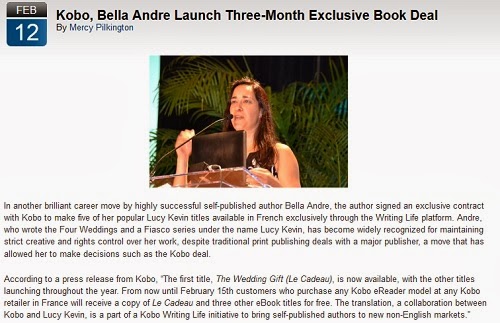
Wow, super star Bella Andre has given full confidence to, no…Not Amazon Kindle Select but Kobo!

See here:

For me, this is surprising news. I’ve always thought of Amazon as the giant e-retailer whose supremacy could not be threatened – not yet and not for a long time. I guess I was wrong.

What we have here is a David vs. Goliath fight, who will win?

As the savvy chaps at Ebook Bargains UK write (see here), the deal is “only for three months, and it’s for five French-translated titles, but she could just as easily have gone into Select and gone exclusive for three months with Amazon France. This is very a big-selling indie author. One of the indie super-stars. The fact that she’s gone exclusive with Kobo when she could take her pick of any of the big retailers and get similar terms is worth pondering.”

What they suggest is that “if you spend 90% of your time promoting Amazon listings, are in and out of Select, and all your links on your blog, website, email header, etc, etc, are to Amazon then you have only yourself to blame for the readers you are not reaching.” (highlight added)

Right so. Are you linking to other places than Amazon? I know I’m guilty of relying on Amazon up to 90%, and in some cases 100%.

How about you?

Post-scriptum: I was wondering why Bella Andre might have signed up that exclusive with Kobo and a little check on the Net turned up some very interesting facts (see here, an illuminating Jeremy Greenfield article in Forbes.com dated August 2013). 

In the US, Kobo is minuscule (around 3% of the ebook market) but abroad it’s doing well, particularly in Canada and Japan but also Brazil and India, both fast-growing huge markets. But, compared to Amazon, what Kobo is doing that is different is:
1. establish a physical on-the-ground presence (it has just signed up with 500 American booksellers and it is certainly present in bookstores here where I live, Italy).
2. focus on readers and e-readers – the reader experience is at the heart of their ethos, or so they say, whereas, as we all know, Amazon sells all sorts of things besides books. 

Whatever…Kobo must be doing something right! I have no doubts that in France a lot of people read books on Kobo devices – no question, that is probably the bet Bella Andre made when she signed up with them. 

Related articles

Kobo is Expanding in All Directions – Drops Hints of a Russian Kobo Store & Signs New Bookstore Partner in Spain(the-digital-reader.com)

Enhanced by Zemanta

3 Comments

Filed under book marketing

Two Good Reasons Why You Should Do Audiobooks

Should you do audio books of your titles? The answer is YES! And there are two very good reasons for doing so, but before I get to them, here’s a little introduction to the world of audiobooks.

It’s a new aspect of the digital publishing industry, now worth $1.6 billion (still peanuts) but growing fast. If you’re considering doing an audiobook, I highly recommend the following article by Michael Kozlowski on Good E Reader’s blog, click here. You will see that in addition to Amazon’s services, there are several excellent alternatives you might want to investigate.

Audio titles so far are relatively few (13,255 titles came out in 2012, up from 4,602 in 2009 – compare that to the millions of ebooks). Audiobooks seem to be the province of affirmed writers with a proven market, like, for example Elizabeth Spann Craig, a successful “hybrid” author (“hybrid” means she has both traditionally published books  and self-published titles). She has a hefty number of published books under her belt and writes 3 to 4 books a year, making sure they’re available in ALL formats. See here for her own summing up of her experience in 2013.

What is remarkable about her is that she spends (next to) zero $$$ on marketing, does just a little blogging and facebooking and tweeting (plus a couple of giveaways on Goodreads/year) – in short, she doesn’t relate directly to her readers as an author. They are more interested in her books than in her, they’re fans of her book characters, not of her as a writer or even as a person! This is what she calls “book-centric reader engagement” (and she is engagingly shy and modest about herself). All that means she has to write more books every year to keep it up rather than waste time on book promotion campaigns.

This is where audio-books come in, a format with a rapidly rising audience as more and more people are engaged in activities that preclude reading (for example, all the time wasted driving your car). We’ve all heard of Audible (acquired by Amazon in 2008), ACX and Podiobooks and I won’t go into it here. One of my fellow author friends, Bert Carson, who’s just dived into turning all his titles into audio-books, waxes enthusiastic, check him out here. He’s got a lot to say about making them (see his “lessons learned” sections).

What I do think is that before you make that extra effort of producing an audio-book you should consider whether it is really worth your while. Which gets me to the reasons for doing audiobooks:

Reason #1: You should definitely do an audio book if you are in Spann Craig’s position, where you’ve “saturated” your corner of the market. If not, you’ll find that your audio-books face the same marketing hurdles as all your other formats (ebooks and printed versions) and are in need of selling boosts. Are you ready for that extra-marketing?

But there may be alternatives. For example, producing audio-clips of portions of your book, say a particularly breathtaking passage that could help in marketing your book, though the places to upload your clips are still essentially limited to soundcloud.com, click here to visit. You can set up your “sound” page there and share your clips – also very useful to embed your clips on your blog or website.

Reason #2: with the advent of Amazon’s “Whispersync For Voice”, it makes total sense. Your readers are able to move from reading to listening and back again without losing the place they stopped reading (or listening). Check it out here. The cool thing is that Amazon provides readers with a discounted audio copy if they buy the ebook first. So what you’ve got here is a built-in marketing tool. See here author Stephen Woodfin’s experience that he very kindly shares on the Venture Galleries blog, an eye-opener.

If you’ve had any experience with recording your book, please share!

Latest News about my publications:

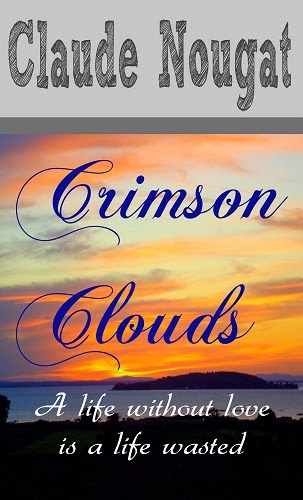
Crimson Clouds, (new edition) romance the second-time-around (on Amazon, click here for ebook and here for printed version) Just garnered new three 5 star reviews (excerpts):

“Honest, profound and emotional, Crimson Clouds will have you exploring some of your own emotions and question the meaning of your own life” (Bill Howard);

“The scenes unfold vividly in front of you, full of color and life, like a painting” (Mamta Madhavan);

“By allowing each of the main characters to narrate their side of the story, Claude Nougat skilfully delivered a must-read novel, enabling the reader to have a deeper understanding of the thoughts and feelings of each character” (Faridah Nassozi)

Beware of the offer of a printed first version of the book, under the title “A Hook in the Sky”, see here. It looks nice and cheap ($10.80!) but it’s no longer in print and I have retired it. It’s just that the Amazon system is slow to register change…

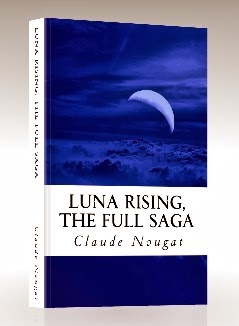
Luna Rising, the full saga (new edition, 3 volumes) one young man’s battle to rebuild the family name (on Amazon, click here for ebook and here for the printed version)

Again, beware of the printed version presented  here, it’s cheaper BUT that is the first edition (originally called “Fear of the Past”) and unless you are a collector of rare editions, don’t buy it!

Note: ebook is 40% off compared to buying each e-volume of the saga separately. See here.

Enhanced by Zemanta

2 Comments

Filed under Uncategorized